
粗木质残体分解评估工具:模型开发与敏感性分析。
Coarse woody debris decomposition assessment tool: Model development and sensitivity analysis.
机构信息
Center for Forested Watershed Research, USDA Forest Service, Cordesville, South Carolina, United States of America.
College of Forest Resources and Environmental Science, Michigan Technological University, Houghton, Michigan, United States of America.
出版信息
PLoS One. 2021 Jun 4;16(6):e0251893. doi: 10.1371/journal.pone.0251893. eCollection 2021.
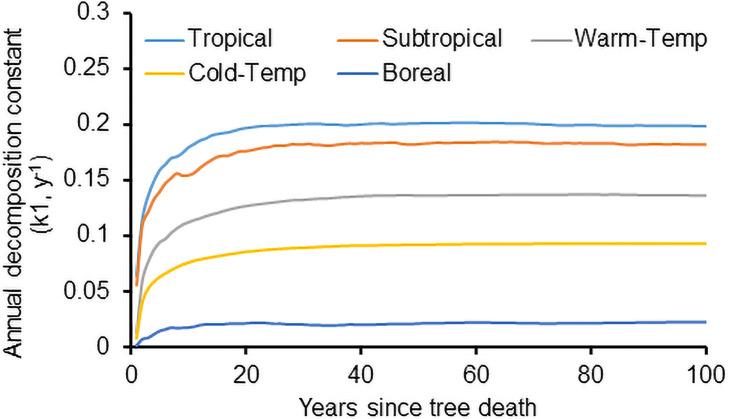
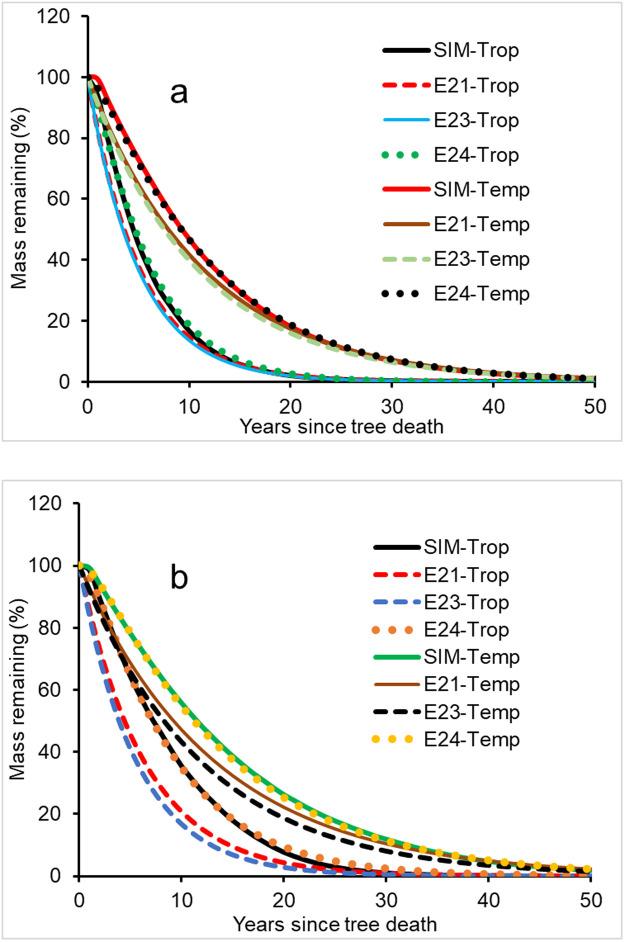
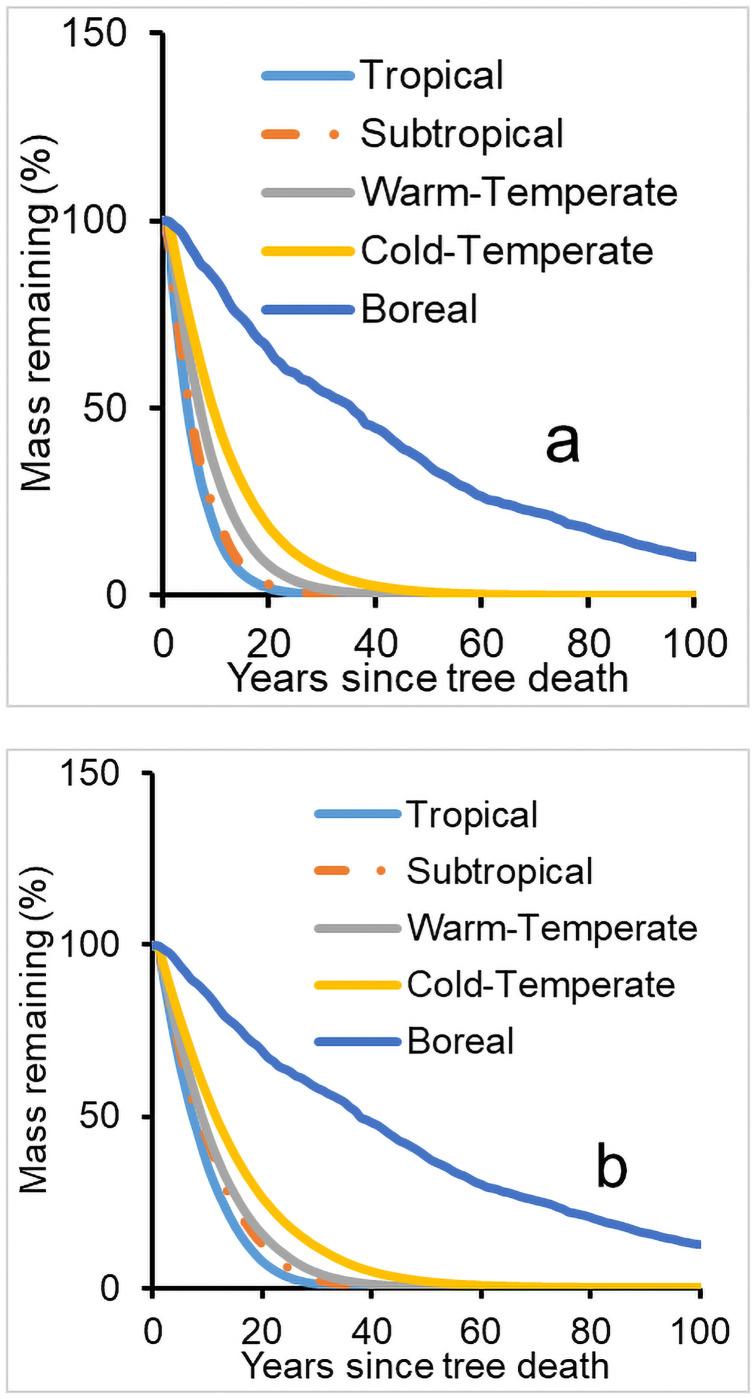
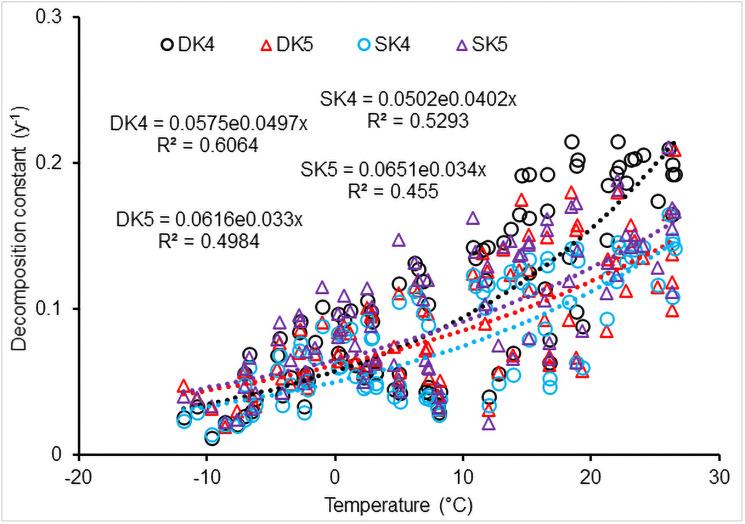
Coarse woody debris (CWD) is an important component in forests, hosting a variety of organisms that have critical roles in nutrient cycling and carbon (C) storage. We developed a process-based model using literature, field observations, and expert knowledge to assess woody debris decomposition in forests and the movement of wood C into the soil and atmosphere. The sensitivity analysis was conducted against the primary ecological drivers (wood properties and ambient conditions) used as model inputs. The analysis used eighty-nine climate datasets from North America, from tropical (14.2° N) to boreal (65.0° N) zones, with large ranges in annual mean temperature (26.5°C in tropical to -11.8°C in boreal), annual precipitation (6,143 to 181 mm), annual snowfall (0 to 612 kg m-2), and altitude (3 to 2,824 m above mean see level). The sensitivity analysis showed that CWD decomposition was strongly affected by climate, geographical location and altitude, which together regulate the activity of both microbial and invertebrate wood-decomposers. CWD decomposition rate increased with increments in temperature and precipitation, but decreased with increases in latitude and altitude. CWD decomposition was also sensitive to wood size, density, position (standing vs downed), and tree species. The sensitivity analysis showed that fungi are the most important decomposers of woody debris, accounting for over 50% mass loss in nearly all climatic zones in North America. The model includes invertebrate decomposers, focusing mostly on termites, which can have an important role in CWD decomposition in tropical and some subtropical regions. The role of termites in woody debris decomposition varied widely, between 0 and 40%, from temperate areas to tropical regions. Woody debris decomposition rates simulated for eighty-nine locations in North America were within the published range of woody debris decomposition rates for regions in northern hemisphere from 1.6° N to 68.3° N and in Australia.
粗木质残体 (CWD) 是森林的重要组成部分,它为各种生物体提供了栖息地,这些生物体在养分循环和碳 (C) 储存方面发挥着关键作用。我们使用文献、实地观测和专家知识开发了一个基于过程的模型,以评估森林中木质残体的分解以及木质 C 向土壤和大气中的迁移。敏感性分析针对作为模型输入的主要生态驱动因素(木材特性和环境条件)进行。该分析使用了来自北美洲的 89 个气候数据集,范围从热带(14.2°N)到北方(65.0°N),年平均温度(热带为 26.5°C,北方为-11.8°C)、年降水量(6143 至 181 毫米)、年降雪量(0 至 612 千克/平方米)和海拔高度(海平面以上 3 至 2824 米)的差异很大。敏感性分析表明,CWD 分解受气候、地理位置和海拔高度的强烈影响,这些因素共同调节微生物和无脊椎木质分解者的活动。CWD 分解速率随温度和降水的增加而增加,但随纬度和海拔的升高而降低。CWD 分解还对木材大小、密度、位置(立木与倒木)和树种敏感。敏感性分析表明,真菌是木质残体分解的最重要分解者,在北美的几乎所有气候带中,真菌分解者导致的木质残体质量损失超过 50%。该模型包括无脊椎分解者,主要集中在白蚁上,白蚁在热带和一些亚热带地区的 CWD 分解中可能发挥重要作用。白蚁在木质残体分解中的作用差异很大,从温带地区到热带地区,范围从 0 到 40%。为北美洲 89 个地点模拟的木质残体分解速率与北半球从 1.6°N 到 68.3°N 和澳大利亚的木质残体分解速率的公布范围一致。




 Zotero 插件