Edward A. Doisy Department of Biochemistry and Molecular Biology, Saint Louis University School of Medicine, St. Louis, MO, USA; Center for Cardiovascular Research, Saint Louis University School of Medicine, St. Louis, MO, USA.
Edward A. Doisy Department of Biochemistry and Molecular Biology, Saint Louis University School of Medicine, St. Louis, MO, USA; Center for Cardiovascular Research, Saint Louis University School of Medicine, St. Louis, MO, USA.
J Lipid Res. 2021;62:100090. doi: 10.1016/j.jlr.2021.100090. Epub 2021 Jun 1.
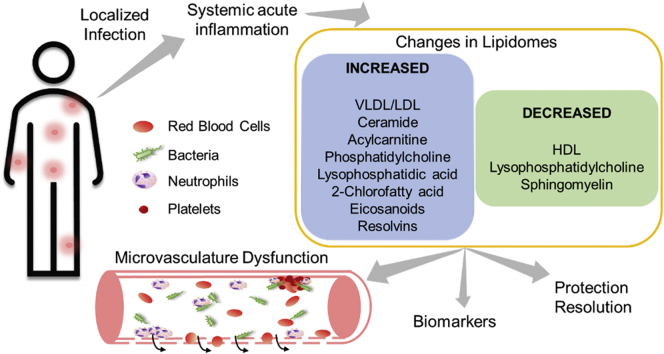
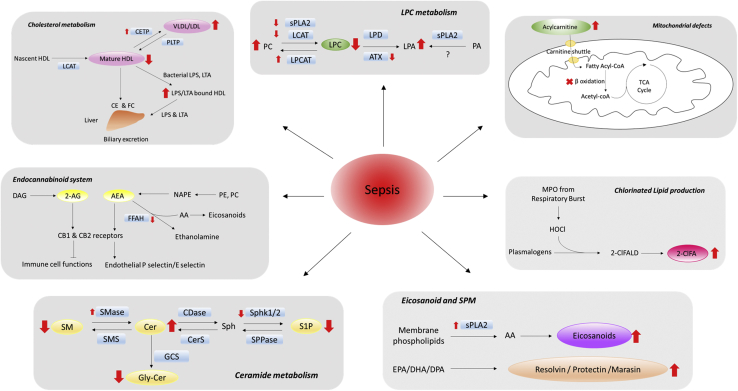
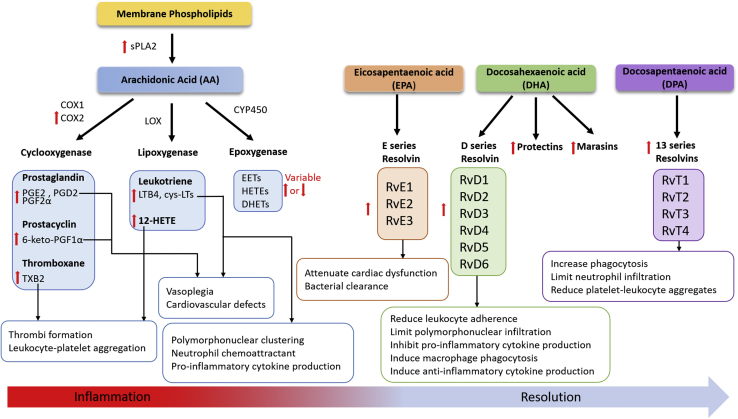
Sepsis, defined as the dysregulated immune response to an infection leading to organ dysfunction, is one of the leading causes of mortality around the globe. Despite the significant progress in delineating the underlying mechanisms of sepsis pathogenesis, there are currently no effective treatments or specific diagnostic biomarkers in the clinical setting. The perturbation of cell signaling mechanisms, inadequate inflammation resolution, and energy imbalance, all of which are altered during sepsis, are also known to lead to defective lipid metabolism. The use of lipids as biomarkers with high specificity and sensitivity may aid in early diagnosis and guide clinical decision making. In addition, identifying the link between specific lipid signatures and their role in sepsis pathology may lead to novel therapeutics. In this review, we discuss the recent evidence on dysregulated lipid metabolism both in experimental and human sepsis focused on bioactive lipids, fatty acids, and cholesterol as well as the enzymes regulating their levels during sepsis. We highlight not only their potential roles in sepsis pathogenesis but also the possibility of using these respective lipid compounds as diagnostic and prognostic biomarkers of sepsis.
脓毒症,即机体对感染的失调免疫反应导致器官功能障碍,是全球范围内主要的死亡原因之一。尽管在阐明脓毒症发病机制的潜在机制方面取得了重大进展,但在临床实践中,目前尚无有效的治疗方法或特定的诊断生物标志物。细胞信号转导机制的紊乱、炎症反应不足和能量失衡,所有这些在脓毒症期间都会发生改变,也会导致脂质代谢缺陷。使用具有高特异性和灵敏度的脂质作为生物标志物可能有助于早期诊断和指导临床决策。此外,确定特定脂质特征与其在脓毒症病理中的作用之间的联系可能会导致新的治疗方法。在这篇综述中,我们讨论了最近关于实验性和人类脓毒症中脂质代谢失调的证据,重点关注生物活性脂质、脂肪酸和胆固醇以及在脓毒症期间调节其水平的酶。我们不仅强调了它们在脓毒症发病机制中的潜在作用,还强调了将这些各自的脂质化合物用作脓毒症诊断和预后生物标志物的可能性。