Pu Ze-Qing, Yu Tian-Fu, Liu Dong, Jin Cheng-Wen, Sadiq Esha, Qiao Xiaofei, Li Xiaojie, Chen Yuxuan, Zhang Jinsong, Tian Mingzhong, Li Siying, Zhao Ru-Xing, Wang Xiang-Dong
Department of Cell Biology, Shandong University School of Medicine, Jinan, China.
Shandong University School of Medicine, Jinan, China.
Cell Death Discov. 2021 Jun 4;7(1):133. doi: 10.1038/s41420-021-00521-0.
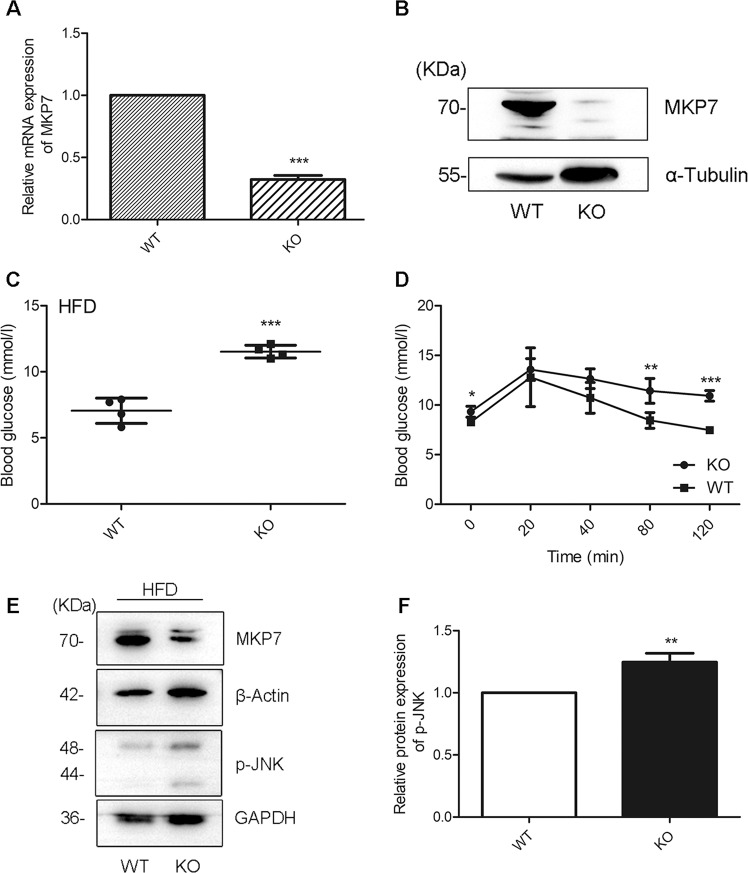
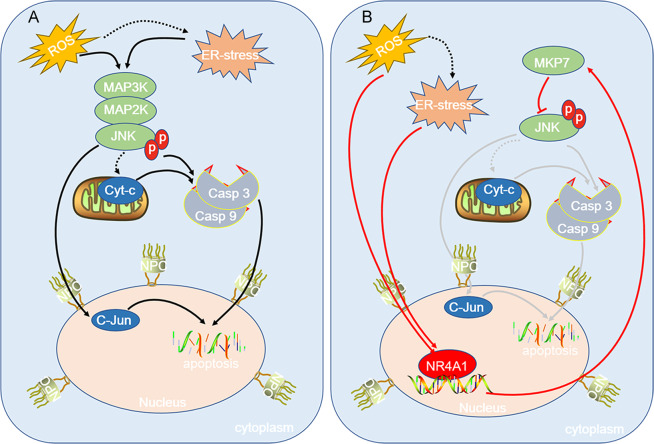
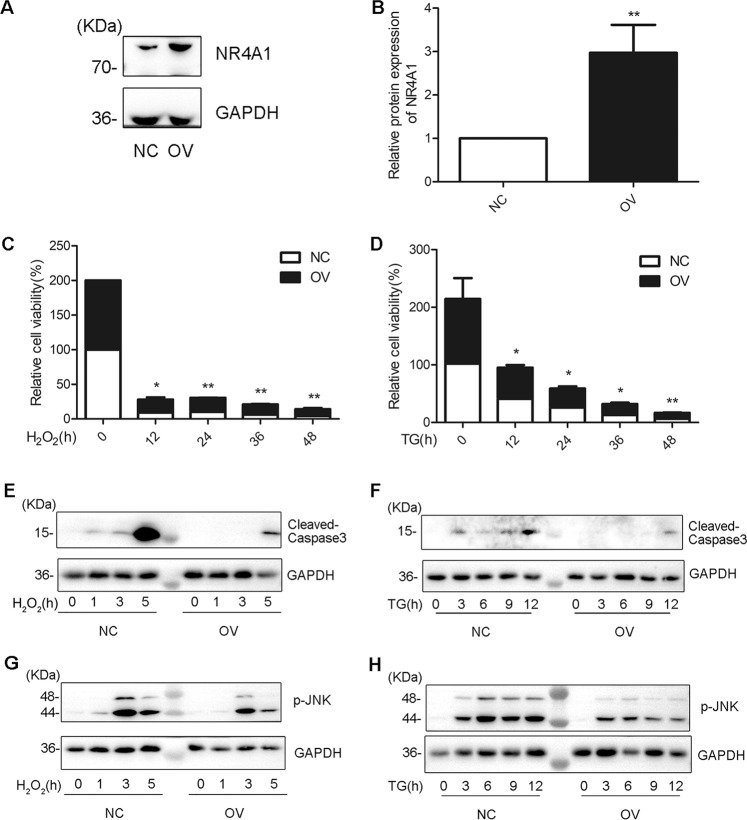
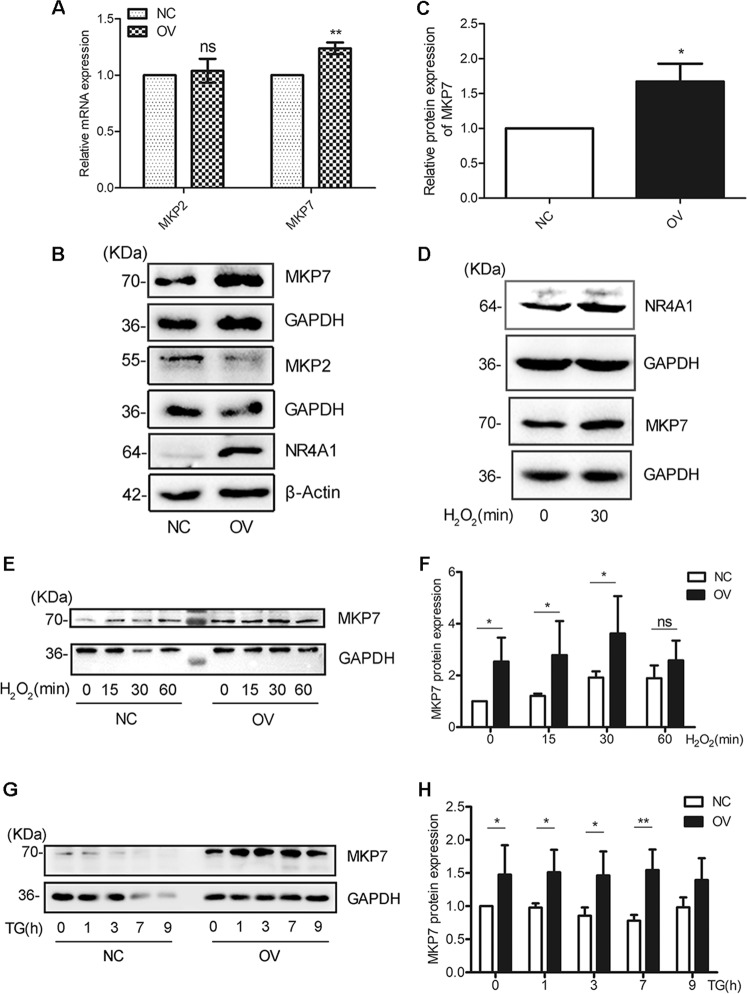
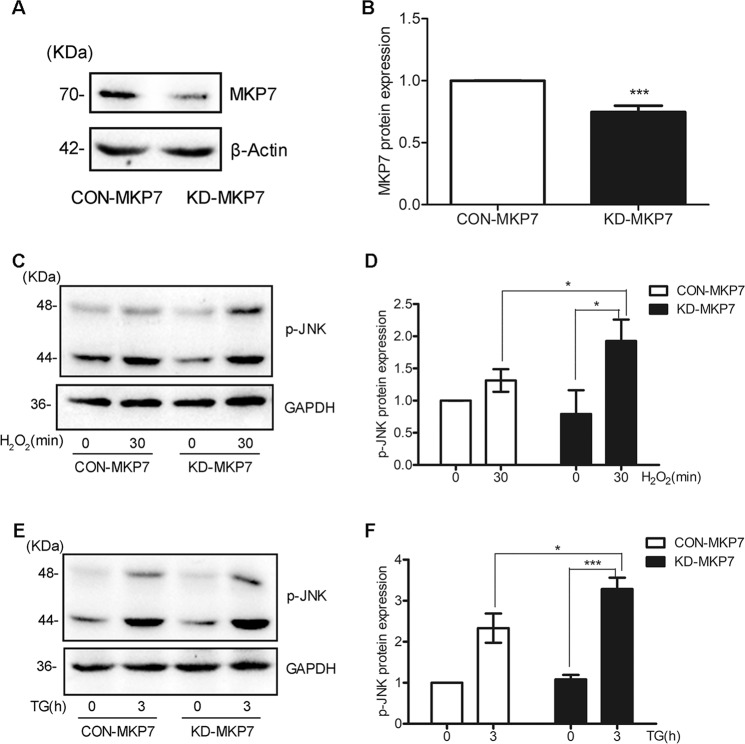
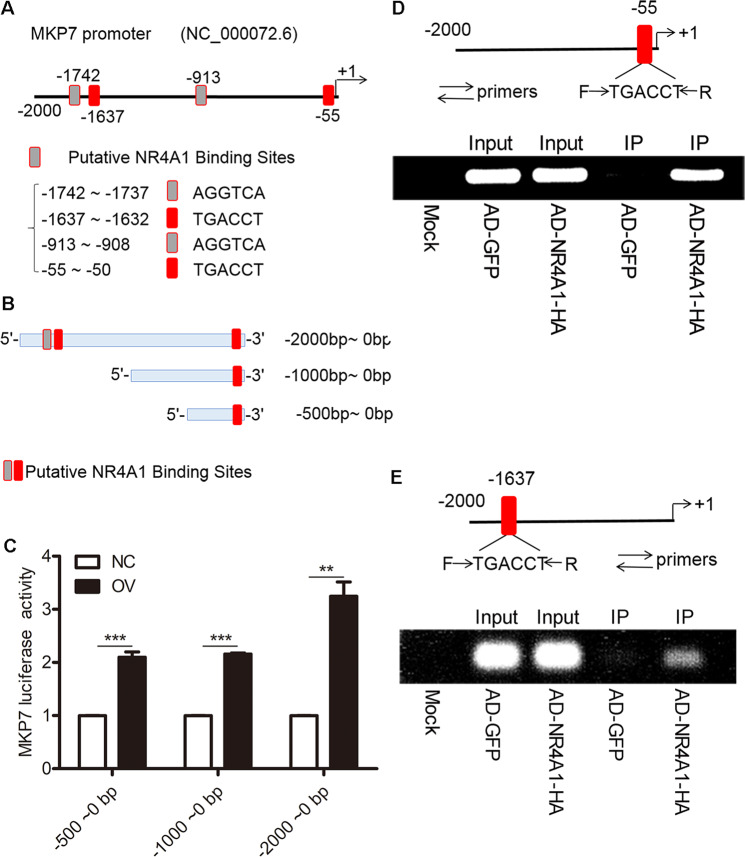
Under adverse conditions, such as sustained or chronic hyperglycemia or hyperlipidemia, ROS (reactive oxygen species) or/and ER-stress (endoplasmic reticulum stress) will be induced in pancreatic β cells. ROS or ER-stress damages β-cells even leads to apoptosis. Previously we found ROS or ER-stress resulted in JNK activation in β cells and overexpressing NR4A1 in MIN6 cells reduced JNK activation via modulating cbl-b expression and subsequent degrading the upstream JNK kinase (MKK4). To search other possible mechanisms, we found the mRNA level and protein level of MKP7 (a phosphatase for phospho-JNK) were dramatic reduced in pancreatic β cells in the islets from NR4A1 KO mice compared with that from wild type mice. To confirm what we found in animals, we applied pancreatic β cells (MIN6 cells) and found that the expression of MKP7 was increased in NR4A1-overexpression MIN6 cells. We further found that knocking down the expression of MKP7 increased the p-JNK level in pancreatic β cells upon treatment with TG or HO. After that, we figured out that NR4A1 did enhance the transactivation of the MKP7 promoter by physical association with two putative binding sites. In sum, NR4A1 attenuates JNK phosphorylation incurred by ER-stress or ROS partially via enhancing MKP7 expression, potentially decreases pancreatic β cell apoptosis induced by ROS or ER-stress. Our finding provides a clue for diabetes prevention.
在诸如持续性或慢性高血糖或高血脂等不利条件下,胰腺β细胞中会诱导产生活性氧(ROS)或/和内质网应激(ER应激)。ROS或ER应激会损害β细胞,甚至导致细胞凋亡。此前我们发现,ROS或ER应激会导致β细胞中的JNK激活,而在MIN6细胞中过表达NR4A1可通过调节cbl-b表达并随后降解上游JNK激酶(MKK4)来降低JNK激活。为了寻找其他可能的机制,我们发现与野生型小鼠相比,NR4A1基因敲除小鼠胰岛中的胰腺β细胞中MKP7(一种磷酸化JNK的磷酸酶)的mRNA水平和蛋白质水平显著降低。为了证实我们在动物实验中的发现,我们应用了胰腺β细胞(MIN6细胞),发现NR4A1过表达的MIN6细胞中MKP7的表达增加。我们进一步发现,敲低MKP7的表达会增加用TG或HO处理后的胰腺β细胞中的p-JNK水平。之后,我们发现NR4A1确实通过与两个假定的结合位点物理结合来增强MKP7启动子的反式激活。总之,NR4A1部分通过增强MKP7表达来减弱由ER应激或ROS引起的JNK磷酸化,可能会减少由ROS或ER应激诱导的胰腺β细胞凋亡。我们的发现为糖尿病预防提供了一条线索。