Zhu Yanping, Klegseth Matthew, Bao Yi, Hoehler Matthew S, Choe Lisa, Chen Genda
Department of Civil, Architectural and Environmental Engineering, Missouri University of Science and Technology, USA.
Department of Civil, Environmental and Ocean Engineering, Stevens Institute of Technology, USA.
Fire Saf J. 2021;121. doi: 10.1016/j.firesaf.2021.103275.
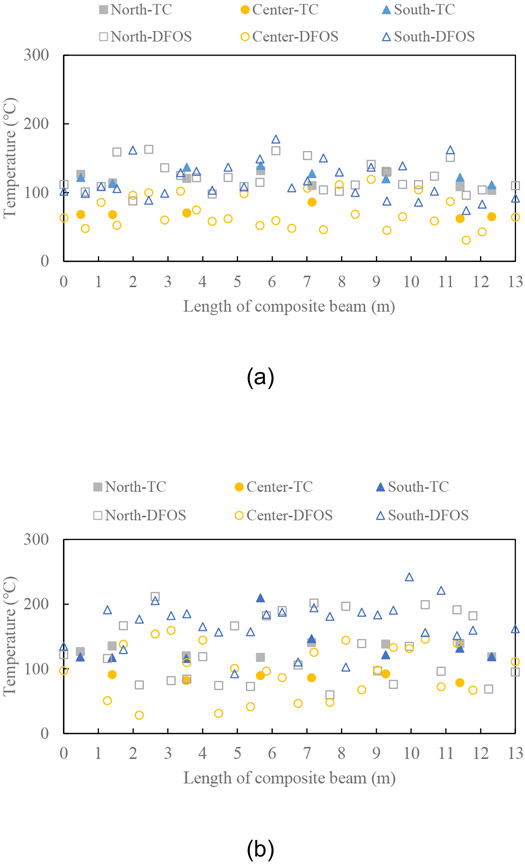
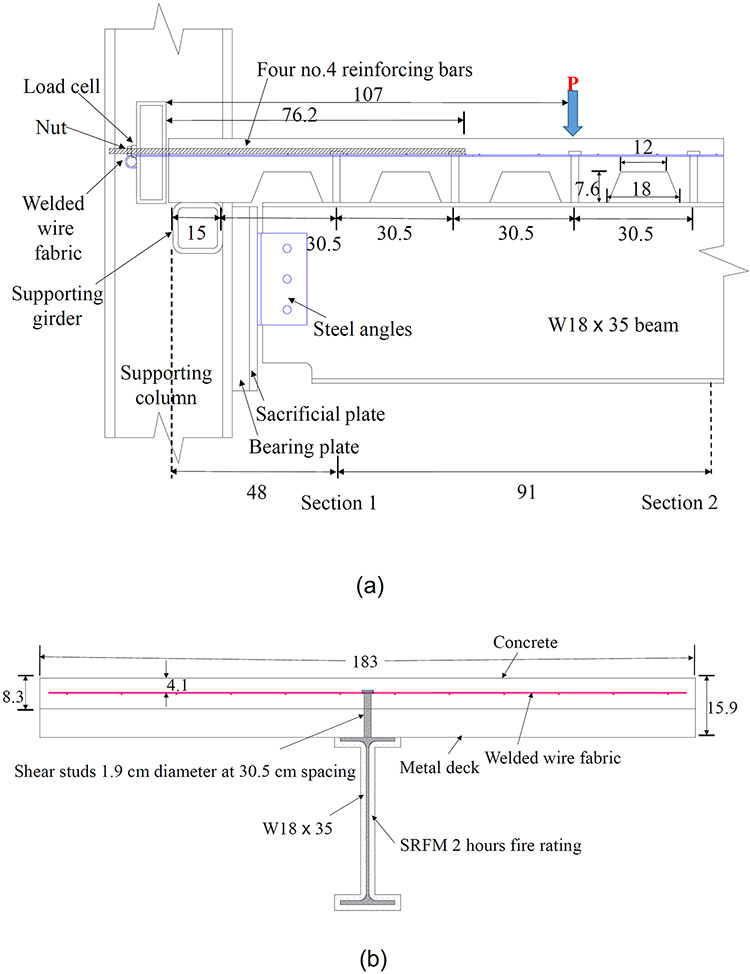
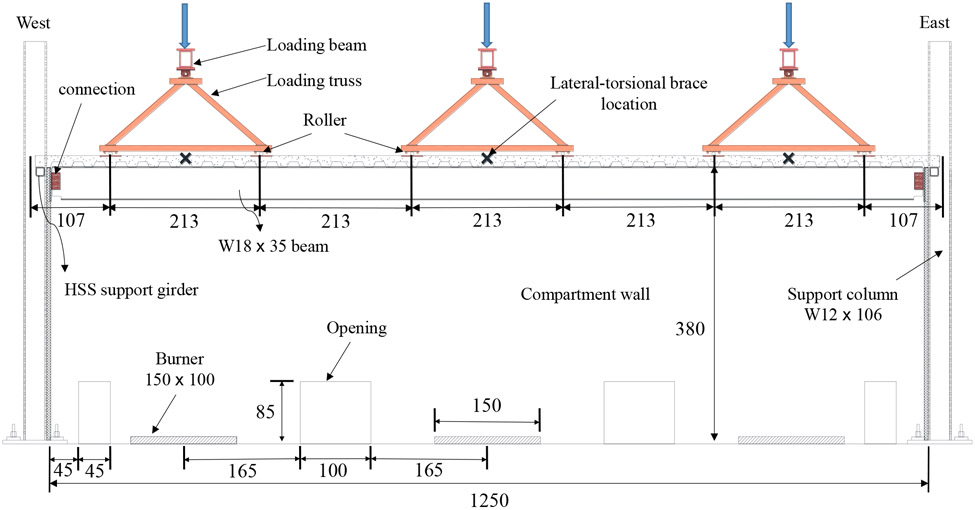
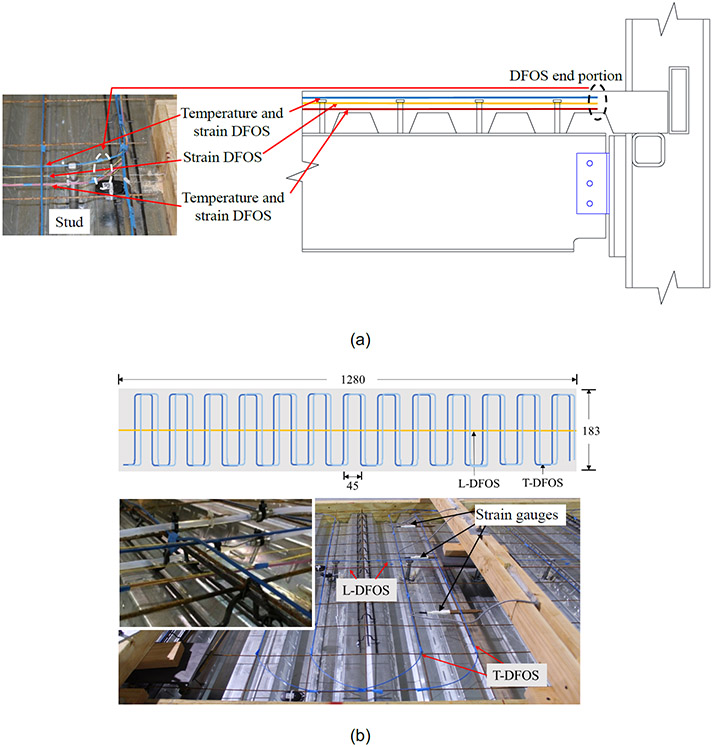
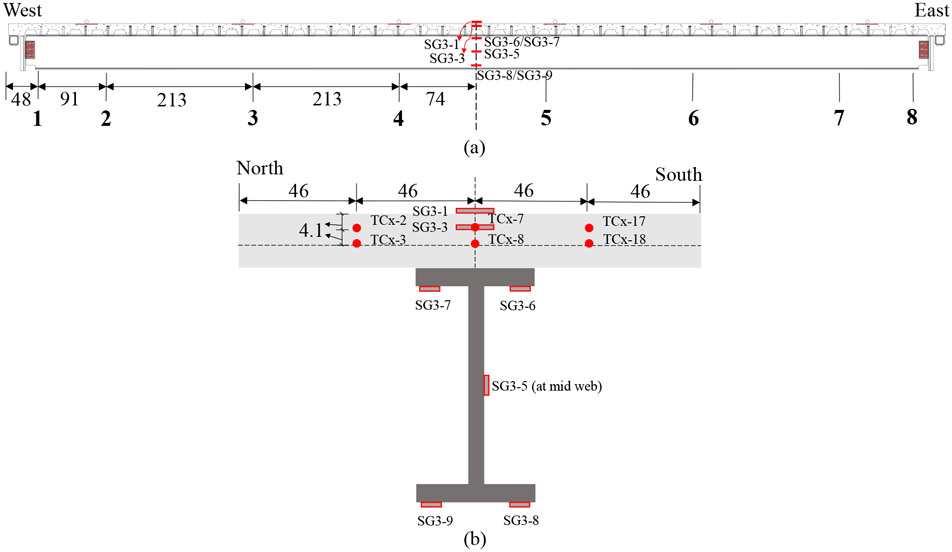
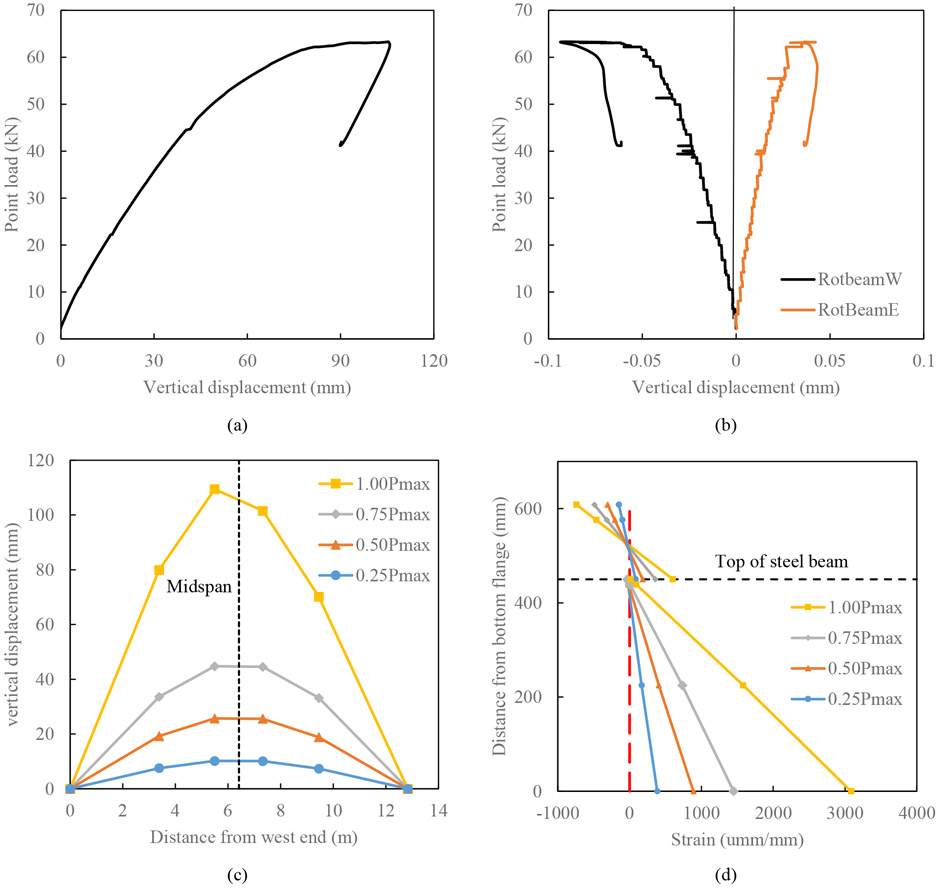
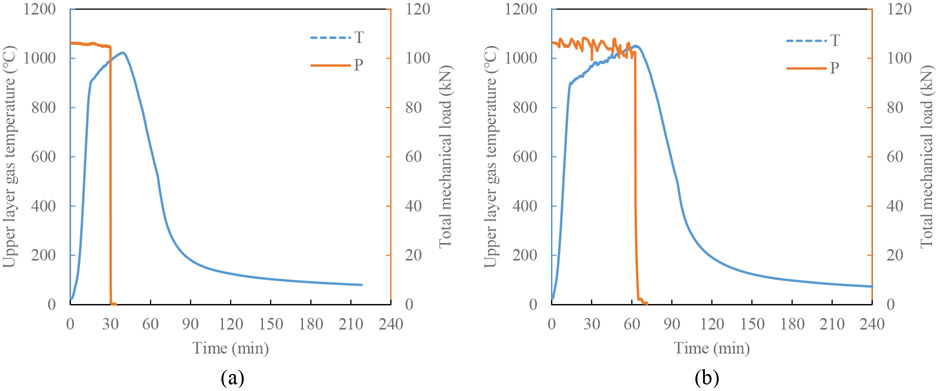
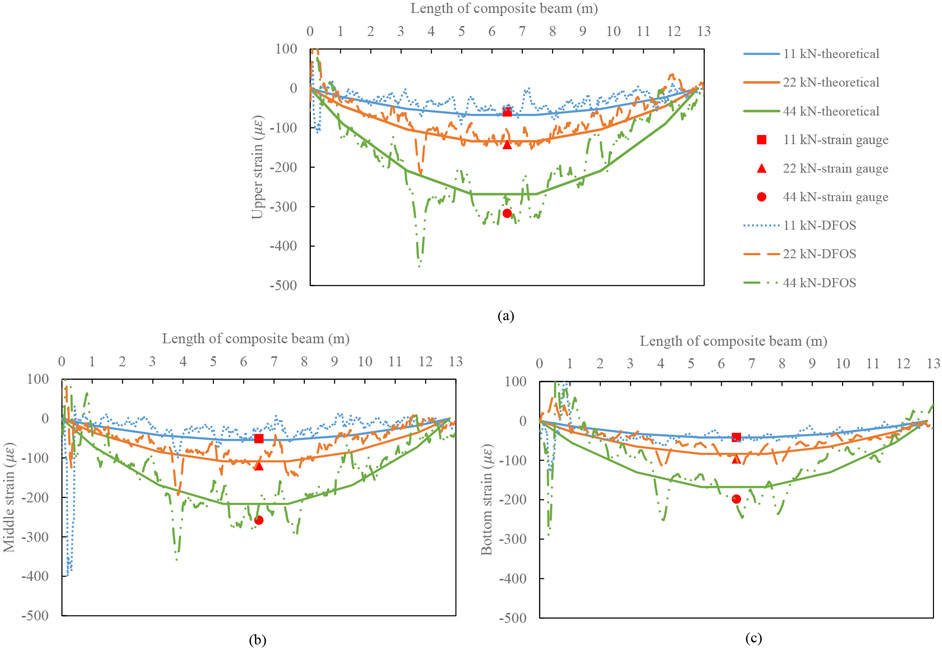
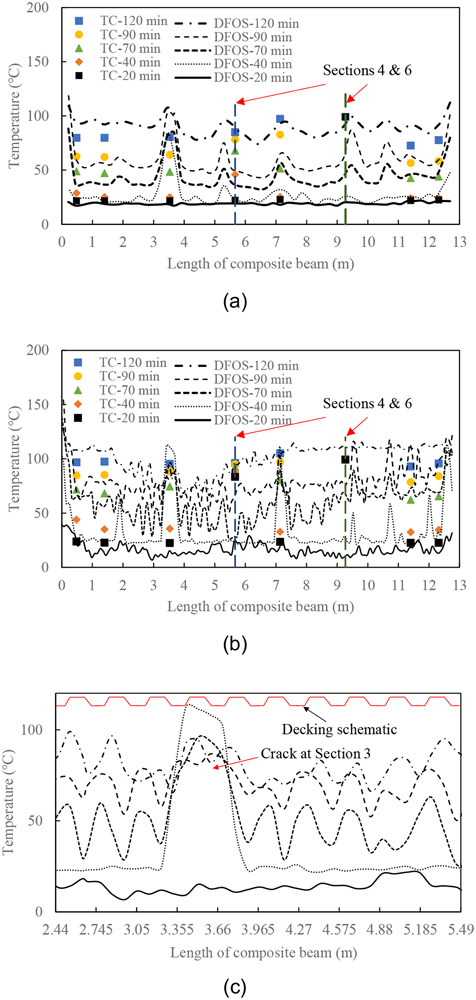
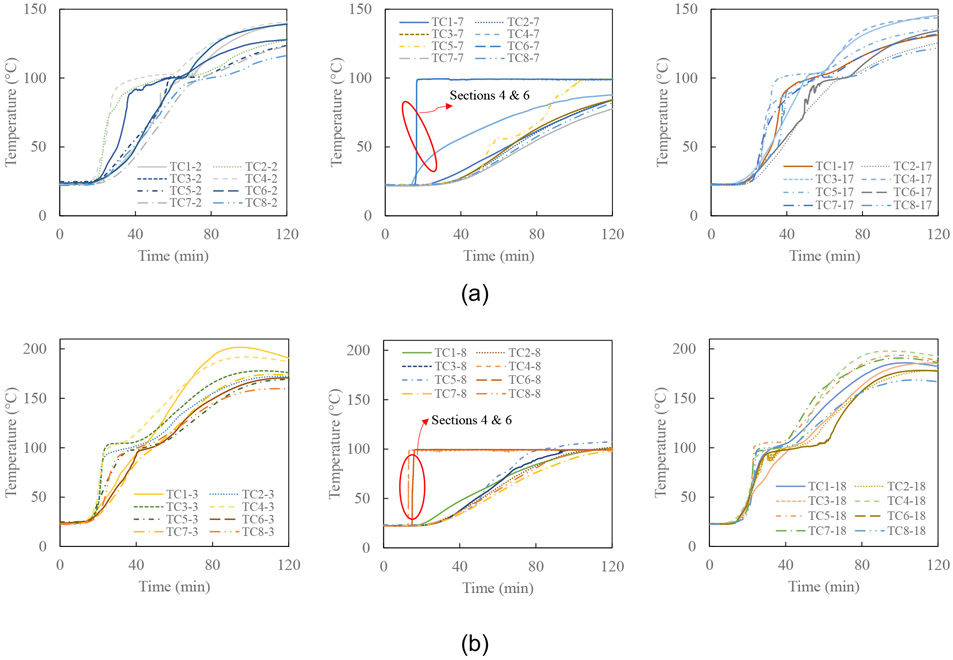
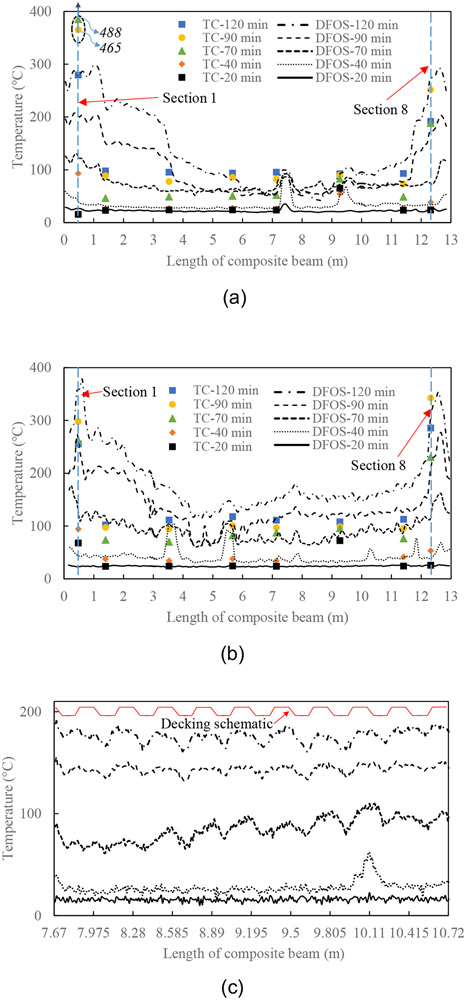
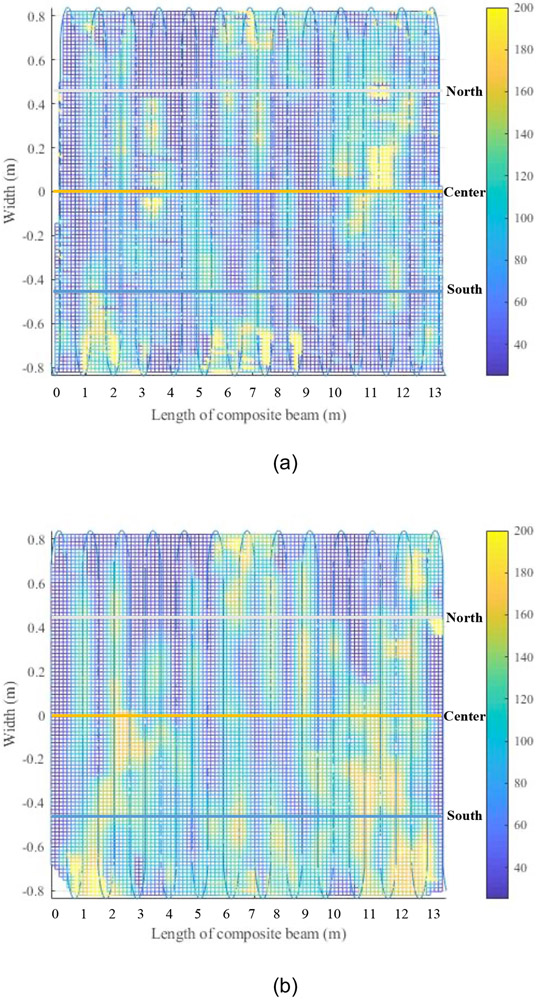
This study explores an instrumentation strategy using distributed fiber optic sensors to measure strain and temperature through the concrete volume in large-scale structures. Single-mode optical fibers were deployed in three 12.8 m long steel and concrete composite floor specimens tested under mechanical or combined mechanical and fire loading. The concrete slab in each specimen was instrumented with five strain and temperature fiber optic sensors along the centerline of the slab to determine the variation of the measurands through the depth of the concrete. Two additional fiber optic temperature sensors were arranged in a zigzag pattern at mid-depth in the concrete to map the horizontal spatial temperature distribution across each slab. Pulse pre-pump Brillouin optical time domain analysis (PPP-BOTDA) was used to determine strains and temperatures at thousands of locations at time intervals of a few minutes. Comparisons with co-located strain gauges and theoretical calculations indicate good agreement in overall spatial distribution along the length of the beam tested at ambient temperature, while the fiber optic sensors additionally capture strain fluctuations associated with local geometric variations in the specimen. Strain measurements with the distributed fiber optic sensors at elevated temperatures were unsuccessful. Comparisons with co-located thermocouples show that while the increased spatial resolution provides new insights about temperature phenomena, challenges for local temperature measurements were encountered during this first attempt at application to large-scale specimens.
本研究探索了一种仪器策略,该策略使用分布式光纤传感器来测量大型结构中混凝土体积内的应变和温度。在三个12.8米长的钢与混凝土组合楼板试件上布置了单模光纤,这些试件在机械荷载或机械与火灾组合荷载作用下进行测试。每个试件的混凝土板沿着板的中心线布置了五个应变和温度光纤传感器,以确定被测物理量在混凝土深度方向上的变化。另外两个光纤温度传感器以之字形图案布置在混凝土的中间深度处,以绘制每个板的水平空间温度分布。脉冲预泵布里渊光时域分析(PPP-BOTDA)用于每隔几分钟确定数千个位置处的应变和温度。与同位置应变片和理论计算的比较表明,在环境温度下沿测试梁长度的整体空间分布方面具有良好的一致性,而光纤传感器还能捕捉与试件局部几何变化相关的应变波动。在高温下使用分布式光纤传感器进行应变测量未成功。与同位置热电偶的比较表明,虽然空间分辨率的提高为温度现象提供了新的见解,但在首次应用于大型试件时,局部温度测量遇到了挑战。