McNeill Jessica, Rudyk Christopher, Hildebrand Michael E, Salmaso Natalina
Department of Neuroscience, Carleton University, Ottawa, ON, Canada.
Front Cell Neurosci. 2021 May 20;15:644126. doi: 10.3389/fncel.2021.644126. eCollection 2021.
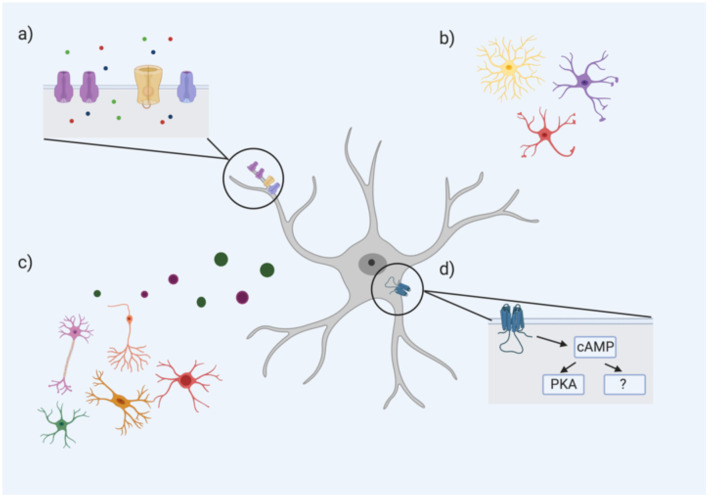
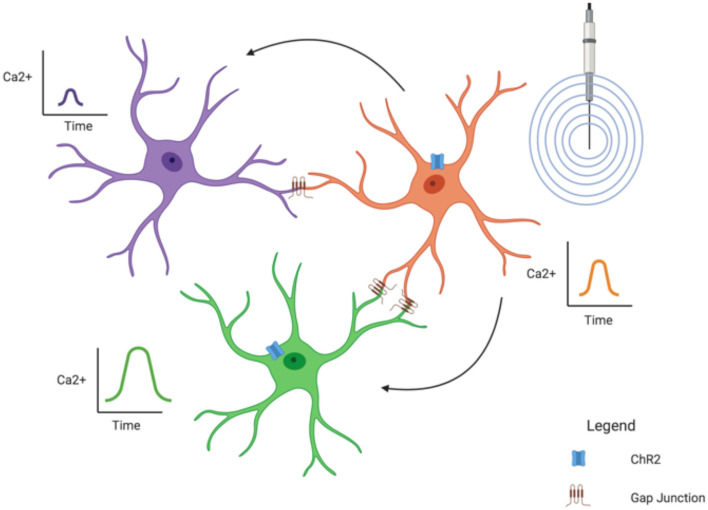
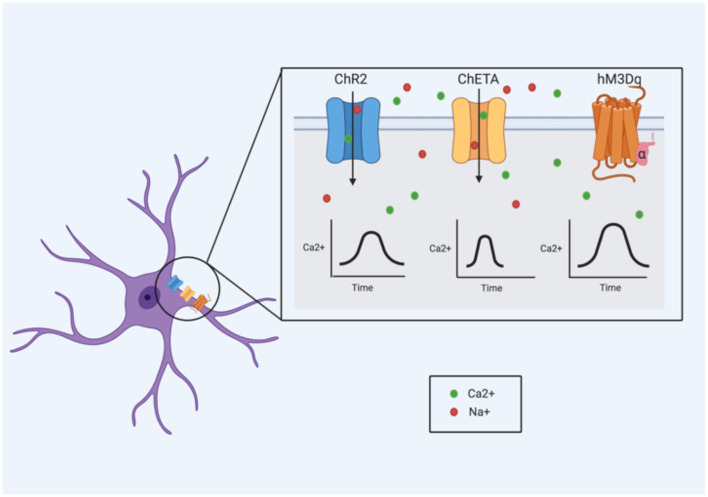
Astrocytes comprise a heterogeneous cell population characterized by distinct morphologies, protein expression and function. Unlike neurons, astrocytes do not generate action potentials, however, they are electrically dynamic cells with extensive electrophysiological heterogeneity and diversity. Astrocytes are hyperpolarized cells with low membrane resistance. They are heavily involved in the modulation of K and express an array of different voltage-dependent and voltage-independent channels to help with this ion regulation. In addition to these K channels, astrocytes also express several different types of Na channels; intracellular Na signaling in astrocytes has been linked to some of their functional properties. The physiological hallmark of astrocytes is their extensive intracellular Ca signaling cascades, which vary at the regional, subregional, and cellular levels. In this review article, we highlight the physiological properties of astrocytes and the implications for their function and influence of network and synaptic activity. Furthermore, we discuss the implications of these differences in the context of optogenetic and DREADD experiments and consider whether these tools represent physiologically relevant techniques for the interrogation of astrocyte function.
星形胶质细胞是一类异质性细胞群体,具有独特的形态、蛋白质表达和功能。与神经元不同,星形胶质细胞不会产生动作电位,然而,它们是具有广泛电生理异质性和多样性的电动态细胞。星形胶质细胞是具有低膜电阻的超极化细胞。它们大量参与钾离子的调节,并表达一系列不同的电压依赖性和电压非依赖性通道来协助这种离子调节。除了这些钾离子通道,星形胶质细胞还表达几种不同类型的钠离子通道;星形胶质细胞内的钠离子信号传导与它们的一些功能特性有关。星形胶质细胞的生理标志是其广泛的细胞内钙信号级联反应,这些反应在区域、亚区域和细胞水平上有所不同。在这篇综述文章中,我们重点介绍了星形胶质细胞的生理特性及其对网络和突触活动的功能和影响。此外,我们在光遗传学和DREADD实验的背景下讨论了这些差异的影响,并考虑这些工具是否代表用于探究星形胶质细胞功能的生理相关技术。