Nakamura Akihiro, Suzuki Yasuyuki, Milosevic Matija, Nomura Taishin
Department of Mechanical Science and Bioengineering, Graduate School of Engineering Science, Osaka University, Osaka, Japan.
Front Syst Neurosci. 2021 May 21;15:660434. doi: 10.3389/fnsys.2021.660434. eCollection 2021.
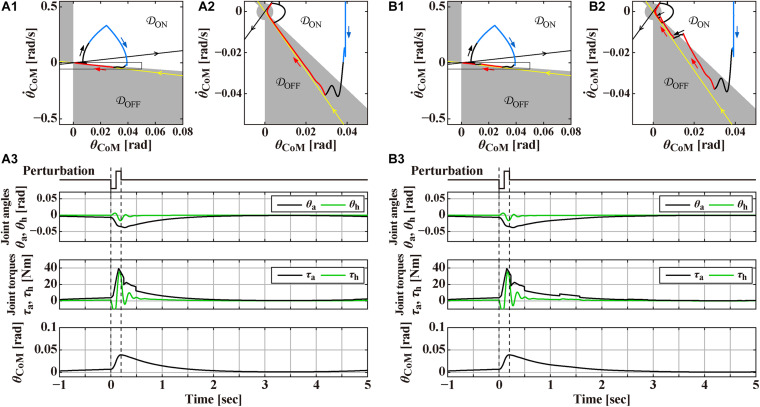
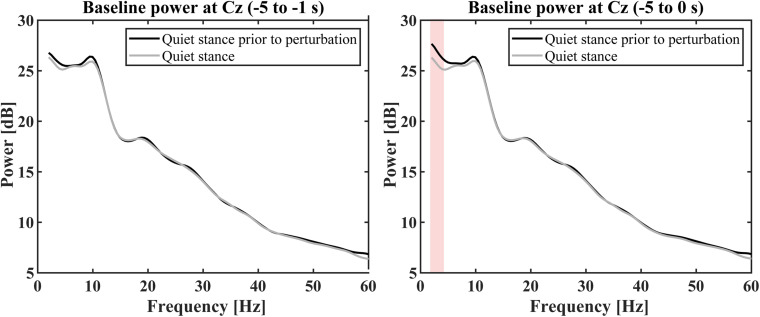
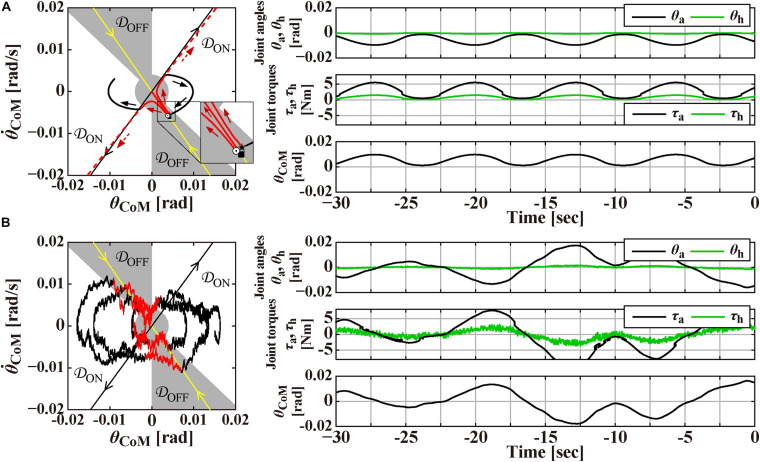
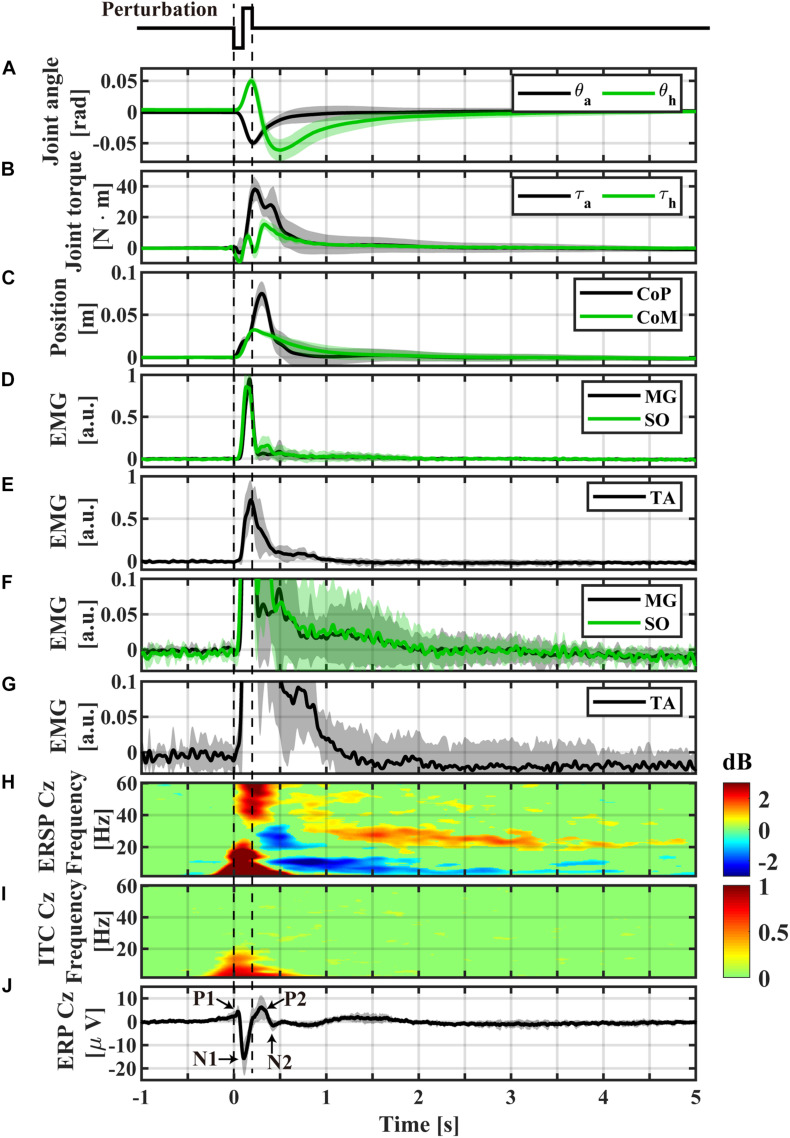
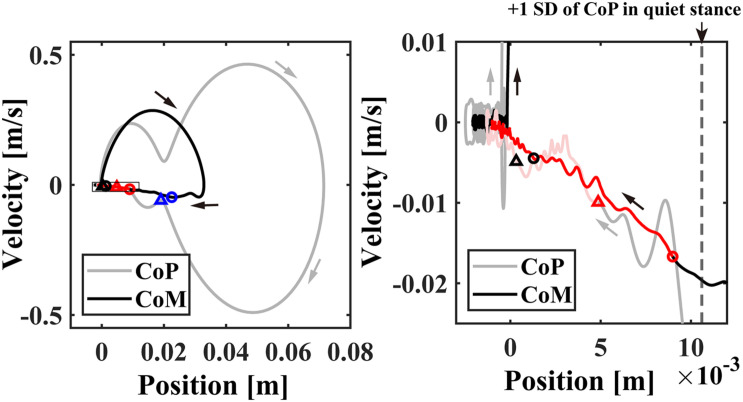
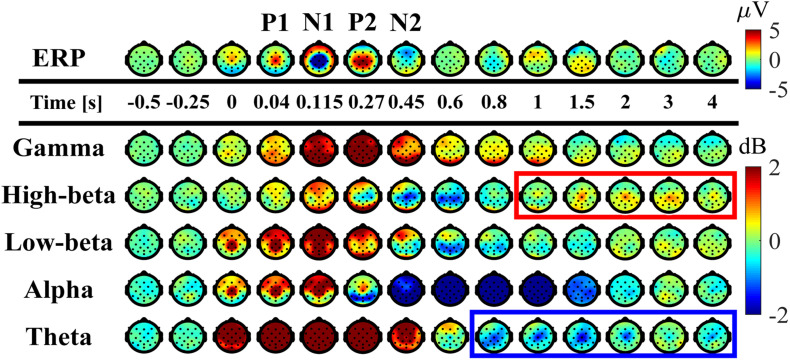
Movement related beta band cortical oscillations, including beta rebound after execution and/or suppression of movement, have drawn attention in upper extremity motor control literature. However, fewer studies focused on beta band oscillations during postural control in upright stance. In this preliminary study, we examined beta rebound and other components of electroencephalogram (EEG) activity during perturbed upright stance to investigate supraspinal contributions to postural stabilization. Particularly, we aimed to clarify the timing and duration of beta rebound within a non-sustained, but long-lasting postural recovery process that occurs more slowly compared to upper extremities. To this end, EEG signals were acquired from nine healthy young adults in response to a brief support-surface perturbation, together with the center of pressure, the center of mass and electromyogram (EMG) activities of ankle muscles. Event-related potentials (ERPs) and event-related spectral perturbations were computed from EEG data using the perturbation-onset as a triggering event. After short-latency (<0.3 s) ERPs, our results showed a decrease in high-beta band oscillations (event-related desynchronization), which was followed by a significant increase (event-related synchronization) in the same band, as well as a decrease in theta band oscillations. Unlike during upper extremity motor tasks, the beta rebound in this case was initiated before the postural recovery was completed, and sustained for as long as 3 s with small EMG responses for the first half period, followed by no excessive EMG activities for the second half period. We speculate that those novel characteristics of beta rebound might be caused by slow postural dynamics along a stable manifold of the unstable saddle-type upright equilibrium of the postural control system without active feedback control, but with active monitoring of the postural state, in the framework of the intermittent control.
与运动相关的β波段皮层振荡,包括运动执行和/或抑制后的β反弹,已在上肢运动控制文献中受到关注。然而,较少有研究关注直立姿势下姿势控制过程中的β波段振荡。在这项初步研究中,我们检查了在受扰直立姿势期间脑电图(EEG)活动的β反弹和其他成分,以研究脊髓上部分对姿势稳定的贡献。特别是,我们旨在阐明在一个非持续但持久的姿势恢复过程中β反弹的时间和持续时间,该过程与上肢相比发生得更慢。为此,我们采集了9名健康年轻成年人在短暂支撑面扰动后的EEG信号,同时采集了压力中心、质心和踝关节肌肉的肌电图(EMG)活动。以扰动开始作为触发事件,从EEG数据中计算事件相关电位(ERP)和事件相关频谱扰动。在短潜伏期(<0.3秒)的ERP之后,我们的结果显示高β波段振荡减少(事件相关去同步),随后同一波段显著增加(事件相关同步),以及θ波段振荡减少。与上肢运动任务不同,这种情况下的β反弹在姿势恢复完成之前就开始了,并持续长达3秒,前半段有小的EMG反应,后半段没有过度的EMG活动。我们推测,β反弹的这些新特征可能是由姿势控制系统不稳定鞍型直立平衡的稳定流形上缓慢的姿势动力学引起的,在间歇控制框架下,没有主动反馈控制,但有对姿势状态的主动监测。