• 文献检索
  • 文档翻译
  • 深度研究
  • 学术资讯
  • Suppr Zotero 插件Zotero 插件
  • 邀请有礼
  • 套餐&价格
  • 历史记录
应用&插件
Suppr Zotero 插件Zotero 插件浏览器插件Mac 客户端Windows 客户端微信小程序
定价
高级版会员购买积分包购买API积分包
服务
文献检索文档翻译深度研究API 文档MCP 服务
关于我们
关于 Suppr公司介绍联系我们用户协议隐私条款
关注我们

Suppr 超能文献

核心技术专利:CN118964589B侵权必究
粤ICP备2023148730 号-1Suppr @ 2026

文献检索

告别复杂PubMed语法,用中文像聊天一样搜索,搜遍4000万医学文献。AI智能推荐,让科研检索更轻松。

立即免费搜索

文件翻译

保留排版,准确专业,支持PDF/Word/PPT等文件格式,支持 12+语言互译。

免费翻译文档

深度研究

AI帮你快速写综述,25分钟生成高质量综述,智能提取关键信息,辅助科研写作。

立即免费体验

通过计算建模与仿真定位爆炸所致创伤性脑损伤的临床模式

Localizing Clinical Patterns of Blast Traumatic Brain Injury Through Computational Modeling and Simulation.

作者信息

Miller Scott T, Cooper Candice F, Elsbernd Paul, Kerwin Joseph, Mejia-Alvarez Ricardo, Willis Adam M

机构信息

Computational Solid Mechanics & Structural Dynamics, Sandia National Laboratories, Albuquerque, NM, United States.

Terminal Ballistics Technology, Sandia National Laboratories, Albuquerque, NM, United States.

出版信息

Front Neurol. 2021 May 20;12:547655. doi: 10.3389/fneur.2021.547655. eCollection 2021.

DOI:10.3389/fneur.2021.547655
PMID:34093380
原文链接:https://pmc.ncbi.nlm.nih.gov/articles/PMC8173077/
Abstract

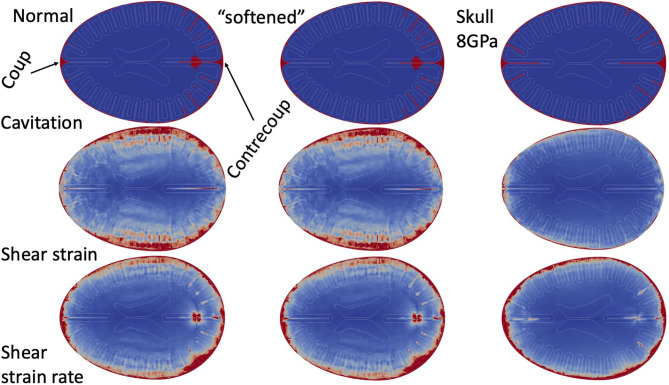
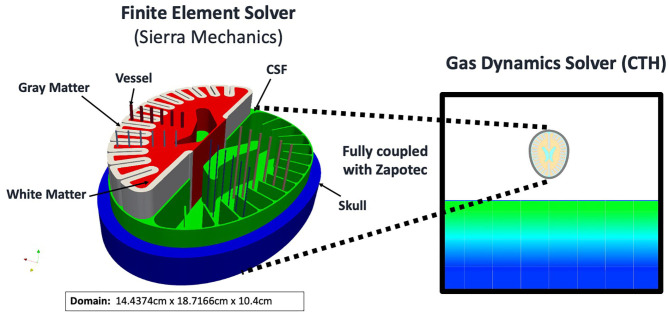
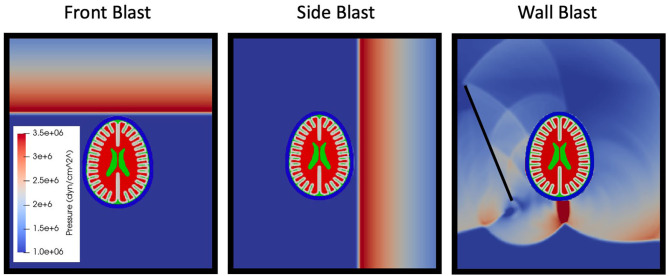
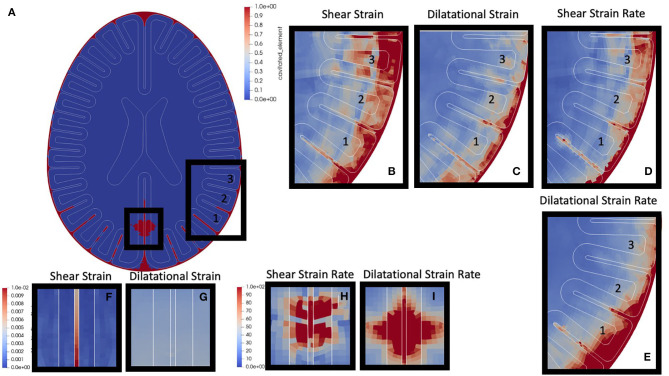
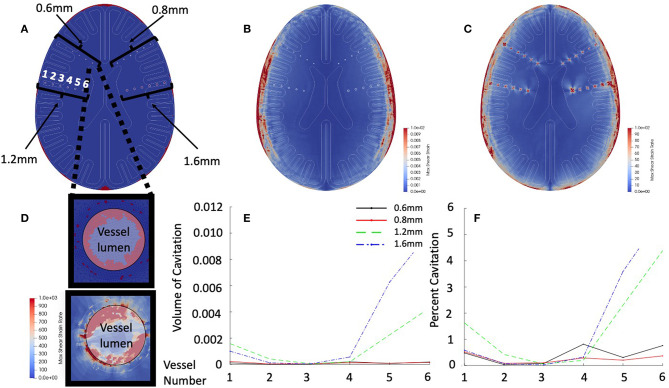
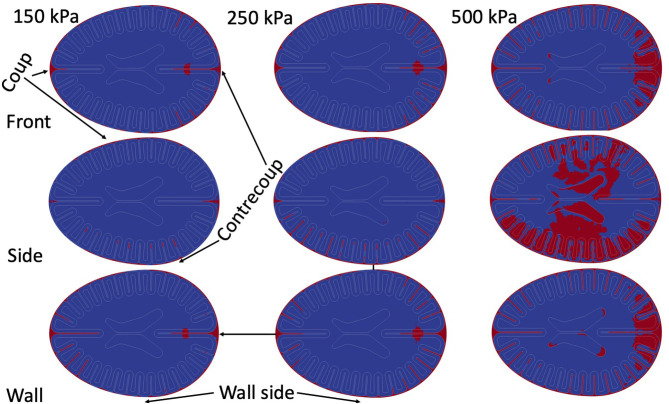
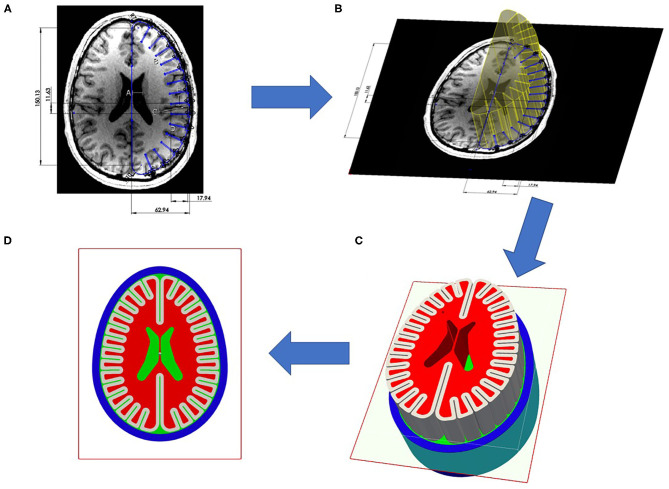
Blast traumatic brain injury is ubiquitous in modern military conflict with significant morbidity and mortality. Yet the mechanism by which blast overpressure waves cause specific intracranial injury in humans remains unclear. Reviewing of both the clinical experience of neurointensivists and neurosurgeons who treated service members exposed to blast have revealed a pattern of injury to cerebral blood vessels, manifested as subarachnoid hemorrhage, pseudoaneurysm, and early diffuse cerebral edema. Additionally, a seminal neuropathologic case series of victims of blast traumatic brain injury (TBI) showed unique astroglial scarring patterns at the following tissue interfaces: subpial glial plate, perivascular, periventricular, and cerebral gray-white interface. The uniting feature of both the clinical and neuropathologic findings in blast TBI is the co-location of injury to material interfaces, be it solid-fluid or solid-solid interface. This motivates the hypothesis that blast TBI is an injury at the intracranial mechanical interfaces. In order to investigate the intracranial interface dynamics, we performed a novel set of computational simulations using a model human head simplified but containing models of gyri, sulci, cerebrospinal fluid (CSF), ventricles, and vasculature with high spatial resolution of the mechanical interfaces. Simulations were performed within a hybrid Eulerian-Lagrangian simulation suite (CTH coupled Zapotec to Sierra Mechanics). Because of the large computational meshes, simulations required high performance computing resources. Twenty simulations were performed across multiple exposure scenarios-overpressures of 150, 250, and 500 kPa with 1 ms overpressure durations-for multiple blast exposures (front blast, side blast, and wall blast) across large variations in material model parameters (brain shear properties, skull elastic moduli). All simulations predict fluid cavitation within CSF (where intracerebral vasculature reside) with cavitation occurring deep and diffusely into cerebral sulci. These cavitation events are adjacent to high interface strain rates at the subpial glial plate. Larger overpressure simulations (250 and 500kPa) demonstrated intraventricular cavitation-also associated with adjacent high periventricular strain rates. Additionally, models of embedded intraparenchymal vascular structures-with diameters as small as 0.6 mm-predicted intravascular cavitation with adjacent high perivascular strain rates. The co-location of local maxima of strain rates near several of the regions that appear to be preferentially damaged in blast TBI (vascular structures, subpial glial plate, perivascular regions, and periventricular regions) suggest that intracranial interface dynamics may be important in understanding how blast overpressures leads to intracranial injury.

摘要
https://cdn.ncbi.nlm.nih.gov/pmc/blobs/71f7/8173077/b85545245e83/fneur-12-547655-g0007.jpg
https://cdn.ncbi.nlm.nih.gov/pmc/blobs/71f7/8173077/feadf7196ec0/fneur-12-547655-g0001.jpg
https://cdn.ncbi.nlm.nih.gov/pmc/blobs/71f7/8173077/e80fc5700add/fneur-12-547655-g0002.jpg
https://cdn.ncbi.nlm.nih.gov/pmc/blobs/71f7/8173077/0820965aaab8/fneur-12-547655-g0003.jpg
https://cdn.ncbi.nlm.nih.gov/pmc/blobs/71f7/8173077/57ba2ddc6fe8/fneur-12-547655-g0004.jpg
https://cdn.ncbi.nlm.nih.gov/pmc/blobs/71f7/8173077/913ce6581e8c/fneur-12-547655-g0005.jpg
https://cdn.ncbi.nlm.nih.gov/pmc/blobs/71f7/8173077/03063eb50ca8/fneur-12-547655-g0006.jpg
https://cdn.ncbi.nlm.nih.gov/pmc/blobs/71f7/8173077/b85545245e83/fneur-12-547655-g0007.jpg
https://cdn.ncbi.nlm.nih.gov/pmc/blobs/71f7/8173077/feadf7196ec0/fneur-12-547655-g0001.jpg
https://cdn.ncbi.nlm.nih.gov/pmc/blobs/71f7/8173077/e80fc5700add/fneur-12-547655-g0002.jpg
https://cdn.ncbi.nlm.nih.gov/pmc/blobs/71f7/8173077/0820965aaab8/fneur-12-547655-g0003.jpg
https://cdn.ncbi.nlm.nih.gov/pmc/blobs/71f7/8173077/57ba2ddc6fe8/fneur-12-547655-g0004.jpg
https://cdn.ncbi.nlm.nih.gov/pmc/blobs/71f7/8173077/913ce6581e8c/fneur-12-547655-g0005.jpg
https://cdn.ncbi.nlm.nih.gov/pmc/blobs/71f7/8173077/03063eb50ca8/fneur-12-547655-g0006.jpg
https://cdn.ncbi.nlm.nih.gov/pmc/blobs/71f7/8173077/b85545245e83/fneur-12-547655-g0007.jpg

爆炸所致创伤性脑损伤在现代军事冲突中很常见,具有较高的发病率和死亡率。然而,爆炸超压波导致人类特定颅内损伤的机制仍不清楚。回顾治疗过爆炸伤军人的神经重症监护医生和神经外科医生的临床经验,发现了脑血管损伤的一种模式,表现为蛛网膜下腔出血、假性动脉瘤和早期弥漫性脑水肿。此外,一项关于爆炸所致创伤性脑损伤(TBI)受害者的开创性神经病理学病例系列研究显示,在以下组织界面出现了独特的星形胶质细胞瘢痕形成模式:软脑膜下胶质板、血管周围、脑室周围和脑灰白质界面。爆炸所致TBI临床和神经病理学发现的共同特征是损伤位于物质界面,无论是固液界面还是固固界面。这促使人们提出这样的假设,即爆炸所致TBI是颅内机械界面处的损伤。为了研究颅内界面动力学,我们使用简化的人体头部模型进行了一组新颖的计算模拟,该模型包含脑回、脑沟、脑脊液(CSF)、脑室和血管模型,对机械界面具有高空间分辨率模拟在混合欧拉-拉格朗日模拟套件(CTH与Zapotec耦合到Sierra Mechanics)中进行。由于计算网格较大,模拟需要高性能计算资源。在多种暴露场景下进行了20次模拟——超压分别为150、250和500 kPa,超压持续时间为l ms——针对多种爆炸暴露情况(正面爆炸、侧面爆炸和墙壁爆炸),涉及材料模型参数(脑剪切特性、颅骨弹性模量)的大幅变化。所有模拟均预测脑脊液(脑内血管所在处)内会出现液体空化,空化发生在脑沟深部且广泛分布。这些空化事件与软脑膜下胶质板处高界面应变率相邻。更大超压模拟(250和500 kPa)显示脑室内出现空化——也与相邻的高脑室周围应变率有关。此外,直径小至0.6 mm的脑实质内血管结构模型预测血管内会出现空化,且与相邻的高血管周围应变率有关。在爆炸所致TBI中似乎优先受损的几个区域(血管结构、软脑膜下胶质板、血管周围区域和脑室周围区域)附近,应变率局部最大值的共存表明,颅内界面动力学可能对理解爆炸超压如何导致颅内损伤很重要。
相似文献

1
Localizing Clinical Patterns of Blast Traumatic Brain Injury Through Computational Modeling and Simulation.通过计算建模与仿真定位爆炸所致创伤性脑损伤的临床模式
Front Neurol. 2021 May 20;12:547655. doi: 10.3389/fneur.2021.547655. eCollection 2021.
2
Development of a finite element model for blast brain injury and the effects of CSF cavitation.用于爆炸性脑损伤的有限元模型的建立及脑脊液气穴现象的影响。
Ann Biomed Eng. 2012 Jul;40(7):1530-44. doi: 10.1007/s10439-012-0519-2.
3
Characterisation of interface astroglial scarring in the human brain after blast exposure: a post-mortem case series.爆震暴露后人脑界面星形胶质瘢痕的特征:一项尸检病例系列研究。
Lancet Neurol. 2016 Aug;15(9):944-953. doi: 10.1016/S1474-4422(16)30057-6. Epub 2016 Jun 9.
4
Investigation of cavitation as a possible damage mechanism in blast-induced traumatic brain injury.研究空化作用是否为爆炸所致创伤性脑损伤的一种可能损伤机制。
J Neurotrauma. 2012 Jul 1;29(10):1970-81. doi: 10.1089/neu.2011.2224. Epub 2012 May 14.
5
Does Blast Exposure to the Torso Cause a Blood Surge to the Brain?躯干遭受爆炸冲击会导致血液涌向大脑吗?
Front Bioeng Biotechnol. 2020 Dec 17;8:573647. doi: 10.3389/fbioe.2020.573647. eCollection 2020.
6
Non-Lethal Blasts can Generate Cavitation in Cerebrospinal Fluid While Severe Helmeted Impacts Cannot: A Novel Mechanism for Blast Brain Injury.非致命性爆炸可在脑脊液中产生空化现象,而严重的头盔撞击则不会:一种新型的爆炸脑损伤机制。
Front Bioeng Biotechnol. 2022 Jul 7;10:808113. doi: 10.3389/fbioe.2022.808113. eCollection 2022.
7
Cerebral Vasculature Influences Blast-Induced Biomechanical Responses of Human Brain Tissue.脑血管影响爆炸引起的人脑组织生物力学反应。
Front Bioeng Biotechnol. 2021 Nov 4;9:744808. doi: 10.3389/fbioe.2021.744808. eCollection 2021.
8
Intracranial venous injury, thrombosis and repair as hallmarks of mild blast traumatic brain injury in rats: Lessons from histological and immunohistochemical studies of decalcified sectioned heads and correlative microarray analysis.颅内静脉损伤、血栓形成及修复作为大鼠轻度爆炸伤性脑损伤的特征:来自脱钙切片头部组织学和免疫组织化学研究以及相关微阵列分析的经验教训
J Neurosci Methods. 2016 Oct 15;272:56-68. doi: 10.1016/j.jneumeth.2016.02.001. Epub 2016 Feb 6.
9
A 3-D Rat Brain Model for Blast-Wave Exposure: Effects of Brain Vasculature and Material Properties.用于爆震波暴露的 3D 大鼠脑模型:脑血管和材料特性的影响。
Ann Biomed Eng. 2019 Sep;47(9):2033-2044. doi: 10.1007/s10439-019-02277-2. Epub 2019 May 3.
10
Biomechanical assessment of brain dynamic responses due to blast pressure waves.基于爆炸压力波的脑动态响应的生物力学评估。
Ann Biomed Eng. 2010 Feb;38(2):490-504. doi: 10.1007/s10439-009-9813-z. Epub 2009 Oct 6.

引用本文的文献

1
Macroscopic changes in aquaporin-4 underlie blast traumatic brain injury-related impairment in glymphatic function.水通道蛋白-4 的宏观变化是爆炸创伤性脑损伤相关神经淋巴功能障碍的基础。
Brain. 2024 Jun 3;147(6):2214-2229. doi: 10.1093/brain/awae065.
2
Considerations for the assessment of blast exposure in service members and veterans.现役军人和退伍军人爆炸暴露评估的注意事项。
Front Neurol. 2024 Apr 15;15:1383710. doi: 10.3389/fneur.2024.1383710. eCollection 2024.
3
Study protocol: Identifying transcriptional regulatory alterations of chronic effects of blast and disturbed sleep in United States Veterans.

本文引用的文献

1
Materials Characterization of Cranial Simulants for Blast-Induced Traumatic Brain Injury.爆炸所致创伤性脑损伤颅骨模拟物的材料特性
Mil Med. 2020 Jan 7;185(Suppl 1):205-213. doi: 10.1093/milmed/usz228.
2
Blast-induced traumatic brain injury: the experience from a level I trauma center in southern Thailand.爆炸所致创伤性脑损伤:来自泰国南部一家一级创伤中心的经验。
Neurosurg Focus. 2018 Dec 1;45(6):E7. doi: 10.3171/2018.8.FOCUS18311.
3
Effects on Neurons and Hippocampal Slices by Single and Multiple Primary Blast Pressure Waves From Detonating Spherical Cyclotrimethylenetrinitramine (RDX) Explosive Charges.
研究方案:鉴定美国退伍军人爆震和睡眠紊乱慢性效应的转录调控改变。
PLoS One. 2024 Mar 27;19(3):e0301026. doi: 10.1371/journal.pone.0301026. eCollection 2024.
4
Simultaneous High-Frame-Rate Acoustic Plane-Wave and Optical Imaging of Intracranial Cavitation in Polyacrylamide Brain Phantoms during Blunt Force Impact.钝力撞击过程中聚丙烯酰胺脑模型内颅内空化的同步高帧率声平面波和光学成像
Bioengineering (Basel). 2024 Jan 29;11(2):132. doi: 10.3390/bioengineering11020132.
5
Neurotrauma: 2023 Update.神经创伤:2023年最新进展
Free Neuropathol. 2023 Sep 20;4:14. doi: 10.17879/freeneuropathology-2023-5076. eCollection 2023 Jan.
6
Low-intensity open-field blast exposure effects on neurovascular unit ultrastructure in mice.低强度开放式爆炸暴露对小鼠神经血管单元超微结构的影响。
Acta Neuropathol Commun. 2023 Sep 6;11(1):144. doi: 10.1186/s40478-023-01636-4.
7
Neurotrauma: 2022 update.神经创伤:2022年更新版。
Free Neuropathol. 2022 Nov 15;3:26. doi: 10.17879/freeneuropathology-2022-4495. eCollection 2022 Jan.
8
Measuring vibrations on a biofidelic brain using ferroelectret nanogenerator.使用铁电体纳米发电机测量生物逼真大脑上的振动。
Sci Rep. 2023 Jun 2;13(1):8975. doi: 10.1038/s41598-023-35782-5.
9
Long-Term Effects of Repeated Blast Exposure in United States Special Operations Forces Personnel: A Pilot Study Protocol.美国特种作战部队人员重复爆震暴露的长期影响:一项初步研究方案。
J Neurotrauma. 2022 Oct;39(19-20):1391-1407. doi: 10.1089/neu.2022.0030. Epub 2022 Jun 29.
10
Sulcal Cavitation in Linear Head Acceleration: Possible Correlation With Chronic Traumatic Encephalopathy.线性头部加速中的脑沟空洞化:与慢性创伤性脑病的可能关联。
Front Neurol. 2022 Feb 28;13:832370. doi: 10.3389/fneur.2022.832370. eCollection 2022.
球形环三亚甲基三硝胺(RDX)炸药单次和多次初级爆炸压力波对神经元和海马切片的影响。
Mil Med. 2018 Mar 1;183(suppl_1):269-275. doi: 10.1093/milmed/usx158.
4
Concussion, microvascular injury, and early tauopathy in young athletes after impact head injury and an impact concussion mouse model.脑震荡、微血管损伤和年轻运动员头部撞击伤后的早期 tau 病:撞击性脑震荡小鼠模型研究
Brain. 2018 Feb 1;141(2):422-458. doi: 10.1093/brain/awx350.
5
Primary Blast Brain Injury Mechanisms: Current Knowledge, Limitations, and Future Directions.原发性脑爆震伤机制:当前认知、局限性与未来方向
J Biomech Eng. 2018 Feb 1;140(2). doi: 10.1115/1.4038710.
6
Cavitation nucleation in gelatin: Experiment and mechanism.明胶中的空化核化:实验与机理。
Acta Biomater. 2018 Feb;67:295-306. doi: 10.1016/j.actbio.2017.11.030. Epub 2017 Dec 2.
7
Investigation of the elastic modulus, tensile and flexural strength of five skull simulant materials for impact testing of a forensic skin/skull/brain model.用于法医皮肤/颅骨/大脑模型冲击测试的五种颅骨模拟材料的弹性模量、拉伸强度和弯曲强度研究。
J Mech Behav Biomed Mater. 2017 Apr;68:303-307. doi: 10.1016/j.jmbbm.2017.02.023. Epub 2017 Feb 20.
8
Influence of high deformation rate, brain region, transverse compression, and specimen size on rat brain shear stress morphology and magnitude.高变形率、脑区、横向压缩及样本大小对大鼠脑剪切应力形态和大小的影响。
J Mech Behav Biomed Mater. 2017 Apr;68:88-102. doi: 10.1016/j.jmbbm.2017.01.036. Epub 2017 Jan 26.
9
Experimental Investigation of Cavitation as a Possible Damage Mechanism in Blast-Induced Traumatic Brain Injury in Post-Mortem Human Subject Heads.死后人体头部爆炸所致创伤性脑损伤中空化作为一种可能损伤机制的实验研究
J Neurotrauma. 2017 Apr 15;34(8):1589-1602. doi: 10.1089/neu.2016.4600. Epub 2017 Jan 13.
10
Characterisation of interface astroglial scarring in the human brain after blast exposure: a post-mortem case series.爆震暴露后人脑界面星形胶质瘢痕的特征:一项尸检病例系列研究。
Lancet Neurol. 2016 Aug;15(9):944-953. doi: 10.1016/S1474-4422(16)30057-6. Epub 2016 Jun 9.