Sporer Theresa, Körnig Johannes, Wielsch Natalie, Gebauer-Jung Steffi, Reichelt Michael, Hupfer Yvonne, Beran Franziska
Research Group Sequestration and Detoxification in Insects, Max Planck Institute for Chemical Ecology, Jena, Germany.
Research Group Mass Spectrometry/Proteomics, Max Planck Institute for Chemical Ecology, Jena, Germany.
Front Plant Sci. 2021 May 20;12:645030. doi: 10.3389/fpls.2021.645030. eCollection 2021.
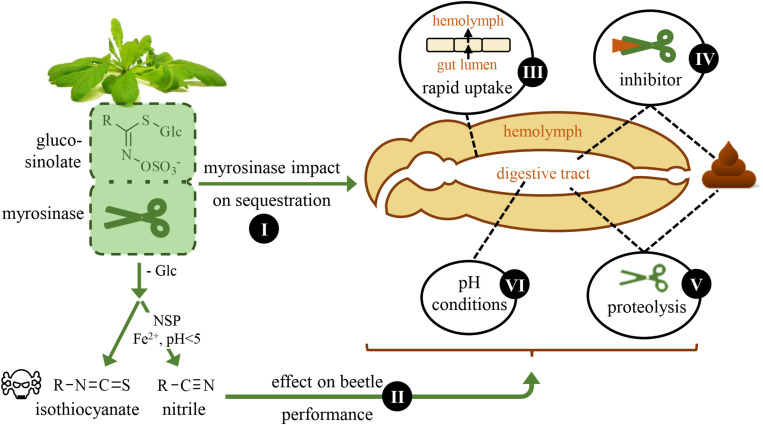
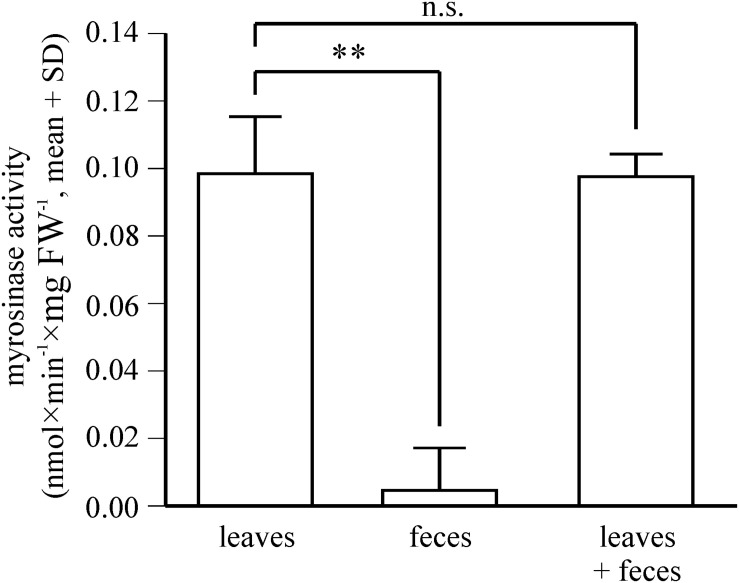
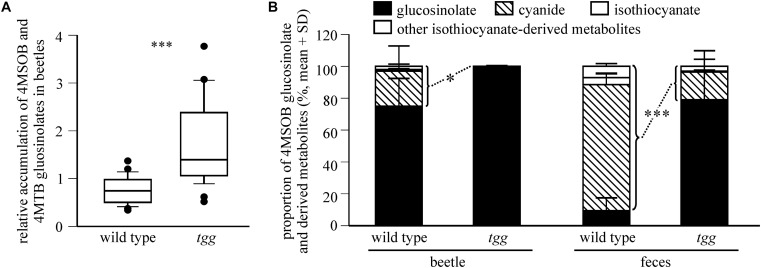
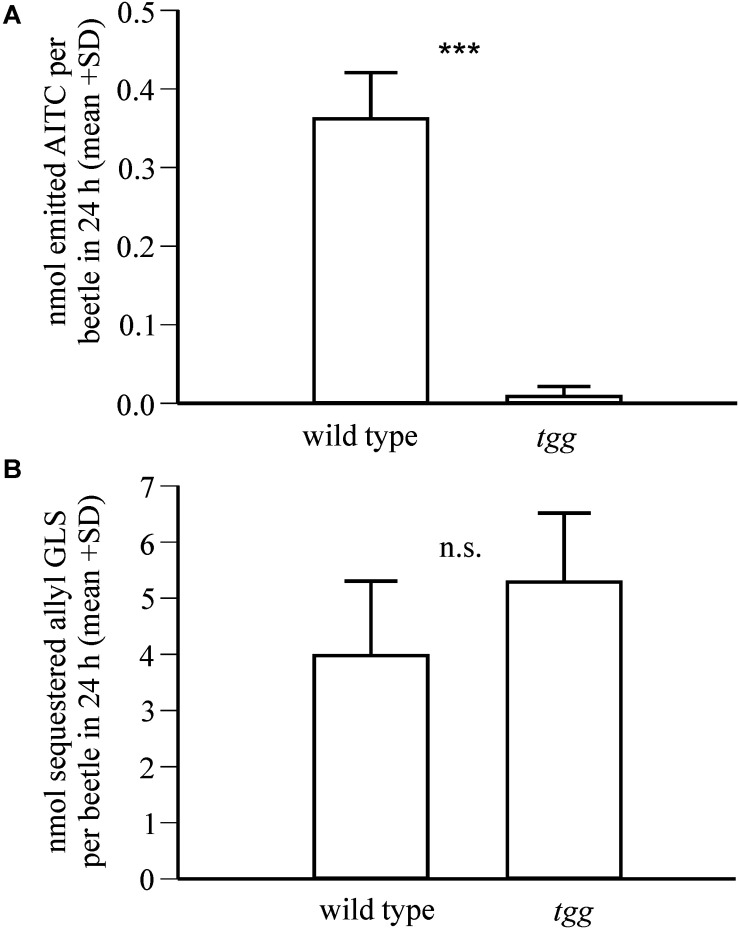
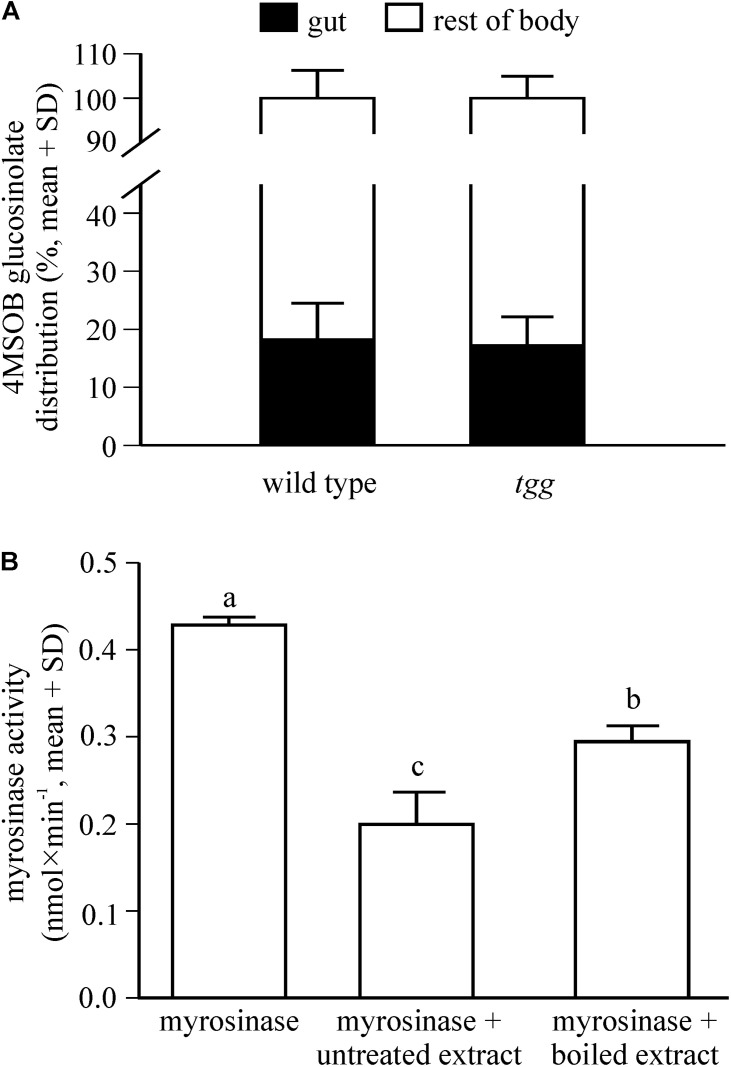
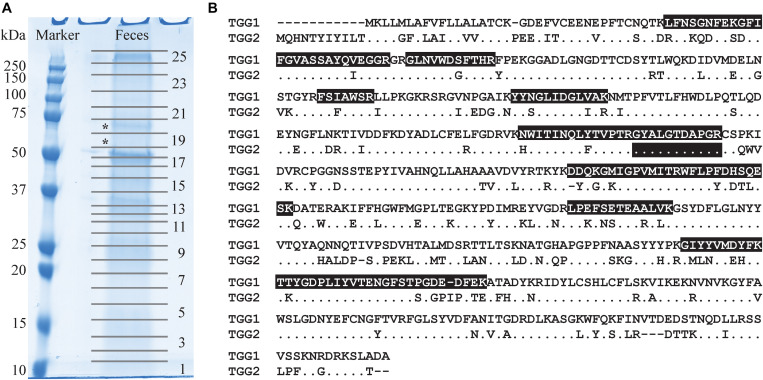
Myrosinase enzymes play a key role in the chemical defense of plants of the order Brassicales. Upon herbivory, myrosinases hydrolyze the β-S-linked glucose moiety of glucosinolates, the characteristic secondary metabolites of brassicaceous plants, which leads to the formation of different toxic hydrolysis products. The specialist flea beetle, , is capable of accumulating high levels of glucosinolates in the body and can thus at least partially avoid plant myrosinase activity. In feeding experiments with the myrosinase-deficient × () mutant and the corresponding Col-0 wild type, we investigated the influence of plant myrosinase activity on the metabolic fate of ingested glucosinolates in adult beetles. myrosinases hydrolyzed a fraction of ingested glucosinolates and thereby reduced the glucosinolate sequestration rate by up to 50% in adult beetles. These results show that cannot fully prevent glucosinolate hydrolysis; however, the exposure of adult beetles to glucosinolate hydrolysis products had no impact on the beetle's energy budget under our experimental conditions. To understand how can partially prevent glucosinolate hydrolysis, we analyzed the short-term fate of ingested glucosinolates and found them to be rapidly absorbed from the gut. In addition, we determined the fate of ingested myrosinase enzymes in . Although we detected myrosinase protein in the feces, we found only traces of myrosinase activity, suggesting that can inactivate plant myrosinases in the gut. Based on our findings, we propose that the ability to tolerate plant myrosinase activity and a fast glucosinolate uptake mechanism represent key adaptations of to their brassicaceous host plants.
黑芥子酶在十字花目植物的化学防御中起着关键作用。在遭受食草动物啃食时,黑芥子酶会水解硫代葡萄糖苷的β-S-连接葡萄糖部分,硫代葡萄糖苷是十字花科植物特有的次生代谢产物,这会导致形成不同的有毒水解产物。专食性跳甲能够在体内积累高水平的硫代葡萄糖苷,因此至少可以部分避免植物黑芥子酶的活性。在对缺乏黑芥子酶的×()突变体和相应的Col-0野生型进行的取食实验中,我们研究了植物黑芥子酶活性对成年跳甲摄入硫代葡萄糖苷代谢命运的影响。黑芥子酶水解了一部分摄入的硫代葡萄糖苷,从而使成年跳甲中硫代葡萄糖苷的螯合率降低了多达50%。这些结果表明跳甲不能完全防止硫代葡萄糖苷的水解;然而,在我们的实验条件下,成年跳甲接触硫代葡萄糖苷水解产物对其能量预算没有影响。为了了解跳甲如何能够部分防止硫代葡萄糖苷的水解,我们分析了摄入硫代葡萄糖苷的短期命运,发现它们能迅速从肠道吸收。此外,我们确定了摄入的黑芥子酶在跳甲体内的命运。虽然我们在粪便中检测到了黑芥子酶蛋白,但只发现了微量的黑芥子酶活性,这表明跳甲能够使肠道中的植物黑芥子酶失活。基于我们的研究结果,我们提出耐受植物黑芥子酶活性的能力和快速的硫代葡萄糖苷摄取机制是跳甲对其十字花科寄主植物的关键适应性特征。