Yuan Ze-Hong, Feng Lin, Jiang Wei-Dan, Wu Pei, Liu Yang, Jiang Jun, Kuang Sheng-Yao, Tang Ling, Zhou Xiao-Qiu
Animal Nutrition Institute, Sichuan Agricultural University, Chengdu, China.
Fish Nutrition and Safety Production University Key Laboratory of Sichuan Province, Sichuan Agricultural University, Chengdu, China.
Front Nutr. 2021 May 20;8:652767. doi: 10.3389/fnut.2021.652767. eCollection 2021.
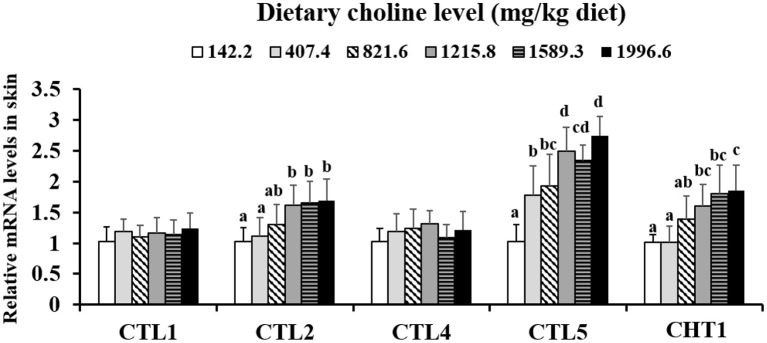
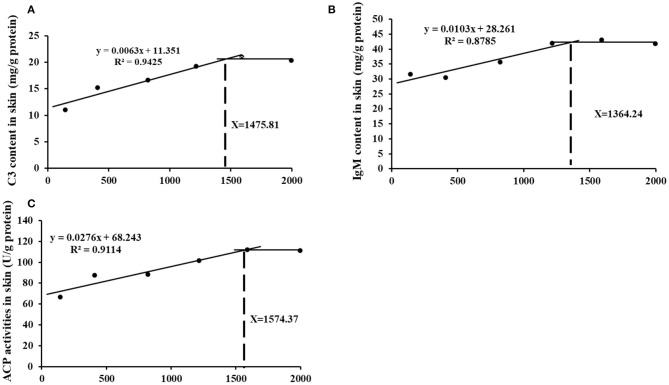
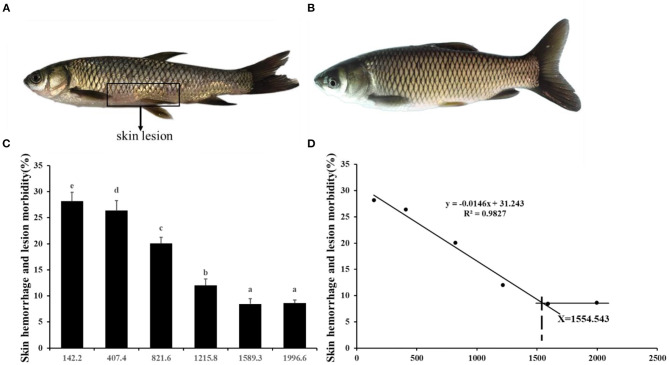
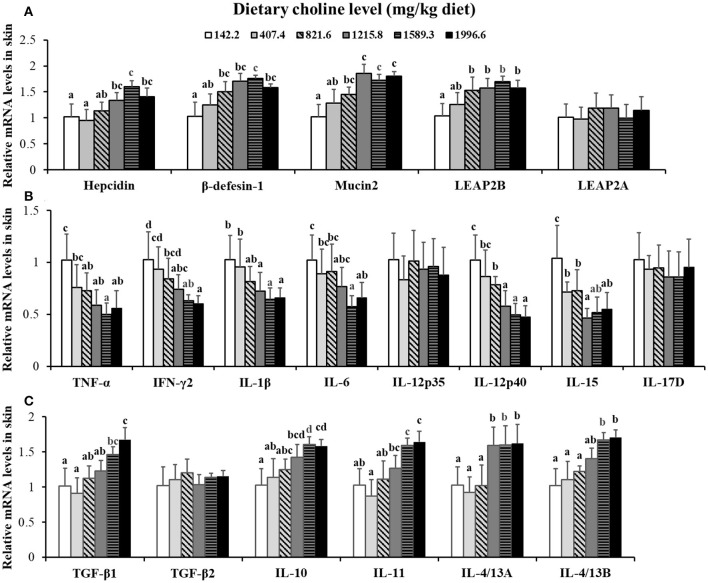
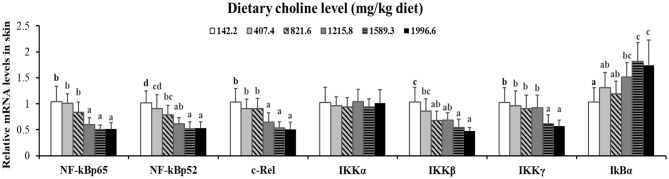
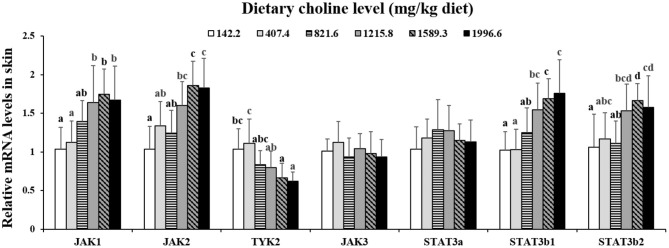
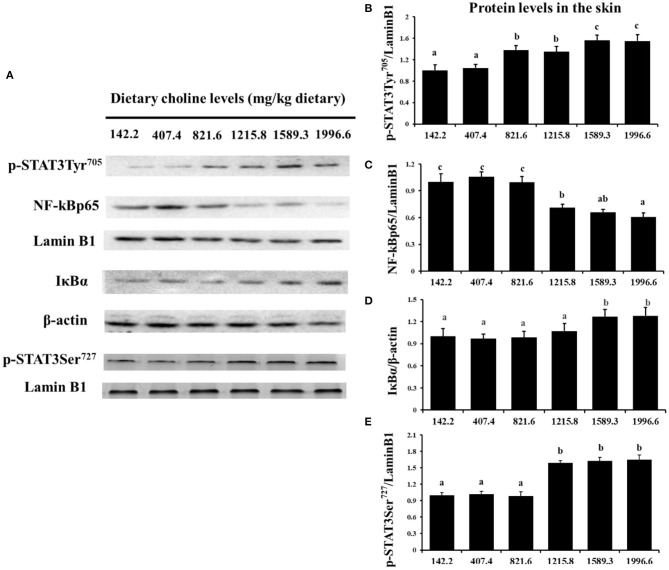
To investigate the effects and potential mechanisms of dietary choline on immune function in the skin of juvenile grass carp (), fish were fed different diets containing different levels of choline (142. 2, 407.4, 821.6, 1215.8, 1589.3, and 1996.6 mg/kg) for 70 d and then sampled after a 6-d challenge test. The results exhibited that dietary choline (1) advanced the contents of phosphatidylcholine (PC), betaine, and choline in grass carp skin ( < 0.05) and upregulated the mRNA abundance of choline transporter high-affinity choline transporter 1 (CHT1), choline transporter-like protein 1 (CTL1), and choline transporter-like protein 5 (CTL5), indicating that dietary choline could increase the contents of choline which might be connected with choline transporters in the grass carp skin; (2) receded skin rot symptom after infection with (Aeromonas hydrophila), increased the levels of IgM, C4, and C3 and the activities of acid phosphatase (ACP) and lysozyme (LZ), raised mucin2, β-defensin, hepcidin, and LEAP-2B mRNA abundance (rather than LEAP-2A), downregulated pro-inflammatory cytokine mRNA abundance (IFN-γ2, IL-15, TNF-α, IL-6, IL-12P40, and IL-1β) in skin of juvenile grass carp ( < 0.05), and upregulated anti-inflammatory cytokine mRNA abundance (IL-10, IL-4/13A, TGF-β1, IL-11, and IL-4/13B) in grass carp skin ( < 0.05), demonstrating that choline enhanced the skin immune function; and (3) downregulated the mRNA abundance of IKKγ, NF-κBp52, IKKβ, c-Rel, NF-κBp65, STAT3b2, STAT3b1, JAK1, and JAK2 as well as protein level of NF-κBp65, p-STAT3 Tyr705, and p-STAT3 Ser727 in nucleus and inhibited the mRNA and protein level of IkBα ( < 0.05), indicating that choline-enhanced immune function might be relevant to the JAK1, 2 /STAT3, and NF-κB signaling pathway in fish skin. In conclusion, choline enhanced the skin immune function which might be related to JAK1, 2/STAT3, and NF-κB signaling molecules in fish. Furthermore, based on immune indices of grass carp (9.28-108.97 g) skin (C3 and IgM contents as well as ACP activities), the choline requirements were estimated to be 1475.81, 1364.24, and 1574.37 mg/kg diet, respectively.
为研究饲料中胆碱对草鱼幼鱼皮肤免疫功能的影响及潜在机制,将草鱼投喂含不同水平胆碱(142.2、407.4、821.6、1215.8、1589.3和1996.6毫克/千克)的不同饲料70天,然后在进行6天攻毒试验后取样。结果表明,饲料中的胆碱:(1)提高了草鱼皮肤中磷脂酰胆碱(PC)、甜菜碱和胆碱的含量(P<0.05),并上调了胆碱转运体高亲和力胆碱转运体1(CHT1)、胆碱转运样蛋白1(CTL1)和胆碱转运样蛋白5(CTL5)的mRNA丰度,表明饲料中的胆碱可增加草鱼皮肤中胆碱的含量,这可能与胆碱转运体有关;(2)感染嗜水气单胞菌后减轻了皮肤腐烂症状,提高了IgM、C4和C3水平以及酸性磷酸酶(ACP)和溶菌酶(LZ)的活性,提高了黏蛋白2、β-防御素、铁调素和LEAP-2B的mRNA丰度(而非LEAP-2A),下调了草鱼幼鱼皮肤中促炎细胞因子mRNA丰度(IFN-γ2、IL-15、TNF-α、IL-6、IL-12P40和IL-1β)(P<0.05),并上调了草鱼皮肤中抗炎细胞因子mRNA丰度(IL-10、IL-4/13A、TGF-β1、IL-11和IL-4/13B)(P<0.05),表明胆碱增强了皮肤免疫功能;(3)下调了IKKγ、NF-κBp52、IKKβ、c-Rel、NF-κBp65、STAT3b2、STAT3b1、JAK1和JAK2的mRNA丰度以及细胞核中NF-κBp65、p-STAT3 Tyr705和p-STAT3 Ser727的蛋白水平,并抑制了IkBα的mRNA和蛋白水平(P<0.05),表明胆碱增强的免疫功能可能与鱼类皮肤中的JAK1、2/STAT3和NF-κB信号通路有关。总之,胆碱增强了皮肤免疫功能,这可能与鱼类中的JAK1、2/STAT3和NF-κB信号分子有关。此外,根据草鱼(9.28 - 108.97克)皮肤的免疫指标(C3和IgM含量以及ACP活性),估计胆碱需求量分别为1475.81、1364.24和1574.37毫克/千克饲料。