Advani Dia, Kumar Pravir
Molecular Neuroscience and Functional Genomics Laboratory, Delhi Technological University, Shahabad Daulatpur, Bawana Road, Delhi 110042, India.
ACS Omega. 2021 May 19;6(21):13870-13887. doi: 10.1021/acsomega.1c01526. eCollection 2021 Jun 1.
AIM/HYPOTHESIS: The complexity and heterogeneity of multiple pathological features make Alzheimer's disease (AD) a major culprit to global health. Drug repurposing is an inexpensive and reliable approach to redirect the existing drugs for new indications. The current study aims to study the possibility of repurposing approved anticancer drugs for AD treatment. We proposed an pipeline based on "omics" data mining that combines genomics, transcriptomics, and metabolomics studies. We aimed to validate the neuroprotective properties of repurposed drugs and to identify the possible mechanism of action of the proposed drugs in AD.
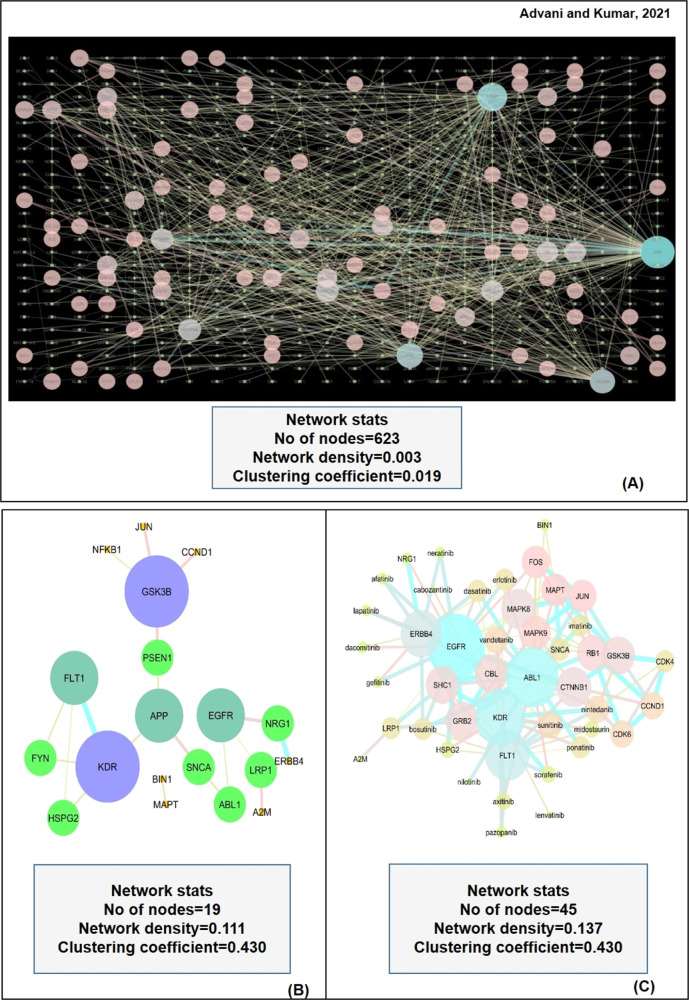
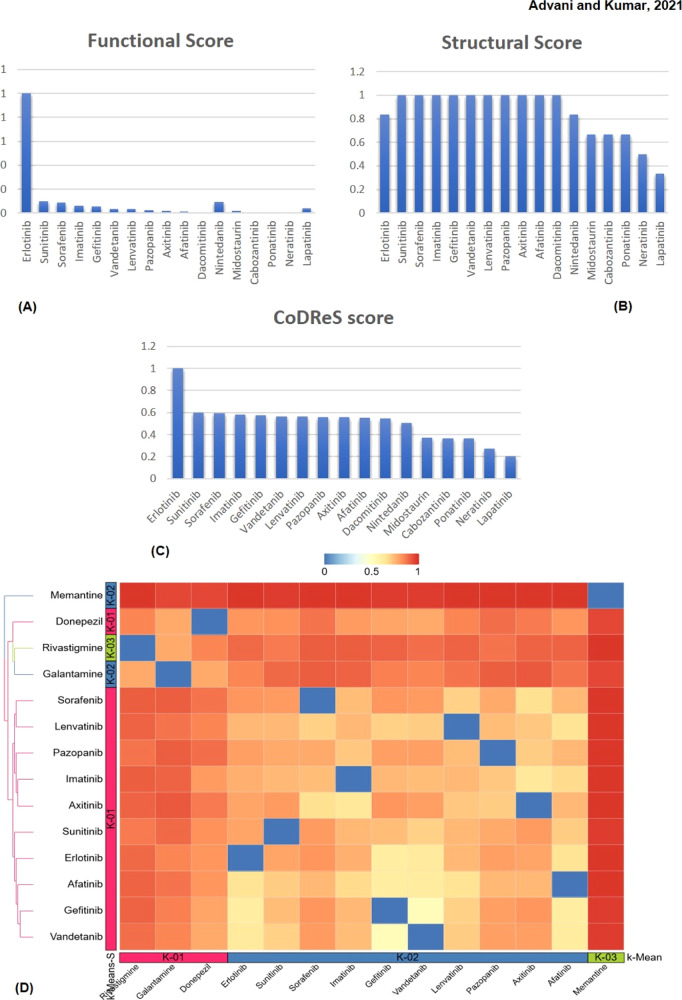
We generated a list of AD-related genes and then searched DrugBank database and Therapeutic Target Database to find anticancer drugs related to potential AD targets. Specifically, we researched the available approved anticancer drugs and excluded the information of investigational and experimental drugs. We developed a computational pipeline to prioritize the anticancer drugs having a close association with AD targets. From data mining, we generated a list of 2914 AD-related genes and obtained 49 potential druggable targets by functional enrichment analysis. The protein-protein interaction (PPI) studies for these genes revealed 641 interactions. We found that 15 AD risk/direct PPI genes were associated with 30 approved oncology drugs. The computational validation of candidate drug-target interactions, structural and functional analysis, investigation of related molecular mechanisms, and literature-based analysis resulted in four repurposing candidates, of which three drugs were epidermal growth factor receptor (EGFR) inhibitors.
Our computational drug repurposing approach proposed EGFR inhibitors as potential repurposing drugs for AD. Consequently, our proposed framework could be used for drug repurposing for different indications in an economical and efficient way.
目的/假设:多种病理特征的复杂性和异质性使阿尔茨海默病(AD)成为全球健康的主要元凶。药物重新利用是一种将现有药物用于新适应症的廉价且可靠的方法。当前研究旨在探讨将已批准的抗癌药物重新用于AD治疗的可能性。我们提出了一种基于“组学”数据挖掘的流程,该流程结合了基因组学、转录组学和代谢组学研究。我们旨在验证重新利用药物的神经保护特性,并确定所提出药物在AD中的可能作用机制。
我们生成了一份AD相关基因列表,然后搜索药物银行数据库和治疗靶点数据库,以找到与潜在AD靶点相关的抗癌药物。具体而言,我们研究了现有的已批准抗癌药物,并排除了研究性和实验性药物的信息。我们开发了一个计算流程,以对与AD靶点密切相关的抗癌药物进行优先级排序。通过数据挖掘,我们生成了一份包含2914个AD相关基因的列表,并通过功能富集分析获得了49个潜在的可药物化靶点。对这些基因的蛋白质-蛋白质相互作用(PPI)研究揭示了641种相互作用。我们发现15个AD风险/直接PPI基因与30种已批准的肿瘤药物相关。对候选药物-靶点相互作用的计算验证、结构和功能分析、相关分子机制的研究以及基于文献的分析产生了四种重新利用的候选药物,其中三种药物是表皮生长因子受体(EGFR)抑制剂。
我们的计算药物重新利用方法提出EGFR抑制剂作为AD的潜在重新利用药物。因此,我们提出的框架可用于以经济有效的方式将药物重新用于不同适应症。