Department of Orthopaedics, Rui Jin Hospital, Shanghai Jiao Tong University School of Medicine, Shanghai, China.
Orthop Surg. 2021 Jul;13(5):1546-1555. doi: 10.1111/os.13029. Epub 2021 Jun 6.
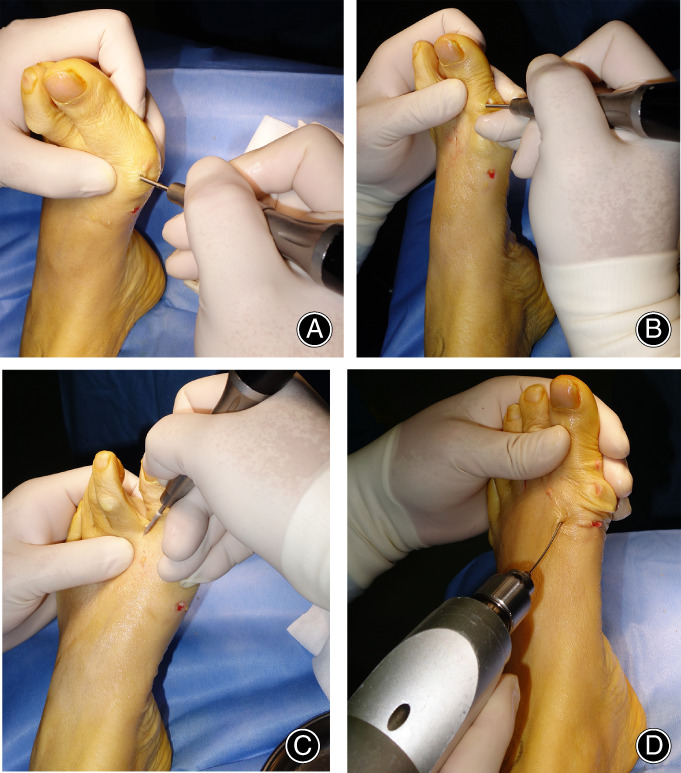
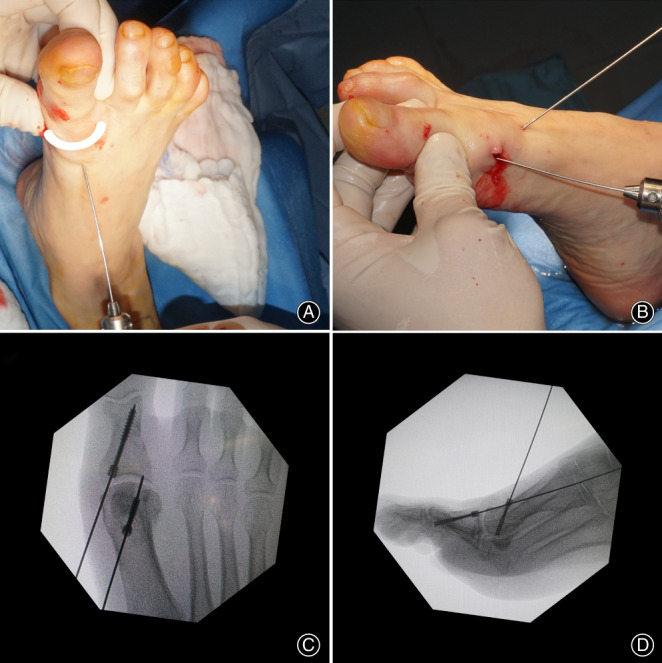
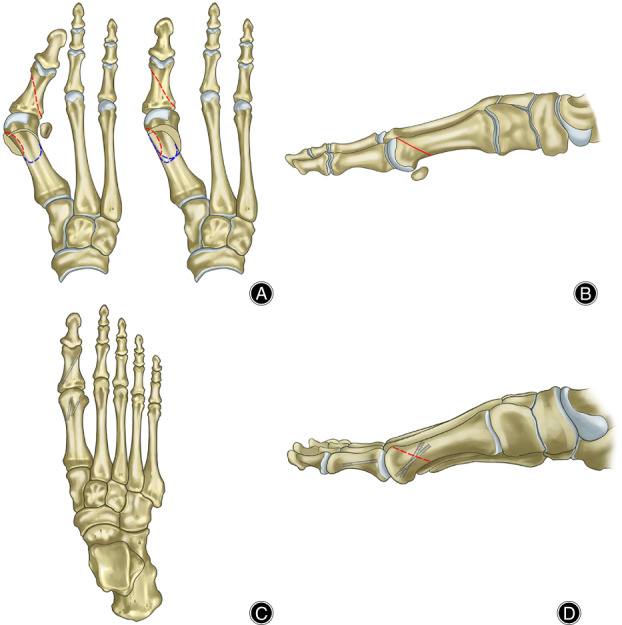
This study aimed to compare the percutaneous oblique osteotomy (POO) and the open chevron osteotomy technique for correction of hallux valgus deformity at a 2-year follow-up.
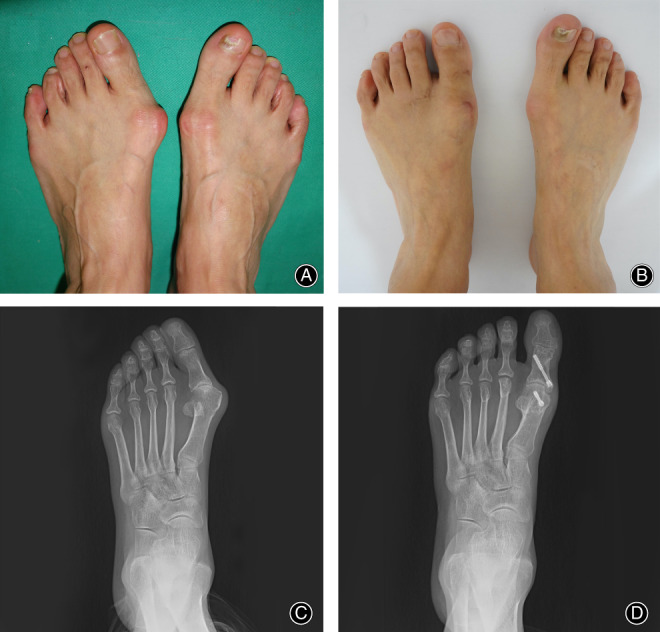
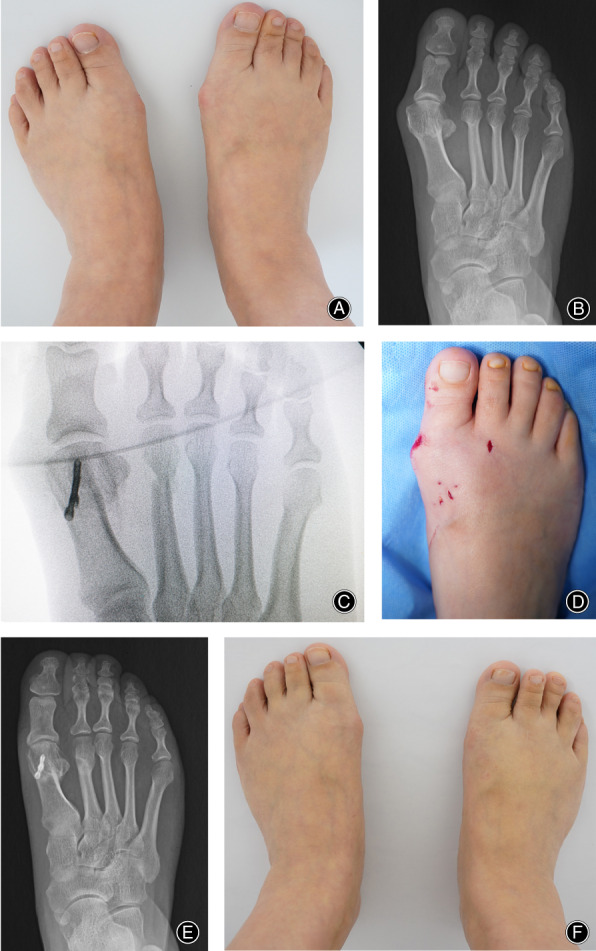
This is a retrospective study of consecutive patients undergoing operative correction of hallux valgus using one of two techniques (POO vs open chevron osteotomy) from 2014 to 2018. Forty eight feet (41 patients) that underwent the POO was compared with 64 feet (58 patients) that underwent open chevron osteotomy. The hallux valgus angle (HVA), intermetatarsal angle (IMA) and American Orthopedic Foot & Ankle Society Hallux Metatarsophalangeal-Interphalangeal scores (AOFAS-HMI) were assessed preoperatively and postoperatively at the 1, 2-year follow-up. The Manchester-Oxford Foot Questionnaire (MOXFQ) were assessed preoperatively and postoperatively at the 2-year follow-up. The VAS score was collected preoperatively and on 2 weeks,1 year and 2-year follow-up.
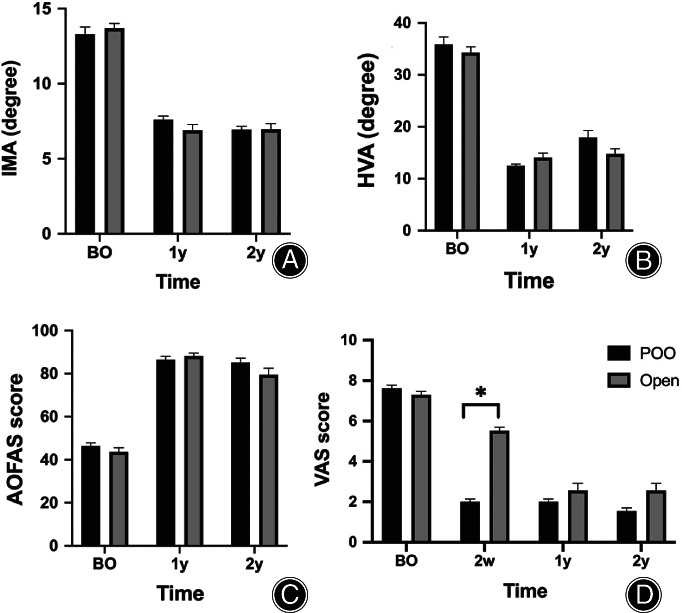
Both groups achieved significant correction of the hallux deformity. The HVA in the POO group during the follow-up period were 12.5 ± 2.22 and 17.9 ± 9.31, respectively, and in the open chevron group were 14.1 ± 6.78 and 14.8 ± 7.83, respectively. The IMA in the POO group during the follow-up period were 7.61 ± 1.63 and 6.94 ± 1.53, respectively, and in the open chevron group were 6.89 ± 3.06 and 6.97 ± 2.95, respectively. Postoperative MOXFQ scores in all domains were significantly improved in both groups, however there was no significant difference in the improvement of any domain between POO and open groups at a 2-year follow-up. The AOFAS HMI scores in the POO group during the follow-up period were 86.5 ± 10.7 and 85.2 ± 13.8, respectively, and in the open chevron group were 88.2 ± 10.8 and 79.5 ± 23.7, respectively. The VAS scores in the POO group during the follow-up period were 2.00 ± 0.98, 2.00 ± 0.99 and 1.55 ± 1.11, respectively, and in the open chevron group were 5.51 ± 1.45, 2.56 ± 2.88 and 2.56 ± 2.88 respectively. The 1-year and 2-year follow-up outcomes between POO and open groups showed no significant difference regarding AOFAS HMI scores and VAS scores, however the POO group showed statistically significant improvement of VAS scores in the postoperative 2 weeks (P < 0.001). There was no statistical significance between the POO and open group in terms of complications rates (8.3% vs 12.5%, P = 0.480).
The POO technique is reliable and shows a comparable outcome to the open chevron osteotomy. However, the POO technique shows significantly less pain in the first 2 weeks after surgery.
本研究旨在比较经皮斜行截骨术(POO)和开放 Chevron 截骨术治疗足拇外翻畸形的疗效,随访时间为 2 年。
这是一项回顾性研究,纳入了 2014 年至 2018 年间接受手术治疗的足拇外翻患者,采用两种技术(POO 与开放 Chevron 截骨术)中的一种进行治疗。将 48 足(41 例)行 POO 与 64 足(58 例)行开放 Chevron 截骨术进行比较。术前、术后 1 年、2 年分别测量足拇外翻角(HVA)、跖骨间角(IMA)和美国矫形足踝协会拇趾跖趾-趾间关节评分(AOFAS-HMI)。术前和术后 2 年采用曼彻斯特-牛津足部问卷(MOXFQ)评估。术前和术后 2 周、1 年、2 年分别采用视觉模拟评分法(VAS)评估疼痛。
两组患者均获得了明显的足拇外翻畸形矫正。POO 组患者随访期间 HVA 分别为 12.5±2.22 和 17.9±9.31,IMA 分别为 7.61±1.63 和 6.94±1.53;开放 Chevron 组患者 HVA 分别为 14.1±6.78 和 14.8±7.83,IMA 分别为 6.89±3.06 和 6.97±2.95。两组术后所有领域的 MOXFQ 评分均显著改善,但在术后 2 年随访时,POO 组与开放 Chevron 组在任何领域的改善均无显著差异。POO 组患者随访期间 AOFAS-HMI 评分分别为 86.5±10.7 和 85.2±13.8,IMA 分别为 2.00±0.98、2.00±0.99 和 1.55±1.11;开放 Chevron 组患者 AOFAS-HMI 评分分别为 88.2±10.8 和 79.5±23.7,IMA 分别为 5.51±1.45、2.56±2.88 和 2.56±2.88。POO 组患者术后 2 周、1 年和 2 年的 VAS 评分分别为 2.00±0.98、2.00±0.99 和 1.55±1.11,开放 Chevron 组患者术后 2 周、1 年和 2 年的 VAS 评分分别为 5.51±1.45、2.56±2.88 和 2.56±2.88。POO 组与开放 Chevron 组在 AOFAS-HMI 评分和 VAS 评分方面,1 年和 2 年随访结果无显著差异,但 POO 组术后 2 周 VAS 评分有统计学显著改善(P<0.001)。POO 组与开放 Chevron 组在并发症发生率方面无统计学差异(8.3%比 12.5%,P=0.480)。
POO 技术是可靠的,与开放 Chevron 截骨术疗效相当。然而,POO 技术在术后 2 周内明显减轻疼痛。