International Institute for Population Sciences, Mumbai, India.
Womens Health (Lond). 2021 Jan-Dec;17:17455065211017068. doi: 10.1177/17455065211017068.
Using the unit-level data of women aged 15-49 years from National Family Health Survey-IV (2015-2016), the article maps the prevalence of hysterectomy across districts in India and examines its determinants.
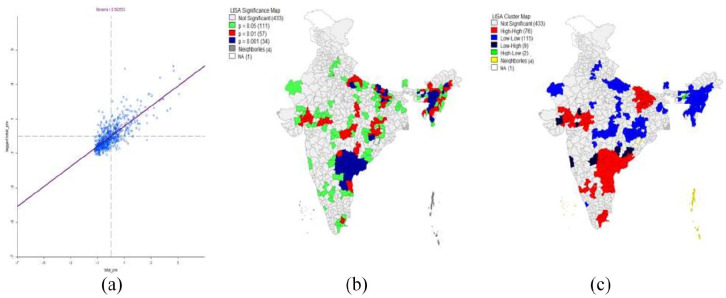
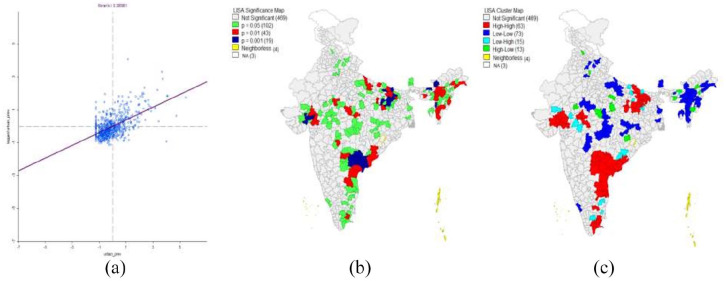
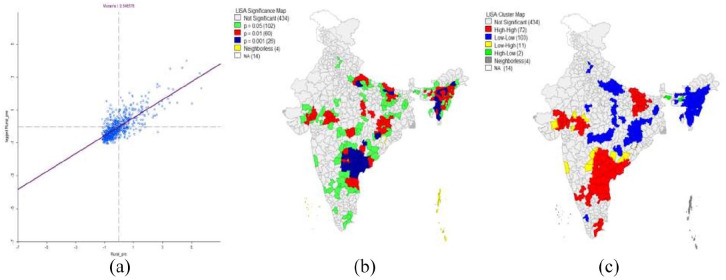
Descriptive statistics, multivariate techniques, Moran's Index and Local indicators of Spatial Association were used to understand the objectives. The data were analysed in STATA 14.2, Geo-Da and Arc-GIS.
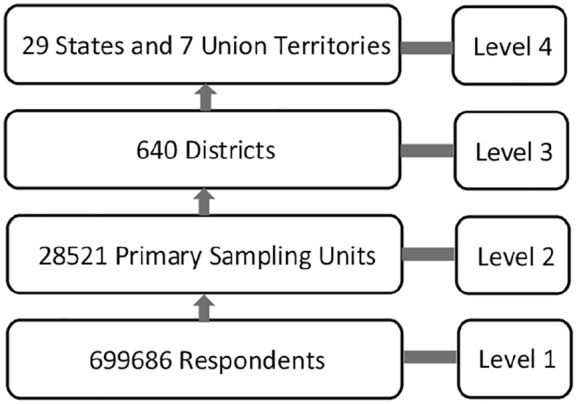
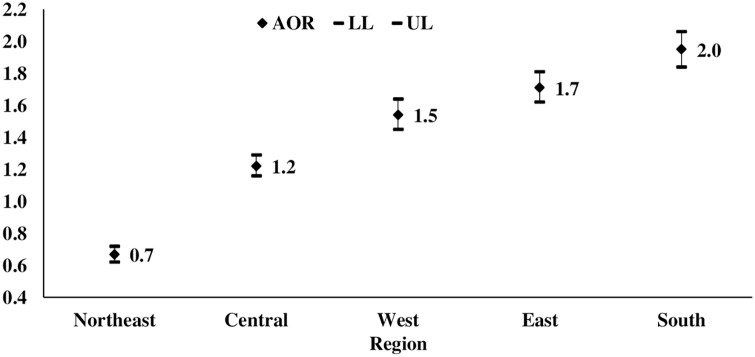
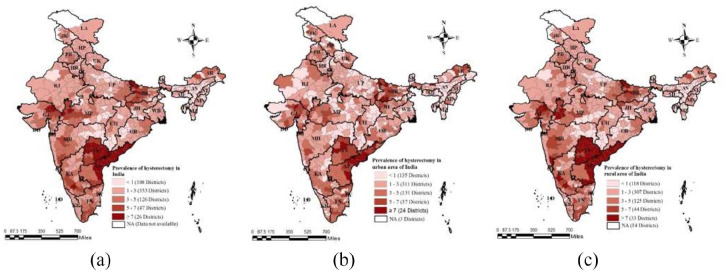
In India, the prevalence of hysterectomy operation was 3.2%, the highest in Andhra Pradesh (8.9%) and the lowest in Assam (0.9%). Rural India had higher a prevalence than urban India. The majority of women underwent the operation in private hospitals. Hysterectomy prevalence ranged between 3% and 5% in 126 districts, 5% and 7% in 47 districts and more than 7% in 26 districts. Moran's Index (0.58) indicated the positive autocorrelation for the prevalence of hysterectomy among districts; a total of 202 districts had significant neighbourhood association. Variation in the prevalence of hysterectomy was attributed to the factors at the primary sampling unit, district and state level. Age, parity, wealth and insurance were positively associated with the prevalence of hysterectomy, whereas education and sterilization was negatively associated.
Hysterectomy operation in India presented the geographical, socio-economic, demographic and medical phenomenon. The high prevalence of hysterectomy in many parts of the country suggested conducting in-depth studies, considering the life cycle approach and providing counselling and education to women about their reproductive rights and informed choice. Surveillance and medical audits and promoting the judicial use of health insurance can be of great help.
利用 2015-2016 年全国家庭健康调查四期(NFHS-4)15-49 岁女性的单位级数据,本文绘制了印度各地区子宫切除术的流行情况,并探讨了其决定因素。
采用描述性统计、多元技术、莫兰指数和局部空间关联指标来理解目标。使用 STATA 14.2、Geo-Da 和 Arc-GIS 对数据进行分析。
在印度,子宫切除术的流行率为 3.2%,安得拉邦最高(8.9%),阿萨姆邦最低(0.9%)。农村的流行率高于城市。大多数妇女在私立医院接受手术。126 个地区的子宫切除术流行率在 3%至 5%之间,47 个地区在 5%至 7%之间,26 个地区超过 7%。莫兰指数(0.58)表明,各地区子宫切除术的流行存在正自相关;共有 202 个地区存在显著的邻里关联。子宫切除术的流行率差异归因于初级抽样单位、地区和邦级别的因素。年龄、胎次、财富和保险与子宫切除术的流行呈正相关,而教育和绝育呈负相关。
印度的子宫切除术呈现出地理、社会经济、人口和医学现象。该国许多地区的子宫切除术高发率表明,需要进行深入研究,考虑生命周期方法,并向妇女提供关于其生殖权利和知情选择的咨询和教育。监测和医疗审核以及促进健康保险的合理使用将大有帮助。