York Biomedical Research Institute, Department of Biology, University of York, York, UK.
Department of Biology and Center of Cellular Nanoanalytics, University of Osnabrück, Osnabrück, Germany.
Platelets. 2021 Aug 18;32(6):770-778. doi: 10.1080/09537104.2021.1925102. Epub 2021 Jun 7.
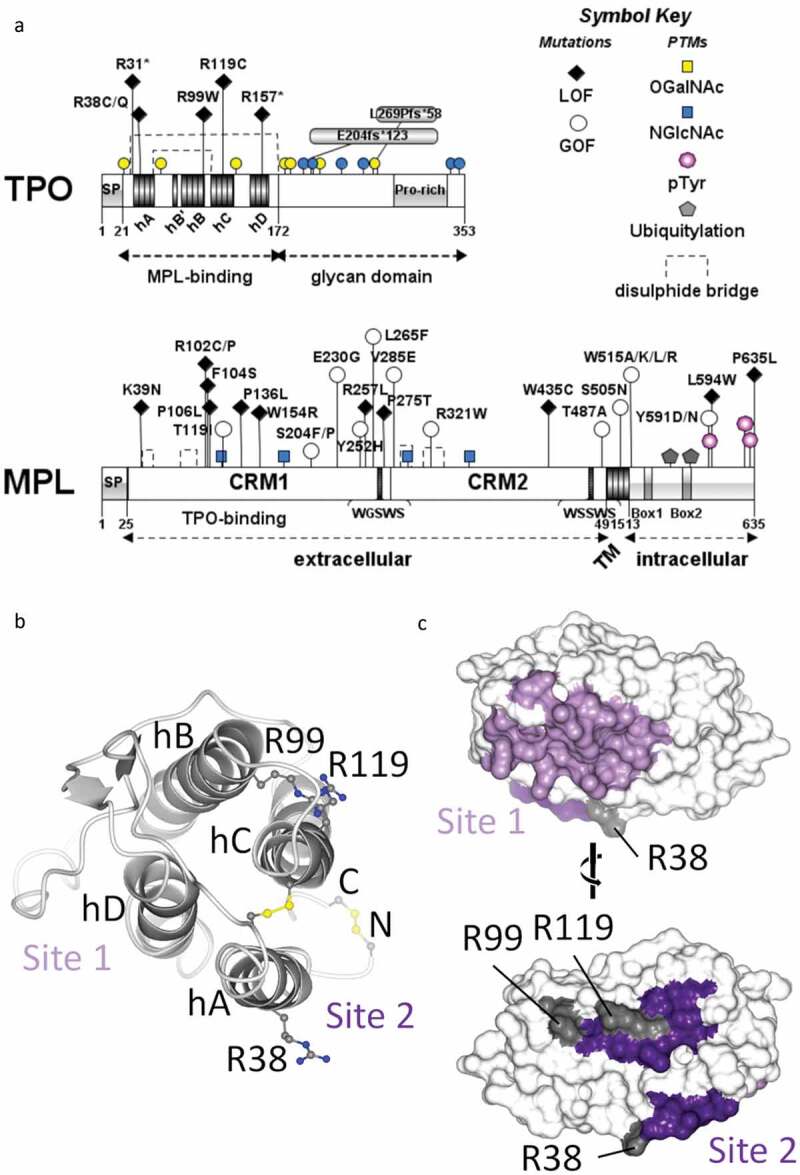
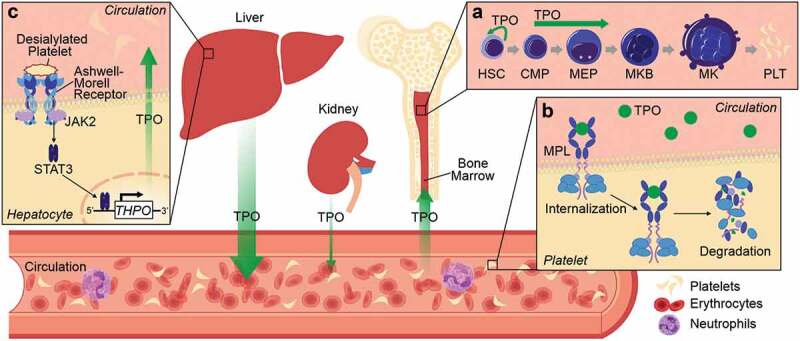
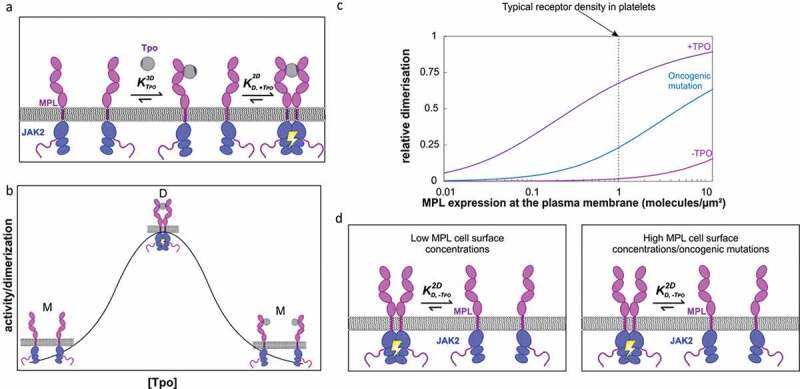
Thrombopoietin (TPO) and its receptor, MPL, are the primary regulators of platelet production and critical for hematopoietic stem cell (HSC) maintenance. Since TPO was first cloned in 1994, the physiological and pathological roles of TPO and MPL have been well characterized, culminating in the first MPL agonists being approved for the treatment of chronic immune thrombocytopenia in 2008. Dysregulation of the TPO-MPL signaling axis contributes to the pathogenesis of hematological disorders: decreased expression or function results in severe thrombocytopenia progressing to bone marrow failure, while hyperactivation of MPL signaling, either by mutations in the receptor or associated Janus kinase 2 (JAK2), results in pathological myeloproliferation. Despite its importance, it was only recently that the long-running debate over the mechanism by which TPO binding activates MPL has been resolved. This review will cover key aspects of TPO and MPL structure and function and their importance in receptor activation, discuss how these are altered in hematological disorders and consider how a greater understanding could lead to the development of better-targeted and more efficacious therapies.
血小板生成素(TPO)及其受体 MPL 是血小板生成的主要调节剂,对造血干细胞(HSC)的维持至关重要。自 1994 年首次克隆 TPO 以来,TPO 和 MPL 的生理和病理作用已经得到了很好的描述,最终导致第一个 MPL 激动剂于 2008 年被批准用于治疗慢性免疫性血小板减少症。TPO-MPL 信号轴的失调导致血液系统疾病的发病机制:表达或功能下降导致严重的血小板减少症进展为骨髓衰竭,而 MPL 信号的过度激活,无论是通过受体突变还是相关的 Janus 激酶 2(JAK2),都会导致病理性骨髓增生。尽管其重要性,但直到最近,关于 TPO 结合激活 MPL 的机制的长期争论才得到解决。这篇综述将涵盖 TPO 和 MPL 的结构和功能的关键方面及其在受体激活中的重要性,讨论它们在血液系统疾病中的变化,并考虑如何更好地理解这一问题,从而开发出更有针对性和更有效的治疗方法。