Varlamov Elena V, Niculescu Dan Alexandru, Banskota Swechya, Galoiu Simona Andreea, Poiana Catalina, Fleseriu Maria
Department of Medicine (Endocrinology, Diabetes and Clinical Nutrition), Oregon Health & Science University, Portland, Oregon, USA.
Department of Neurological Surgery, Oregon Health & Science University, Portland, Oregon, USA.
Endocr Connect. 2021 Jul 5;10(7):731-741. doi: 10.1530/EC-21-0035.
The number of international acromegaly related registries is increasing; however, heterogeneity of acromegaly symptoms and signs across countries is not well described. We compared clinical disease manifestations at diagnosis between two large University referral centers from two continents.
Retrospective, comparative epidemiological study of acromegaly patients at two centers: (i) C. I. Parhon National Institute of Endocrinology, 'Carol Davila' University of Medicine and Pharmacy Bucharest, Romania (Parhon), and (ii) Pituitary Center, Oregon Health & Science University, Portland, Oregon, United States (OHSU) from approved data repositories was undertaken. Data were extracted from medical charts and questionnaires. Binary logistic regression analysis was undertaken for the most frequently noted symptoms and clinical signs.
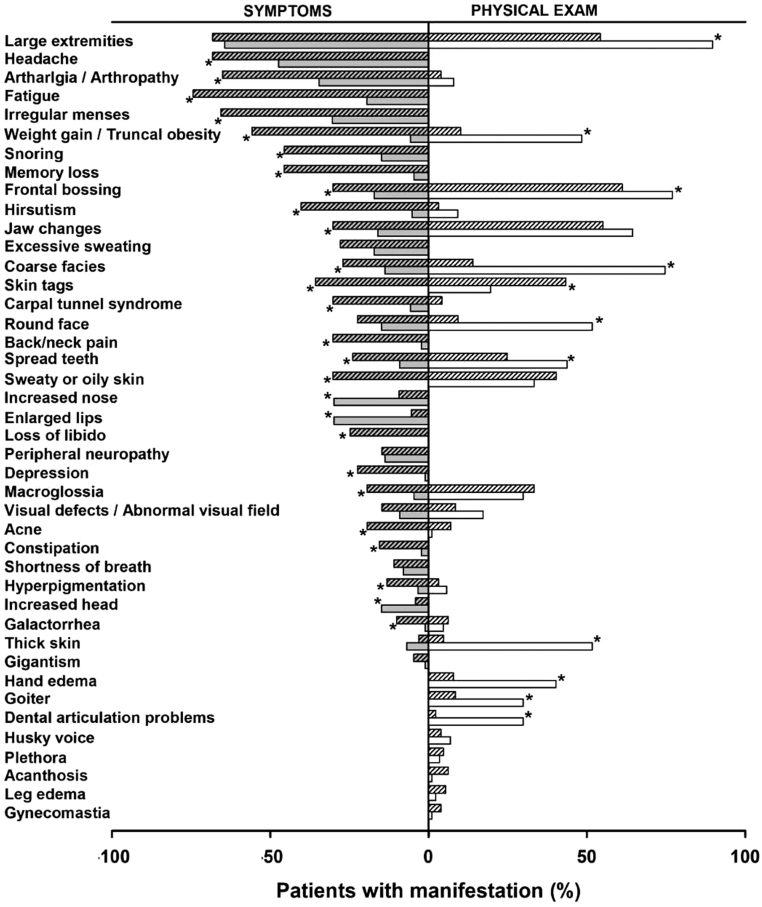
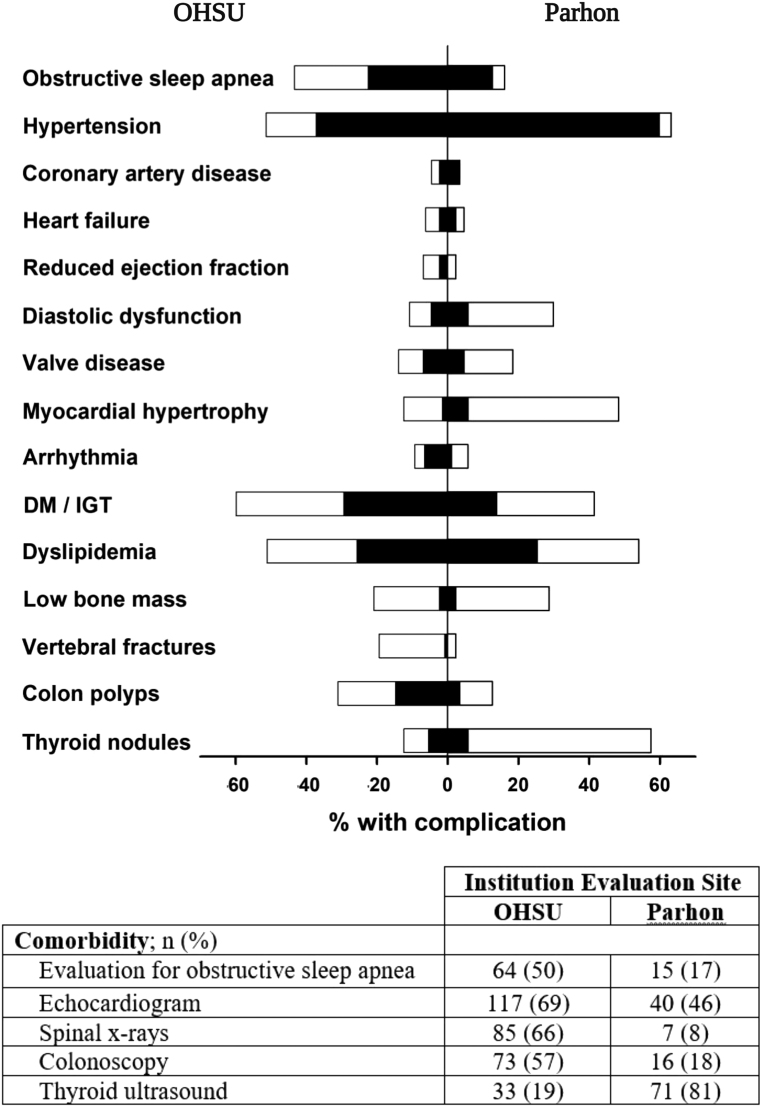
The study included 216 patients (87 Parhon, 129 OHSU). Age, sex, and median delay in diagnosis were similar between centers. IGF-1 index was higher in patients at Parhon (3.3 vs 2.1, P < 0.001). The top five symptoms at both centers were enlarged hands/feet, headache, arthralgia, fatigue, and irregular menses in women. A significant difference was noted for multiple signs and symptoms frequency, often > 20 percentage points between centers. Center was a predictor of many signs and symptoms, independent of acromegaly biochemical severity or disease duration.
We show in the first comparative study that differences in medical practice, documentation, and likely cultural differences can influence patients' symptom(s) reporting and screening patterns in geographically different populations. Pooling data into large multicenter international registry databases may lead to loss of regional characteristics and thus a mixed overall picture of combined cohorts.
国际肢端肥大症相关登记处的数量在不断增加;然而,各国肢端肥大症症状和体征的异质性尚未得到充分描述。我们比较了来自两大洲的两个大型大学转诊中心在诊断时的临床疾病表现。
对两个中心的肢端肥大症患者进行回顾性、比较性流行病学研究:(i)罗马尼亚布加勒斯特“卡罗尔·戴维拉”医科药科大学的C.I.帕尔洪国家内分泌研究所(帕尔洪),以及(ii)美国俄勒冈州波特兰市俄勒冈健康与科学大学垂体中心(OHSU),数据来自经批准的数据存储库。数据从病历和问卷中提取。对最常记录的症状和临床体征进行二元逻辑回归分析。
该研究纳入了216例患者(87例来自帕尔洪,129例来自OHSU)。两个中心患者的年龄、性别和诊断中位延迟时间相似。帕尔洪中心患者的IGF-1指数更高(3.3对2.1,P<0.001)。两个中心最常见的五种症状是手脚增大、头痛、关节痛、疲劳以及女性月经不调。两个中心在多种体征和症状的频率上存在显著差异,通常相差超过20个百分点。中心是许多体征和症状的预测因素,与肢端肥大症的生化严重程度或疾病持续时间无关。
我们在第一项比较研究中表明,医疗实践、记录方式的差异以及可能存在的文化差异会影响地理位置不同人群中患者的症状报告和筛查模式。将数据汇总到大型多中心国际登记数据库中可能会导致区域特征的丢失,从而使合并队列的总体情况变得混杂。