Institute of Aquaculture, Faculty of Natural Sciences, University of Stirling, Stirling FK9 4LA, United Kingdom.
Institute of Aquaculture, Faculty of Natural Sciences, University of Stirling, Stirling FK9 4LA, United Kingdom.
Comp Biochem Physiol C Toxicol Pharmacol. 2021 Oct;248:109095. doi: 10.1016/j.cbpc.2021.109095. Epub 2021 Jun 10.
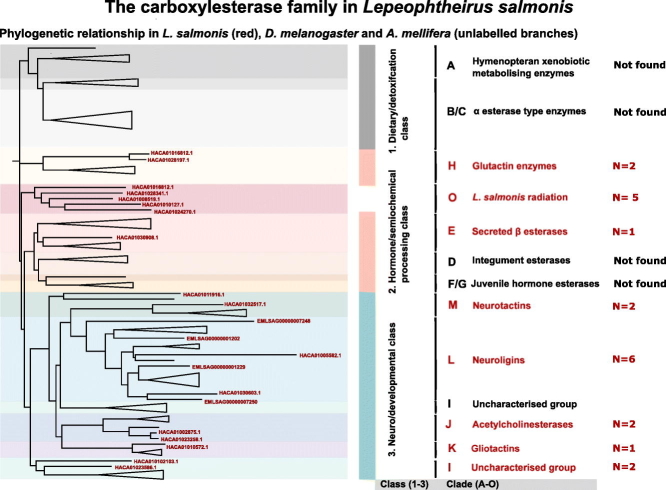
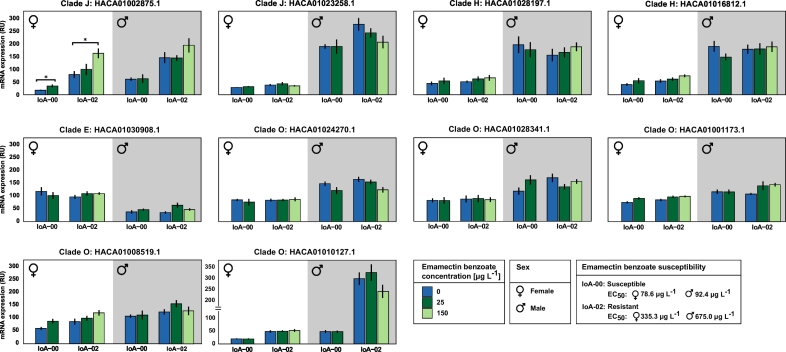
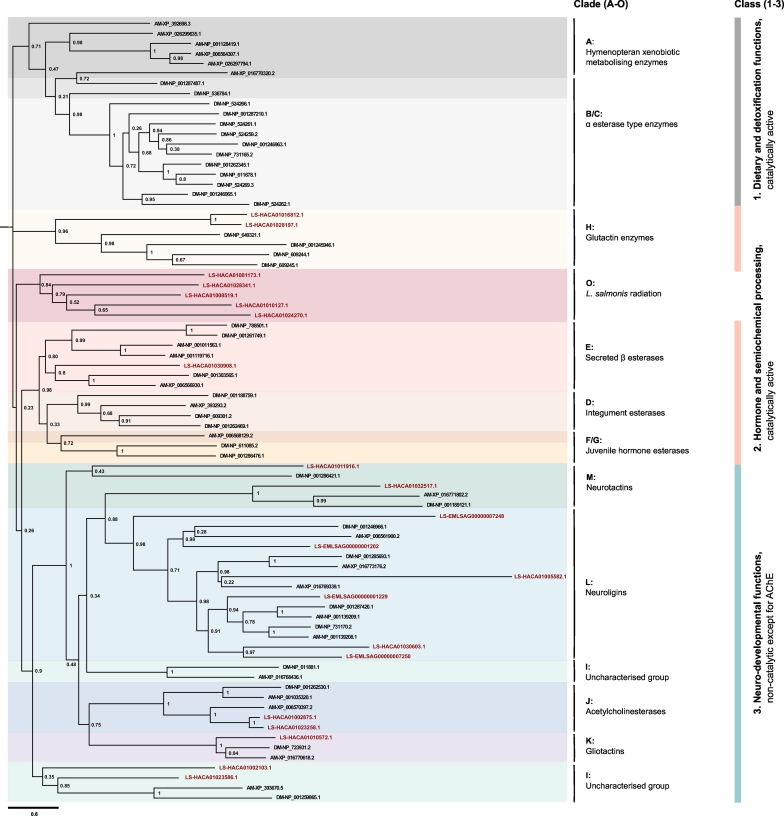
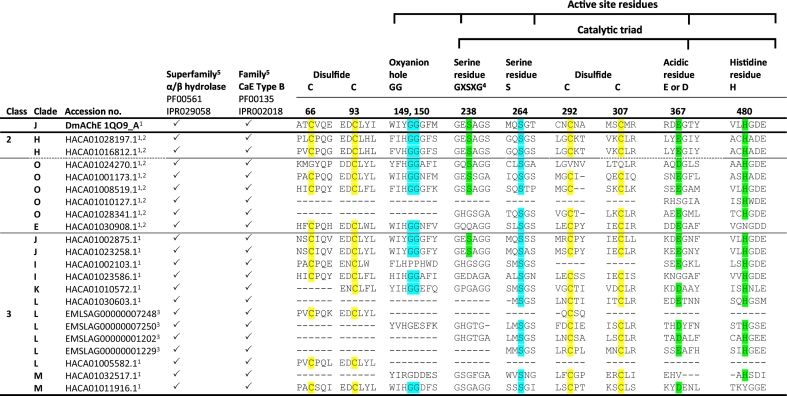
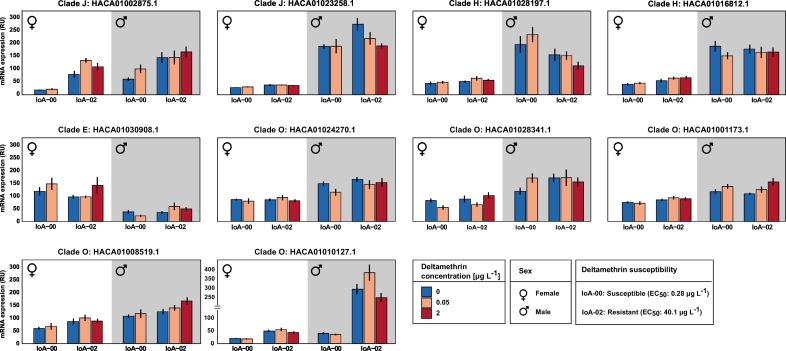
The pyrethroid deltamethrin and the macrocyclic lactone emamectin benzoate (EMB) are used to treat infestations of farmed salmon by parasitic salmon lice, Lepeophtheirus salmonis. While the efficacy of both compounds against Atlantic populations of the parasite has decreased as a result of the evolution of resistance, the molecular mechanisms of drug resistance in L. salmonis are currently not fully understood. The functionally diverse carboxylesterases (CaE) family includes members involved in pesticide resistance phenotypes of terrestrial arthropods. The present study had the objective to characterize the CaE family in L. salmonis and assess its role in drug resistance. L. salmonis CaE homologues were identified by homology searches in the parasite's transcriptome and genome. The transcript expression of CaEs predicted to be catalytically competent was studied using quantitative reverse-transcription PCR in drug susceptible and multi-resistant L. salmonis. The above strategy led to the identification of 21 CaEs genes/pseudogenes. Phylogenetic analyses assigned 13 CaEs to clades involved in neurodevelopmental signaling and cell adhesion, while three sequences were predicted to encode secreted enzymes. Ten CaEs were identified as being potentially catalytically competent. Transcript expression of acetylcholinesterase (ace1b) was significantly increased in multi-resistant lice compared to drug-susceptible L. salmonis, with transcript abundance further increased in preadult-II females following EMB exposure. In summary, results from the present study demonstrate that L. salmonis possesses fewer CaE gene family members than most arthropods characterized so far. Drug resistance in L. salmonis was associated with overexpression of ace1b.
拟除虫菊酯氯菊酯和大环内酯类杀虫剂埃玛菌素苯甲酸酯(EMB)用于治疗养殖三文鱼感染寄生性鲑鱼虱(Lepeophtheirus salmonis)。虽然这两种化合物对大西洋寄生虫种群的疗效因抗药性的进化而降低,但鲑鱼虱的药物抗性的分子机制目前尚未完全了解。功能多样的羧酸酯酶(CaE)家族包括参与陆地节肢动物抗药性表型的成员。本研究旨在鉴定鲑鱼虱中的 CaE 家族并评估其在抗药性中的作用。通过寄生虫转录组和基因组中的同源搜索,鉴定出鲑鱼虱 CaE 同源物。使用定量逆转录 PCR 研究了预测具有催化活性的 CaE 的转录表达,这些 CaE 存在于敏感和多耐药性的鲑鱼虱中。上述策略导致鉴定出 21 个 CaE 基因/假基因。系统发育分析将 13 个 CaE 分配到参与神经发育信号和细胞黏附的类群,而三个序列预测编码分泌酶。鉴定出 10 个 CaE 可能具有催化活性。与敏感的鲑鱼虱相比,多耐药性的鲑鱼虱中的乙酰胆碱酯酶(ace1b)转录表达显著增加,并且在 EMB 暴露后,前幼体-II 期雌性的转录丰度进一步增加。总之,本研究的结果表明,鲑鱼虱拥有的 CaE 基因家族成员比迄今为止大多数已鉴定的节肢动物都要少。鲑鱼虱的抗药性与 ace1b 的过度表达有关。