College of Health, Medicine and Life Sciences, Division of Psychology, Brunel University London, Uxbridge, UB8 3PH, UK.
Sci Rep. 2021 Jun 7;11(1):12003. doi: 10.1038/s41598-021-91205-3.
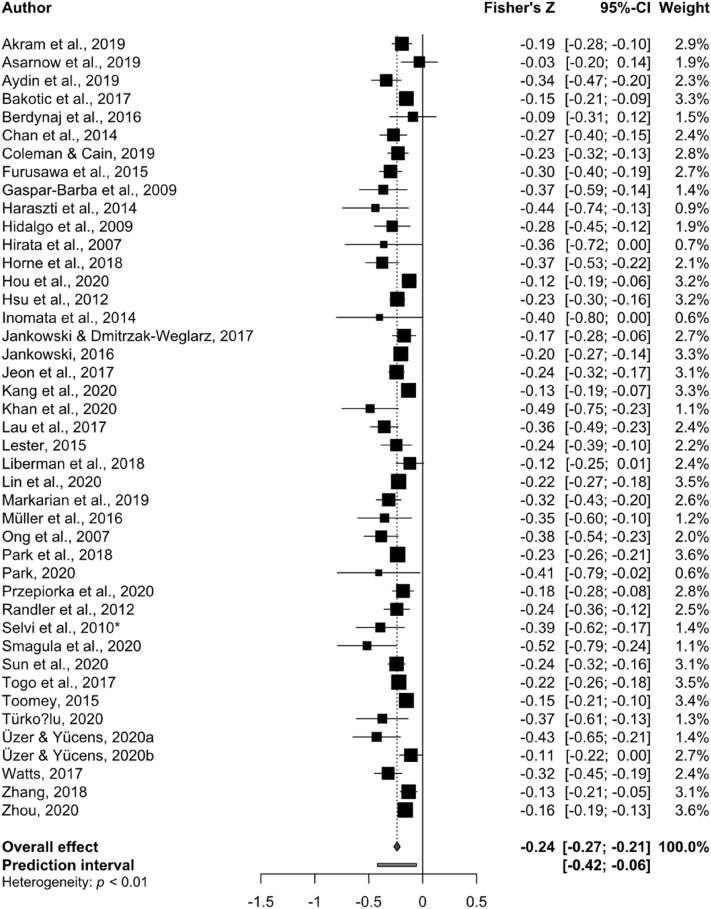
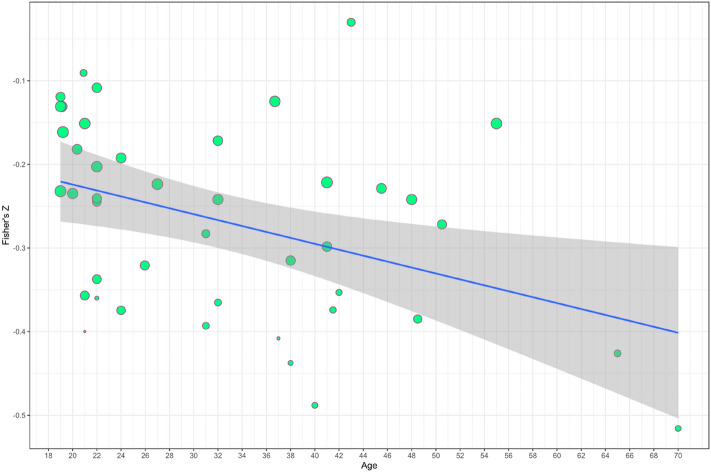
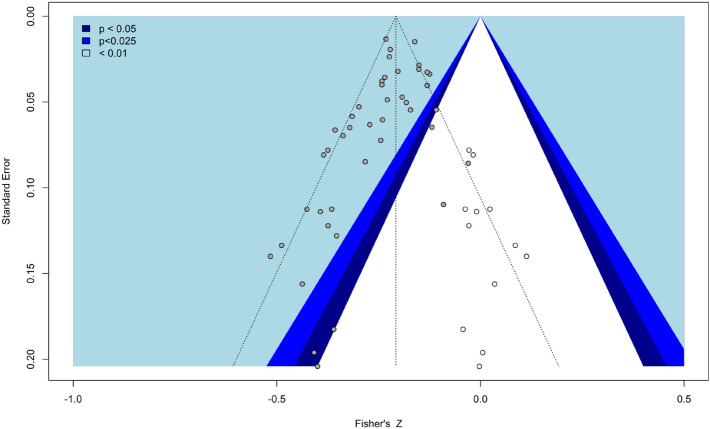
Eveningness, a preference for later sleep and rise times, has been associated with a number of negative outcomes in terms of both physical and mental health. A large body of evidence links eveningness to Major Depressive Disorder (MDD). However, to date, evidence quantifying this association is limited. The current meta-analysis included 43 effect sizes from a total 27,996 participants. Using a random-effects model it was demonstrated that eveningness is associated with a small effect size (Fisher's Z = - 2.4, 95% CI [- 0.27. - 0.21], p < 0.001). Substantial heterogeneity between studies was observed, with meta-regression analyses demonstrating a significant effect of mean age on the association between diurnal preference and depression. There was also evidence of potential publication bias as assessed by visual inspection of funnel plots and Egger's test. The association between diurnal preference and depression is small in magnitude and heterogenous. A better understanding of the mechanistic underpinnings linking diurnal preference to depression and suitably powered prospective studies that allow causal inference are required.
夜间型,即较晚的入睡和起床时间偏好,与身心健康的许多负面结果有关。大量证据表明,夜间型与重度抑郁症(MDD)有关。然而,迄今为止,量化这种关联的证据有限。目前的荟萃分析包括来自总计 27996 名参与者的 43 个效应量。使用随机效应模型表明,夜间型与较小的效应量相关(Fisher's Z=-2.4,95%置信区间[-0.27,-0.21],p<0.001)。研究之间存在大量的异质性,元回归分析表明,昼夜节律偏好与抑郁之间的关联受平均年龄的显著影响。通过漏斗图和 Egger 检验的视觉检查也表明存在潜在的发表偏倚证据。昼夜节律偏好与抑郁之间的关联在幅度和异质性上都较小。需要更好地理解将昼夜节律偏好与抑郁联系起来的机制基础,并进行有足够效力的前瞻性研究以允许因果推断。