Laboratory of Cellular Oncology, Center for Cancer Research, National Cancer Institute, National Institutes of Health, Bethesda, MD, USA.
Center for Cancer Research Microscopy Core, Laboratory of Cancer Biology and Genetics, National Cancer Institute, National Institutes of Health, Bethesda, MD, USA.
EMBO Mol Med. 2021 Jul 7;13(7):e14089. doi: 10.15252/emmm.202114089. Epub 2021 Jun 8.
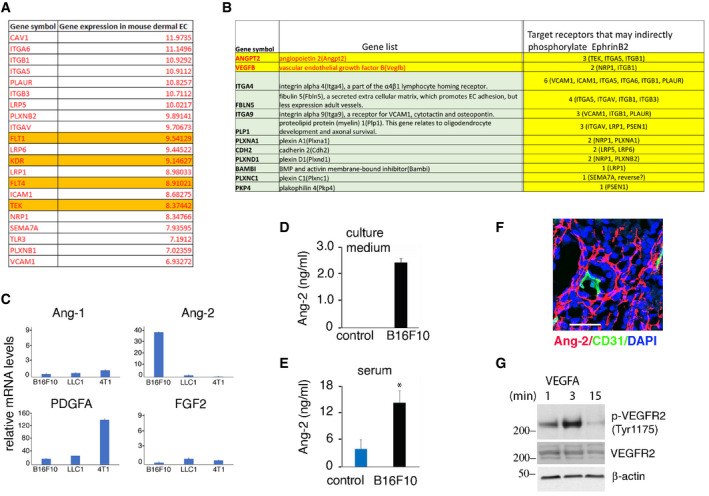
The tyrosine phosphatase SHP2 is oncogenic in cancers driven by receptor-tyrosine-kinases, and SHP2 inhibition reduces tumor growth. Here, we report that SHP2 is an essential promoter of endothelial cell survival and growth in the remodeling tumor vasculature. Using genetic and chemical approaches to inhibit SHP2 activity in endothelial cells, we show that SHP2 inhibits pro-apoptotic STAT3 and stimulates proliferative ERK1/2 signaling. Systemic SHP2 inhibition in mice bearing tumor types selected for SHP2-independent tumor cell growth promotes degeneration of the tumor vasculature and blood extravasation; reduces tumor vascularity and blood perfusion; and increases tumor necrosis. Reduction of tumor growth ensues, independent of SHP2 targeting in the tumor cells, blocking immune checkpoints, or recruiting macrophages. We also show that inhibiting the Angiopoietin/TIE2/AKT cascade magnifies the vascular and anti-tumor effects of SHP2 inhibition by blocking tumor endothelial AKT signaling, not a target of SHP2. Since the SHP2 and Ang2/TIE2 pathways are active in vascular endothelial cells of human melanoma and colon carcinoma, SHP2 inhibitors alone or with Ang2/TIE2 inhibitors hold promise to effectively target the tumor endothelium.
酪氨酸磷酸酶 SHP2 在受体酪氨酸激酶驱动的癌症中具有致癌作用,而 SHP2 抑制可减少肿瘤生长。在这里,我们报告 SHP2 是重塑肿瘤血管中内皮细胞存活和生长的必需促进剂。我们使用遗传和化学方法抑制内皮细胞中的 SHP2 活性,表明 SHP2 抑制促凋亡 STAT3 并刺激增殖 ERK1/2 信号。在携带选择用于 SHP2 非依赖性肿瘤细胞生长的肿瘤类型的小鼠中,全身性 SHP2 抑制可促进肿瘤血管退化和血液渗出;减少肿瘤血管生成和血液灌注;并增加肿瘤坏死。肿瘤生长随之减少,这与肿瘤细胞中 SHP2 靶向、阻断免疫检查点或招募巨噬细胞无关。我们还表明,通过阻断肿瘤内皮 AKT 信号,抑制血管生成素/ Tie2/ AKT 级联可放大 SHP2 抑制的血管和抗肿瘤作用,而 AKT 信号不是 SHP2 的靶点。由于 SHP2 和 Ang2/TIE2 途径在人类黑色素瘤和结肠癌的血管内皮细胞中活跃,因此 SHP2 抑制剂单独或与 Ang2/TIE2 抑制剂有望有效靶向肿瘤内皮。