School of Nursing, Midwifery and Indigenous Health, Charles Sturt University, Bathurst, NSW2795, Australia.
Flinders University, Bedford Park, SA, Australia.
Prim Health Care Res Dev. 2021 Jun 10;22:e29. doi: 10.1017/S1463423621000293.
To collaboratively explore the cultural acceptance of the Pepi-Pod® program as an alternate safe sleep space and to explore the process of implementing the Pepi-Pod® program in a mainstream health service for Aboriginal families living in urban South Australia.
Aboriginal and Torres Strait Islander infants continue to die from sudden infant death syndrome (SIDS) and sudden unexpected death in infancy (SUDI) at rates three to four times greater than other infants born in Australia despite Council of Australian Governments commitment to halve the gap in the Indigenous infant mortality rate by 2018. The Pepi-Pod® program is evidenced in New Zealand and Queensland to provide a culturally appropriate safe sleep alternative that contributes to the reduction of SIDS and SUDI. We have no evidence of acceptability or feasibility when offered through mainstream services in metropolitan South Australia.
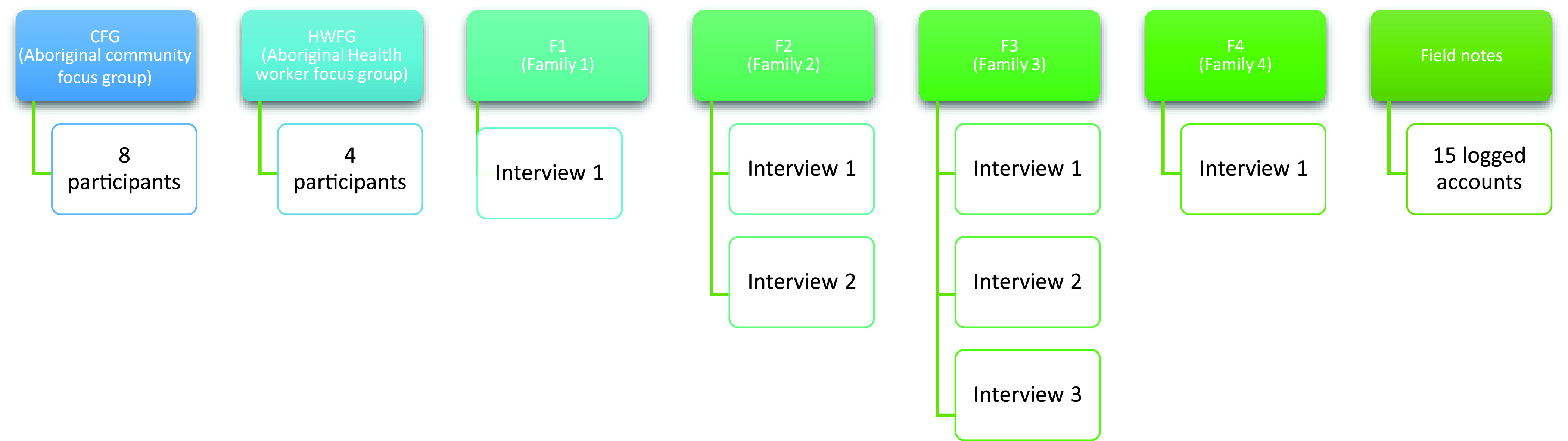
With a focus on decolonizing the research process through a two-way process for mutual learning between Aboriginal and non-Aboriginal team members and community, a novel qualitative design was employed including photo elicited yarning sessions (n = 7), focus groups (n = 2), and field notes (n = 15).
Four themes emerged: 'you don't have to worry'; 'a way of sharing knowledge'; 'it looks like a bread box?' and 'need for consistent safe sleep messages'. The findings suggest that participants believe the Pepi-Pod® program may enrich Aboriginal families' lives evoking feelings of comfort and safety; however, the design could be improved to make them more culturally appropriate. There was confusion around safe sleep processes and education with a call for streamlining safe sleep messaging.
共同探讨 Pepi-Pod® 计划作为替代安全睡眠空间的文化接受度,并探索在南澳大利亚城市主流卫生服务中为原住民家庭实施 Pepi-Pod® 计划的过程。
尽管澳大利亚政府承诺到 2018 年将原住民婴儿死亡率差距缩小一半,但原住民和托雷斯海峡岛民婴儿的婴儿猝死综合征 (SIDS) 和婴儿意外猝死 (SUDI) 死亡率仍然是其他澳大利亚出生婴儿的三到四倍。 Pepi-Pod® 计划在新西兰和昆士兰州已经证明是一种提供文化适宜的安全睡眠替代方案,有助于减少 SIDS 和 SUDI。我们没有在南澳大利亚城市主流服务中提供的可接受性或可行性的证据。
通过原住民和非原住民团队成员和社区之间的双向学习过程,将重点放在使研究过程去殖民化上,采用了一种新颖的定性设计,包括照片引发的交谈会议 (n = 7)、焦点小组 (n = 2) 和现场记录 (n = 15)。
出现了四个主题:“你不必担心”;“一种分享知识的方式”;“它看起来像面包盒吗?”和“需要一致的安全睡眠信息”。研究结果表明,参与者认为 Pepi-Pod® 计划可能丰富原住民家庭的生活,引起舒适和安全的感觉;然而,设计可以改进,使它们更具文化适宜性。在安全睡眠流程和教育方面存在混淆,呼吁简化安全睡眠信息。