Institute of Psychology, Cardinal Stefan Wyszyński University in Warsaw, ul. Wóycickiego 1/3 bud. 14, 01-938, Warsaw, Poland.
Psychol Res. 2022 Apr;86(3):968-982. doi: 10.1007/s00426-021-01544-z. Epub 2021 Jun 10.
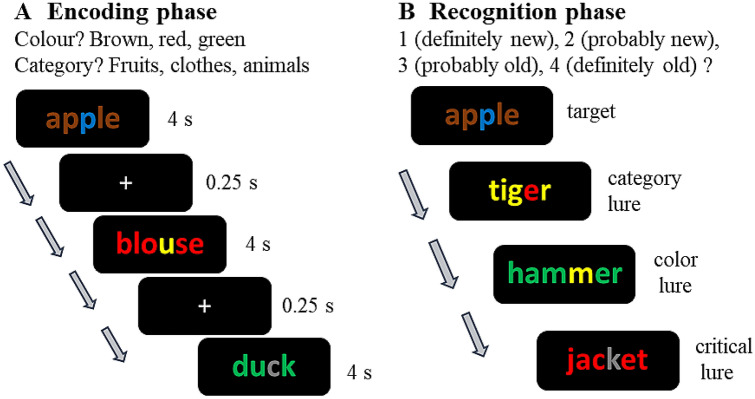
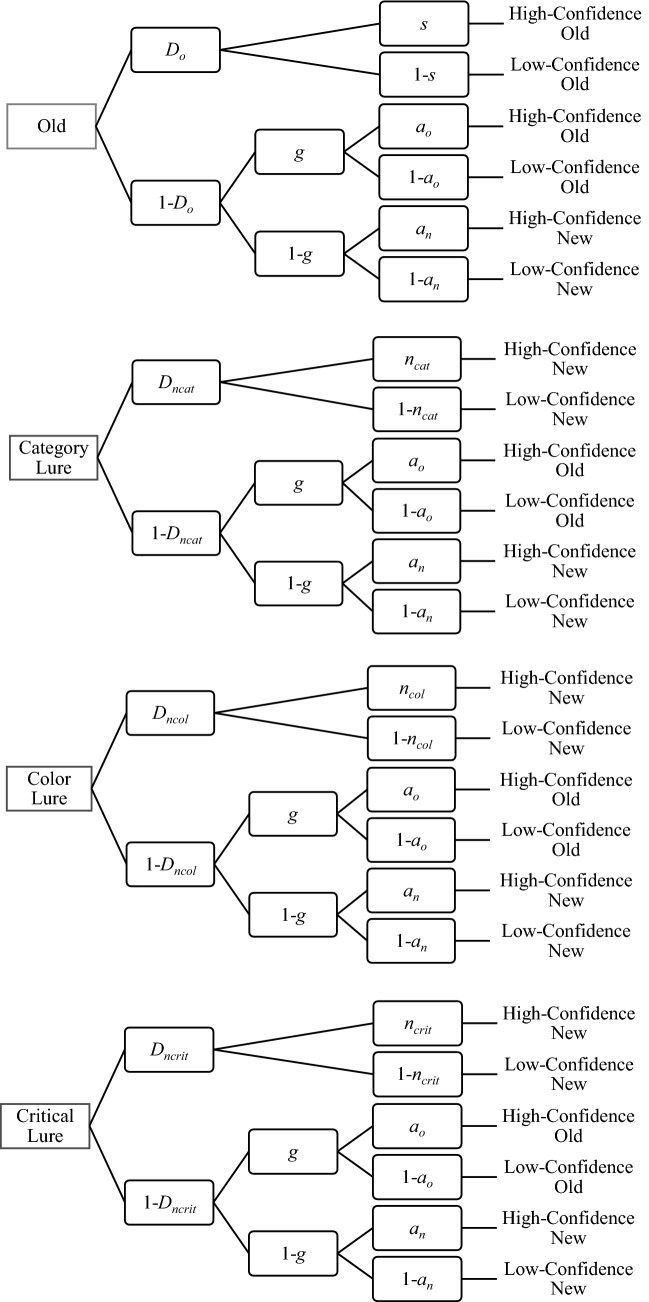
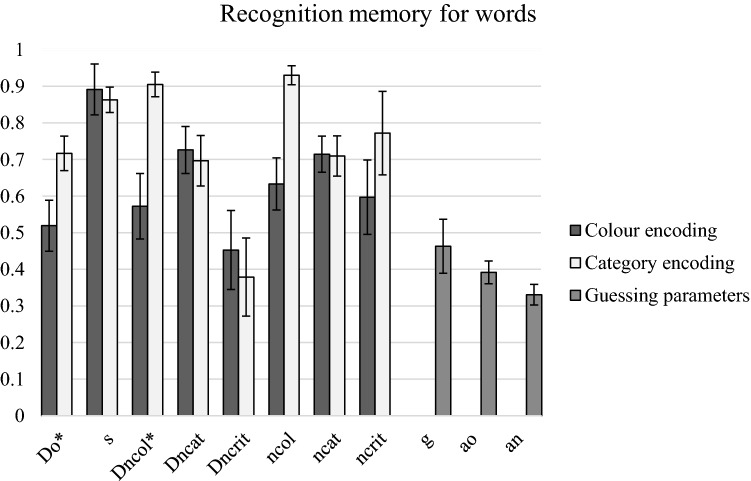
False recognition memory for nonstudied items that share features with targets can be reduced by retrieval monitoring mechanisms. The recall-to-reject process, for example, involves the recollection of information about studied items that disqualifies inconsistent test probes. Monitoring for specific features during retrieval may be enhanced by an encoding orientation that is recapitulated during retrieval. In two experiments, we used concrete words or door scenes as materials and manipulated the level of processing at study and the type of distractors presented at test. We showed that for the verbal material, semantic level of processing at study results in an effective rejection of semantically inconsistent distractors. However, for the pictorial material, the perceptual level of processing leads to an effective rejection of perceptually inconsistent distractors. For targets, the effect of levels of processing was observed for words but not for pictures. The results suggest that retrieval monitoring mechanisms depend on interactions between encoding orientation, study materials, and differentiating features of distractors.
通过提取监测机制,可减少与目标具有共同特征的未学习项目的错误识别记忆。例如,召回拒绝过程涉及对已学项目信息的回忆,这些信息可排除不一致的测试探针。在提取过程中对特定特征进行监测,可能会受到提取过程中再现的编码定向的增强。在两项实验中,我们使用具体单词或门场景作为材料,并在研究时操纵处理水平以及在测试时呈现的干扰物类型。我们表明,对于口头材料,研究时的语义处理水平可有效拒绝语义上不一致的干扰物。但是,对于图片材料,知觉处理水平可有效拒绝知觉上不一致的干扰物。对于目标,在单词上观察到处理水平的影响,但在图片上则没有。结果表明,提取监测机制取决于编码定向、研究材料和干扰物区分特征之间的相互作用。