Department of Biochemistry, Molecular Biology, and Biophysics, University of Minnesota, Minneapolis, Minnesota 55455, United States.
Department of Environmental Science, Stockholm University, Stockholm SE-106 91, Sweden.
Chem Res Toxicol. 2021 Jul 19;34(7):1769-1781. doi: 10.1021/acs.chemrestox.1c00111. Epub 2021 Jun 10.
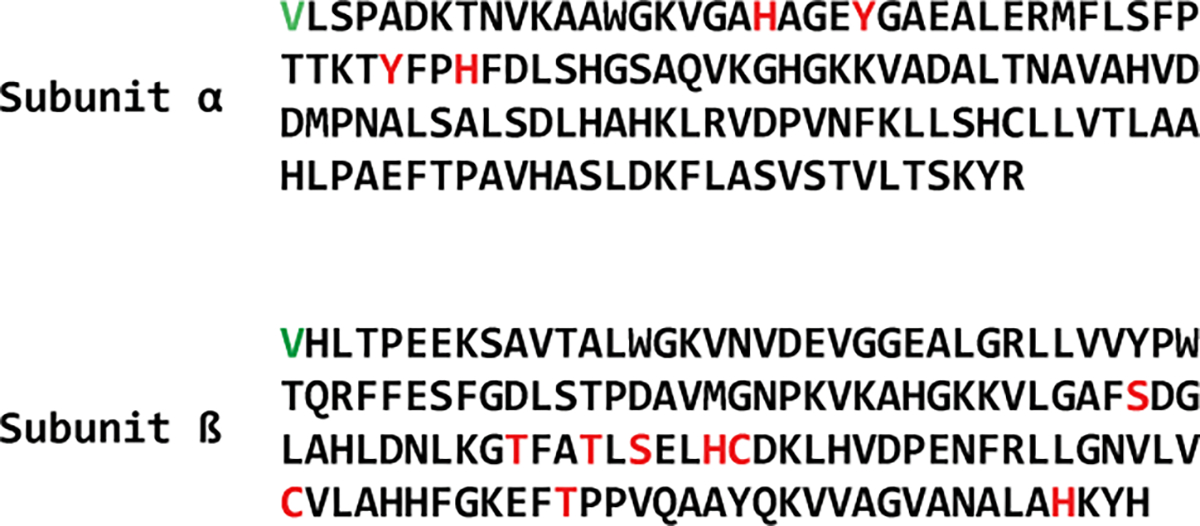
Humans are exposed to large numbers of electrophiles from their diet, the environment, and endogenous physiological processes. Adducts formed at the N-terminal valine of hemoglobin are often used as biomarkers of human exposure to electrophilic compounds. We previously reported the formation of hemoglobin N-terminal valine adducts (added mass, 106.042 Da) in the blood of human smokers and nonsmokers and identified their structure as 4-hydroxybenzyl-Val. In the present work, mass spectrometry-based proteomics was utilized to identify additional sites for 4-hydroxybenzyl adduct formation at internal nucleophilic amino acid side chains within hemoglobin. Hemoglobin isolated from human blood was treated with -quinone methide (-QM) followed by global nanoLC-MS/MS and targeted nanoLC-MS/MS to identify amino acid residues containing the 4-hydroxybenzyl modification. Our experiments revealed the formation of 4-hydroxybenzyl adducts at the αHis20, αTyr24, αTyr42, αHis45, βSer72, βThr84, βThr87, βSer89, βHis92, βCys93, βCys112, βThr123, and βHis143 residues (in addition to N-terminal valine) through characteristic MS/MS spectra. These amino acid side chains had variable reactivity toward -QM with αHis45, αTyr42, βCys93, βHis92, and βSer72 forming the largest numbers of adducts upon exposure to -QM. Two additional mechanisms for formation of 4-hydroxybenzyl adducts in humans were investigated: exposure to 4-hydroxybenzaldehyde (4-HBA) followed by reduction and UV-mediated reactions of hemoglobin with tyrosine. Exposure of hemoglobin to a 5-fold molar excess of 4-HBA followed by reduction with sodium cyanoborohydride produced 4-hydroxybenzyl adducts at several amino acid side chains of which αHis20, αTyr24, αTyr42, αHis45, βSer44, βThr84, and βHis92 were verified in targeted mass spectrometry experiments. Similarly, exposure of human blood to ultraviolet radiation produced 4-hydroxybenzyl adducts at αHis20, αTyr24, αTyr42, αHis45, βSer44, βThr84, and βSer89. Overall, our results reveal that 4-hydroxybenzyl adducts form at multiple nucleophilic sites of hemoglobin and that -QM is the most likely source of these adducts in humans.
人类从饮食、环境和内源性生理过程中接触到大量的亲电试剂。血红蛋白 N 末端缬氨酸形成的加合物通常被用作人类暴露于亲电化合物的生物标志物。我们之前报道了在人类吸烟者和不吸烟者的血液中形成血红蛋白 N 末端缬氨酸加合物(附加质量,106.042 Da),并鉴定其结构为 4-羟基苯甲基-Val。在本工作中,基于质谱的蛋白质组学被用于鉴定血红蛋白内部亲核氨基酸侧链中 4-羟基苯甲基加合物形成的其他位点。用 - 醌甲醚(-QM)处理从人血中分离出的血红蛋白,然后进行全局纳升 LC-MS/MS 和靶向纳升 LC-MS/MS,以鉴定含有 4-羟基苯甲基修饰的氨基酸残基。我们的实验表明,除了 N 末端缬氨酸外,4-羟基苯甲基加合物还形成于αHis20、αTyr24、αTyr42、αHis45、βSer72、βThr84、βThr87、βSer89、βHis92、βCys93、βCys112、βThr123 和βHis143 残基(通过特征性 MS/MS 谱)。这些氨基酸侧链对 -QM 的反应性不同,其中αHis45、αTyr42、βCys93、βHis92 和βSer72 在暴露于 -QM 时形成的加合物数量最多。还研究了人类中形成 4-羟基苯甲基加合物的另外两种机制:暴露于 4-羟基苯甲醛(4-HBA),然后还原和血红蛋白与酪氨酸的 UV 介导反应。血红蛋白暴露于 5 倍摩尔过量的 4-HBA,然后用氰基硼氢化钠还原,在几个氨基酸侧链上产生 4-羟基苯甲基加合物,其中αHis20、αTyr24、αTyr42、αHis45、βSer44、βThr84 和βHis92 在靶向质谱实验中得到验证。同样,将人血暴露于紫外线辐射会在αHis20、αTyr24、αTyr42、αHis45、βSer44、βThr84 和βSer89 处形成 4-羟基苯甲基加合物。总的来说,我们的结果表明,4-羟基苯甲基加合物在血红蛋白的多个亲核位点形成,并且 -QM 是这些加合物在人类中最有可能的来源。