Luchini Karstan, Sloan Shelly N B, Mauro Ryan, Sargsyan Aspram, Newman Aundrea, Persaud Purnadeo, Hawkins Daniel, Wolff Dennis, Staudinger Jeff, Creamer Bradley A
Department of Basic Sciences, Kansas City University, College of Medicine, Farber-McIntire Campus, Joplin, MO, USA.
Department of Biology and Environmental Health, Missouri Southern State University, Joplin, MO, USA.
3D Print Med. 2021 Jun 11;7(1):16. doi: 10.1186/s41205-021-00106-8.
The emergence of the severe acute respiratory syndrome coronavirus 2 (SARS-CoV-2) pandemic during the fall of 2019 and into the spring of 2020 has led to an increased demand of disposable N95 respirators and other types of personal protective equipment (PPE) as a way to prevent virus spread and help ensure the safety of healthcare workers. The sudden demand led to rapid modification, development, and dissemination of 3D printed PPE. The goal of this study was to determine the inherent sterility and re-sterilizing ability of 3D printed PPE in order to provide sterile equipment to the healthcare field and the general public.
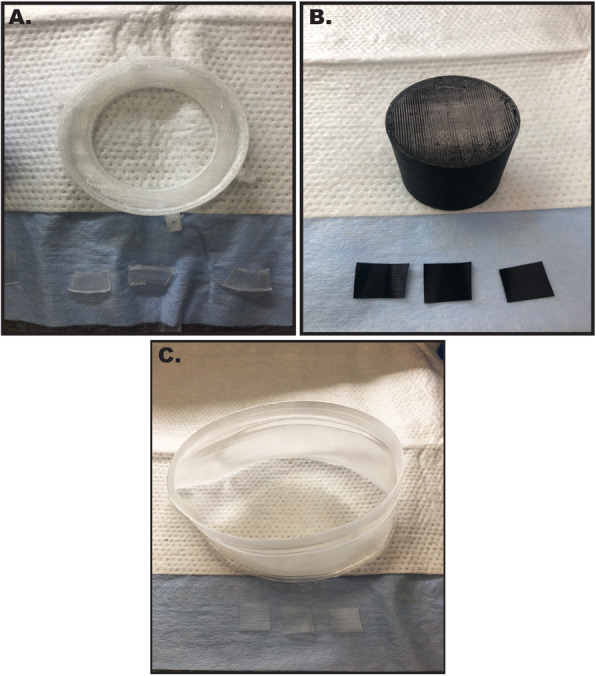
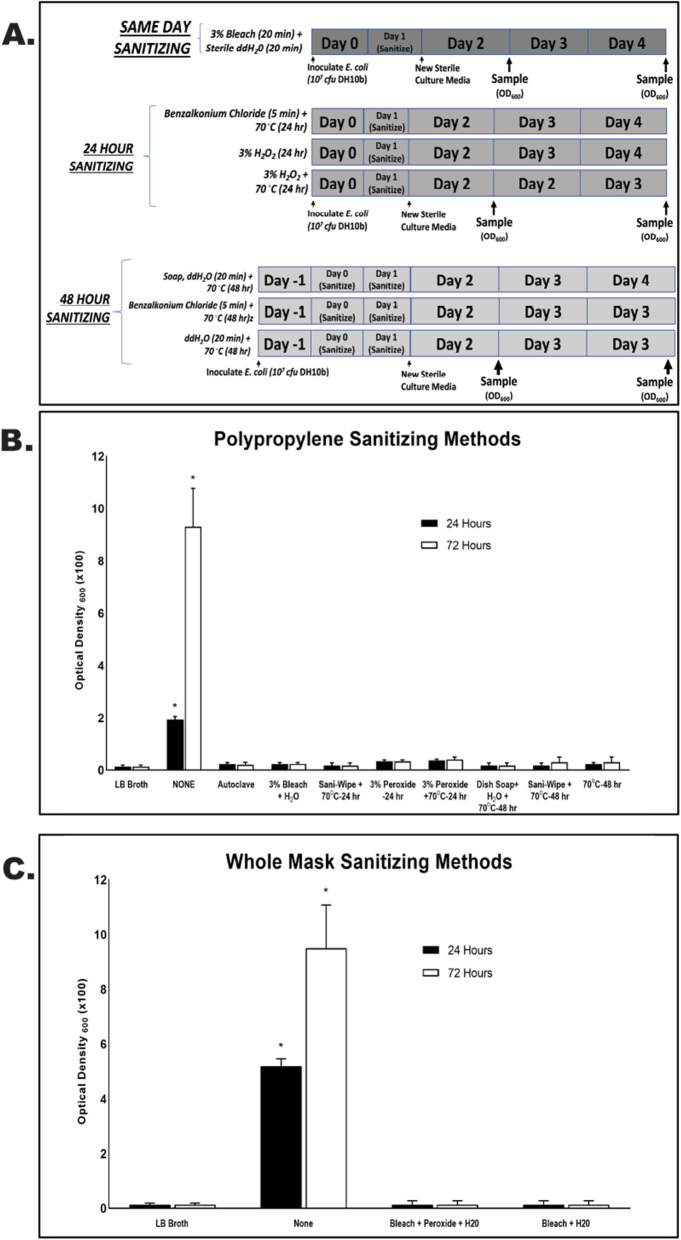
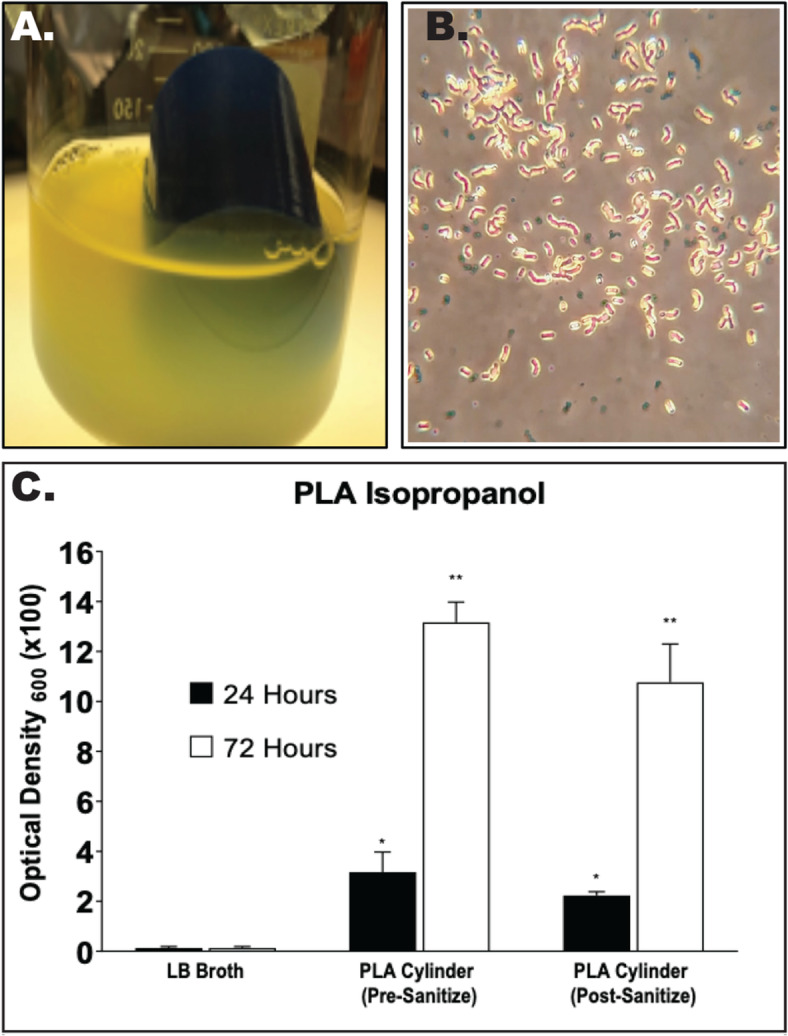
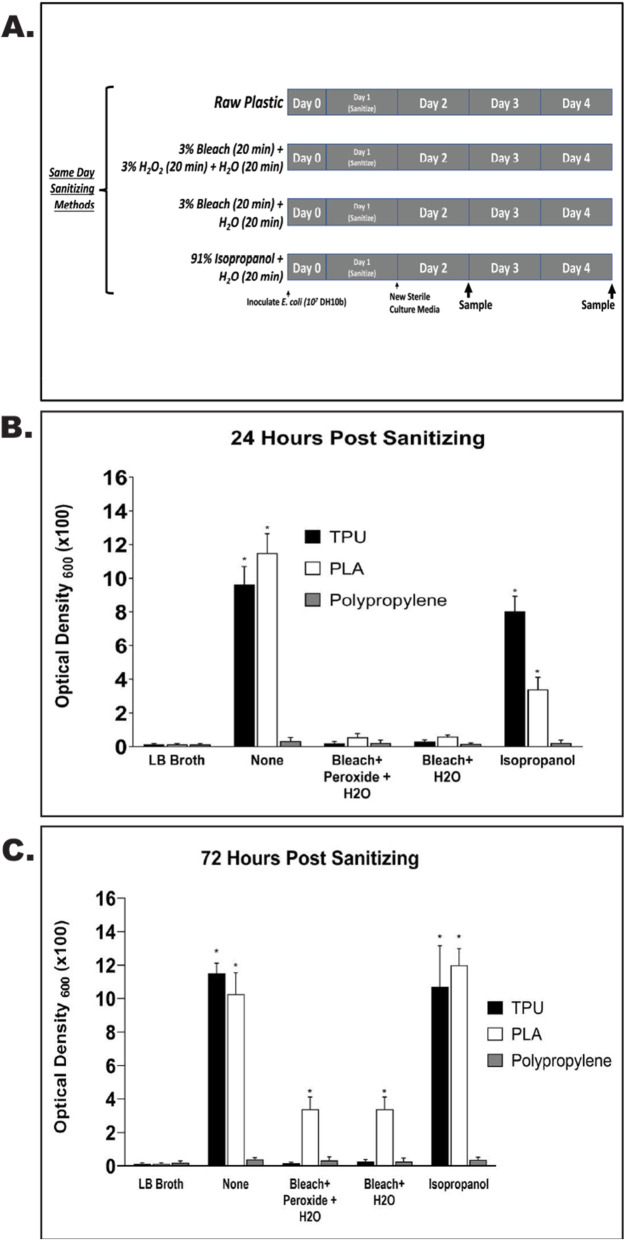
Samples of polylactic acid (PLA), thermoplastic polyurethane (TPU) (infill-based designs) and polypropylene (single-wall hollow design) were 3D printed. Samples were inoculated with E. coli for 24 h and then sanitized using various chemical solutions or heat-based methods. The samples were then incubated for 24- or 72-h in sterile LB medium at 37°C, and bacterial growth was measured by optical density at 600nm. Statistical analysis was conducted using GraphPad Prism v8.2.1.
Significant bacterial growth was observed in all PLA and TPU based samples following re-sterilization, regardless of the methods used when compared to controls (p < 0.05). The single-walled hollow polypropylene design was not only sterile following printing, but was also able to undergo re-sanitization following bacterial inoculation, with no significant bacterial growth (p > 0.05) observed regardless of sanitization method used.
The cost effectiveness, ease of sanitization, and reusability of 3D printed PPE, using our novel single-walled polypropylene design can help meet increased demands of PPE for healthcare workers and the general public that are needed to help decrease the viral transmission of the coronavirus disease of 2019 (COVID-19) pandemic. 3D printing also has the potential to lead to the creation and production of other sterile material items for the healthcare industry in the future. The ability to re-sterilize 3D printed PPE, as our design shows, would also contribute less to the increase in biomedical waste (BMW) being experienced by COVID-19.
2019年秋季至2020年春季期间,严重急性呼吸综合征冠状病毒2(SARS-CoV-2)大流行的出现,导致一次性N95口罩和其他类型个人防护装备(PPE)的需求增加,以此作为预防病毒传播和帮助确保医护人员安全的一种方式。这一突然的需求促使3D打印个人防护装备得到快速改进、开发和传播。本研究的目的是确定3D打印个人防护装备的固有无菌性和再消毒能力,以便为医疗领域和普通公众提供无菌设备。
对聚乳酸(PLA)、热塑性聚氨酯(TPU)(基于填充的设计)和聚丙烯(单壁中空设计)样本进行3D打印。样本接种大肠杆菌24小时,然后使用各种化学溶液或基于加热的方法进行消毒。然后将样本在37°C的无菌LB培养基中培养24小时或72小时,并通过600nm处的光密度测量细菌生长情况。使用GraphPad Prism v8.2.1进行统计分析。
与对照组相比,所有基于PLA和TPU的样本在再消毒后均观察到显著的细菌生长,无论使用何种方法(p < 0.05)。单壁中空聚丙烯设计不仅在打印后无菌,而且在细菌接种后还能够进行再次消毒,无论使用何种消毒方法,均未观察到显著的细菌生长(p > 0.05)。
采用我们新颖的单壁聚丙烯设计的3D打印个人防护装备具有成本效益、易于消毒和可重复使用的特点,有助于满足医护人员和普通公众对个人防护装备不断增加的需求,这些需求对于帮助减少2019冠状病毒病(COVID-19)大流行中的病毒传播是必要的。3D打印还有可能在未来促使为医疗行业创造和生产其他无菌材料物品。正如我们的设计所示,3D打印个人防护装备的再消毒能力也将对COVID-19所导致的生物医疗废物(BMW)增加贡献较小。