State Key Laboratory of Biochemical Engineering, Institute of Process Engineering, Chinese Academy of Sciences, Beijing, 100190, China.
School of Chemistry and Chemical Engineering, University of Chinese Academy of Science, Beijing, 100049, China.
J Neuroinflammation. 2021 Jun 11;18(1):131. doi: 10.1186/s12974-021-02182-3.
Tau pathology is a hallmark of Alzheimer's disease (AD) and other tauopathies. During disease progression, abnormally phosphorylated forms of tau aggregate and accumulate into neurofibrillary tangles, leading to synapse loss, neuroinflammation, and neurodegeneration. Thus, targeting of tau pathology is expected to be a promising strategy for AD treatment.
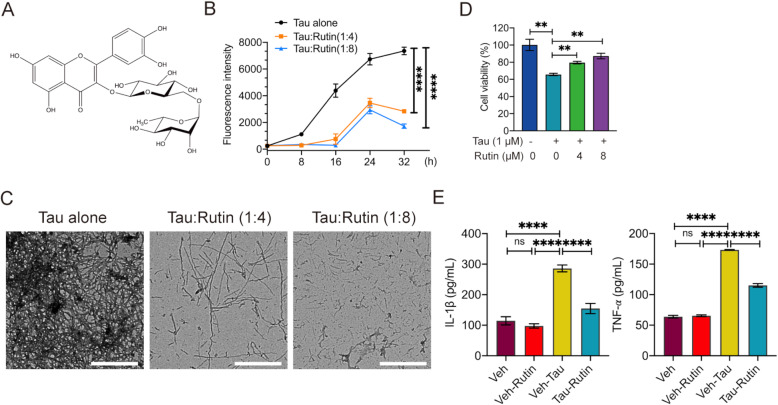
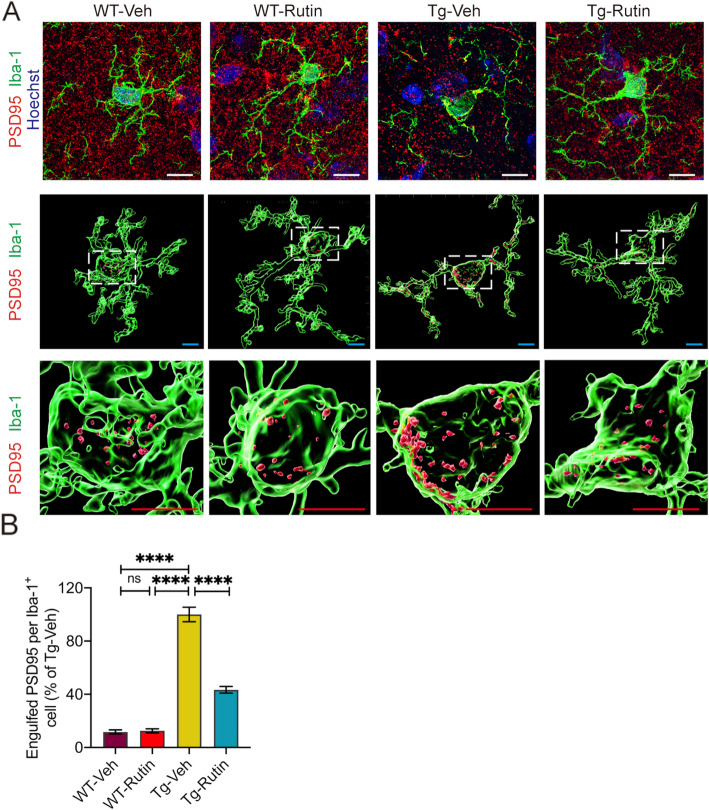
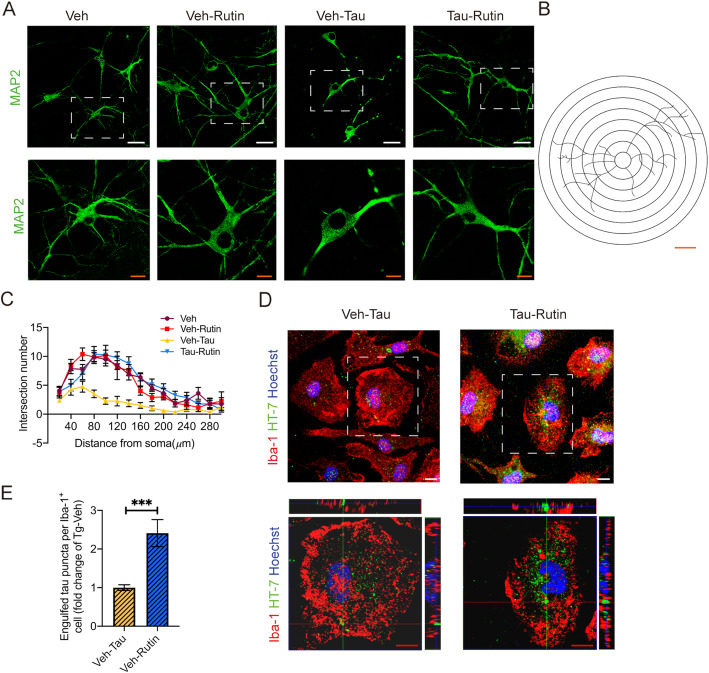
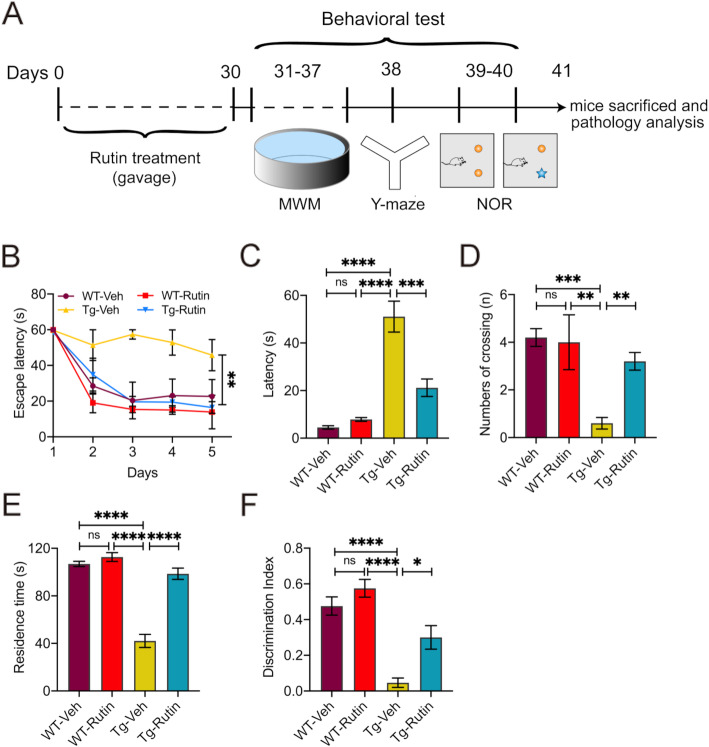
The effect of rutin on tau aggregation was detected by thioflavin T fluorescence and transmission electron microscope imaging. The effect of rutin on tau oligomer-induced cytotoxicity was assessed by MTT assay. The effect of rutin on tau oligomer-mediated the production of IL-1β and TNF-α in vitro was measured by ELISA. The uptake of extracellular tau by microglia was determined by immunocytochemistry. Six-month-old male Tau-P301S mice were treated with rutin or vehicle by oral administration daily for 30 days. The cognitive performance was determined using the Morris water maze test, Y-maze test, and novel object recognition test. The levels of pathological tau, gliosis, NF-kB activation, proinflammatory cytokines such as IL-1β and TNF-α, and synaptic proteins including synaptophysin and PSD95 in the brains of the mice were evaluated by immunolabeling, immunoblotting, or ELISA.
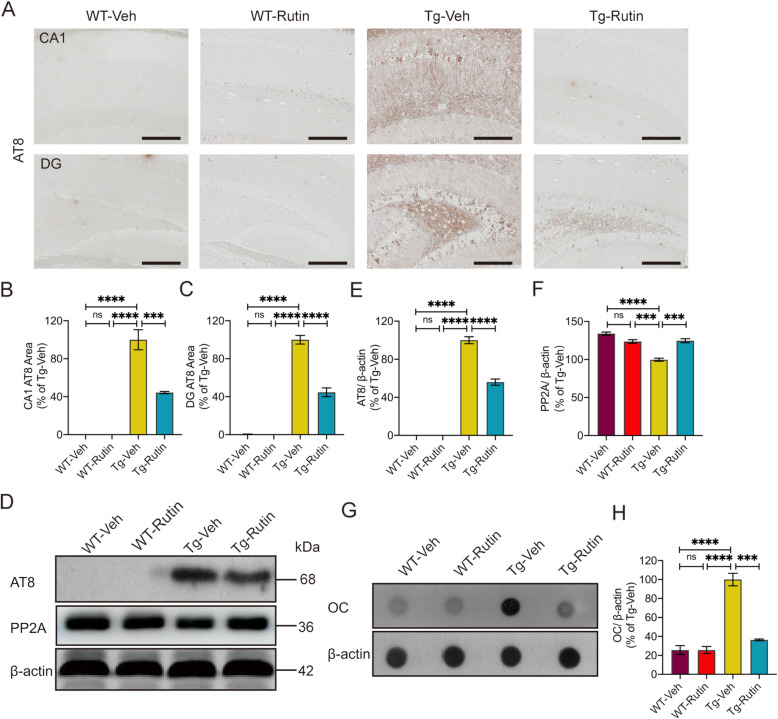
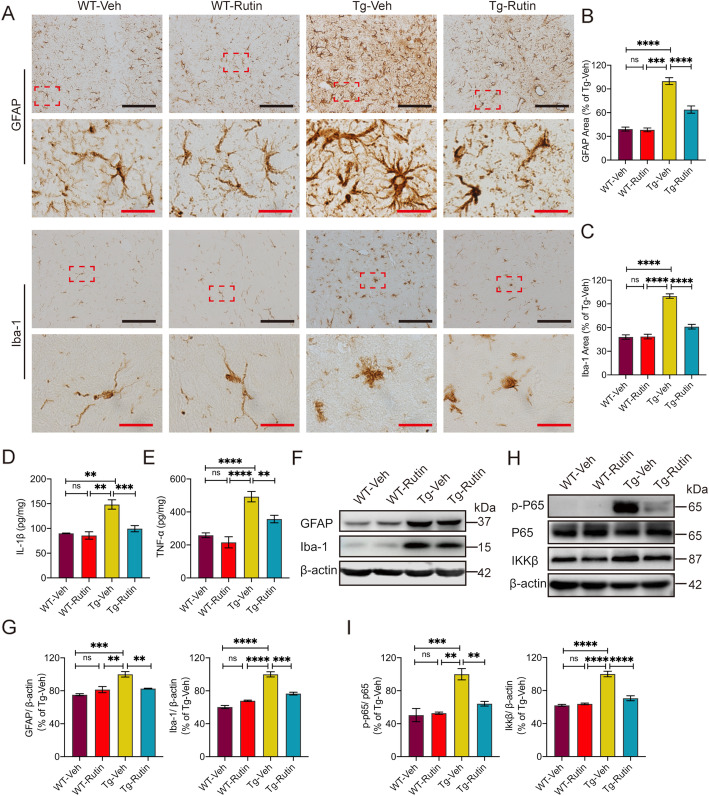
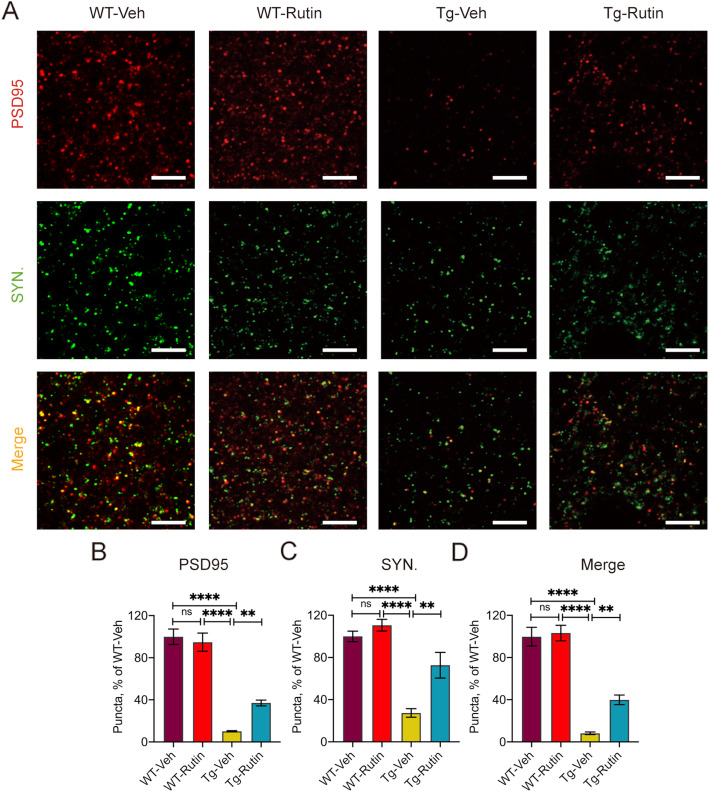
We showed that rutin, a natural flavonoid glycoside, inhibited tau aggregation and tau oligomer-induced cytotoxicity, lowered the production of proinflammatory cytokines, protected neuronal morphology from toxic tau oligomers, and promoted microglial uptake of extracellular tau oligomers in vitro. When applied to Tau-P301S mouse model of tauopathy, rutin reduced pathological tau levels, regulated tau hyperphosphorylation by increasing PP2A level, suppressed gliosis and neuroinflammation by downregulating NF-kB pathway, prevented microglial synapse engulfment, and rescued synapse loss in mouse brains, resulting in a significant improvement of cognition.
In combination with the previously reported therapeutic effects of rutin on Aβ pathology, rutin is a promising drug candidate for AD treatment based its combinatorial targeting of tau and Aβ.
tau 蛋白病理是阿尔茨海默病(AD)和其他 tau 病的标志。在疾病进展过程中,tau 蛋白异常磷酸化形成聚集体并积累成神经纤维缠结,导致突触丧失、神经炎症和神经退行性变。因此,靶向 tau 病理被认为是 AD 治疗的一种有前途的策略。
用硫黄素 T 荧光和透射电子显微镜成像检测芦丁对 tau 聚集的影响。通过 MTT 测定法评估芦丁对 tau 寡聚物诱导的细胞毒性的影响。通过 ELISA 测定芦丁对 tau 寡聚物介导的体外 IL-1β和 TNF-α产生的影响。通过免疫细胞化学测定小胶质细胞摄取细胞外 tau 的情况。用芦丁或载体通过口服每天处理 6 个月大的 Tau-P301S 雄性小鼠 30 天。使用 Morris 水迷宫测试、Y 迷宫测试和新物体识别测试来确定认知表现。通过免疫标记、免疫印迹或 ELISA 评估小鼠大脑中病理 tau、神经胶质增生、NF-kB 激活、IL-1β和 TNF-α等促炎细胞因子以及包括突触蛋白和 PSD95 的突触蛋白的水平。
我们表明,芦丁,一种天然黄酮糖苷,抑制 tau 聚集和 tau 寡聚物诱导的细胞毒性,降低促炎细胞因子的产生,保护神经元形态免受有毒 tau 寡聚物的影响,并促进小胶质细胞摄取细胞外 tau 寡聚物体外。当应用于 tau 病 Tau-P301S 小鼠模型时,芦丁降低了病理 tau 水平,通过增加 PP2A 水平调节 tau 过度磷酸化,通过下调 NF-kB 通路抑制神经胶质增生和神经炎症,防止小胶质细胞吞噬突触,并挽救小鼠大脑中的突触丢失,导致认知显著改善。
结合芦丁先前报道的对 Aβ 病理的治疗作用,芦丁作为一种有前途的药物候选物,因其对 tau 和 Aβ 的联合靶向作用,可用于 AD 治疗。