Zhang Wenhao, Li Changjiu, Wu Fanding, Li Ning, Wang Yuwei, Hu Yixuan, Fang Tiantian, Yuan Hui, He Huadong
The Fourth School of Clinical Medicine, Zhejiang Chinese Medical University, Hangzhou, China.
Department of Urology, Affiliated Hangzhou First People's Hospital, Zhejiang University School of Medicine, Hangzhou, China.
Front Mol Biosci. 2021 May 28;8:689037. doi: 10.3389/fmolb.2021.689037. eCollection 2021.
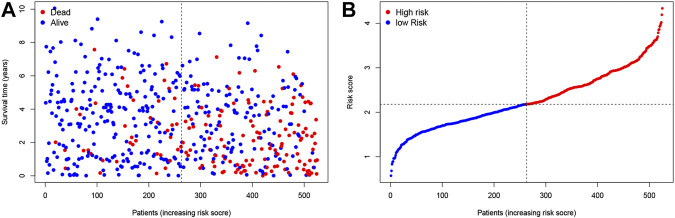
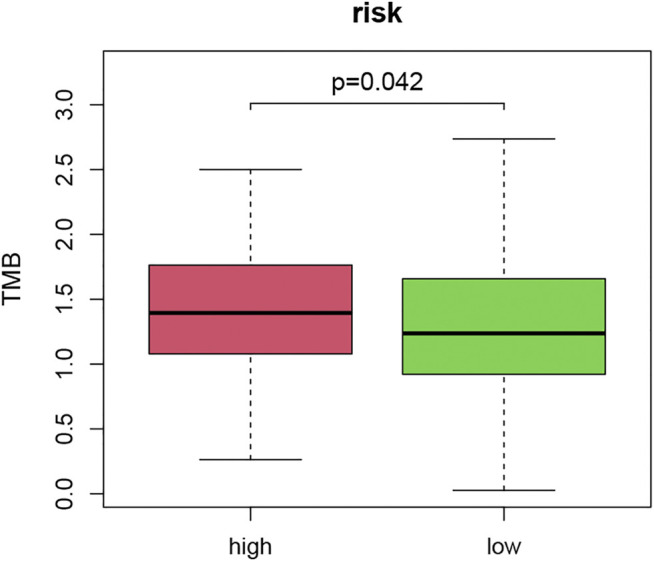
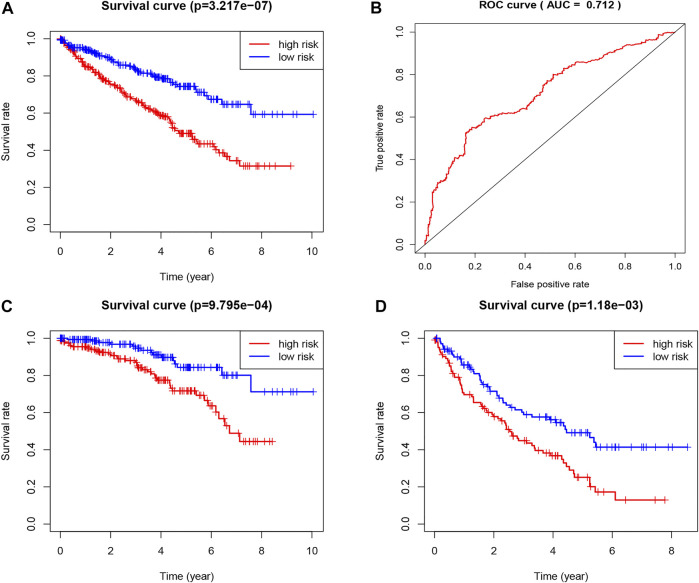
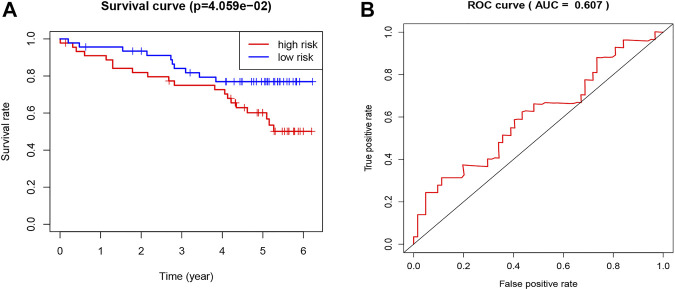
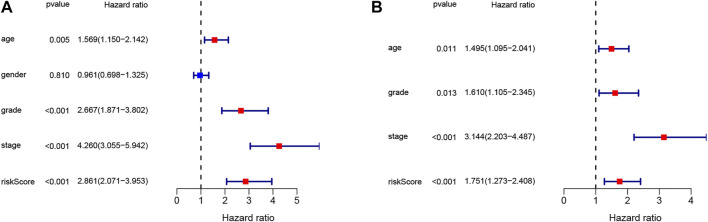
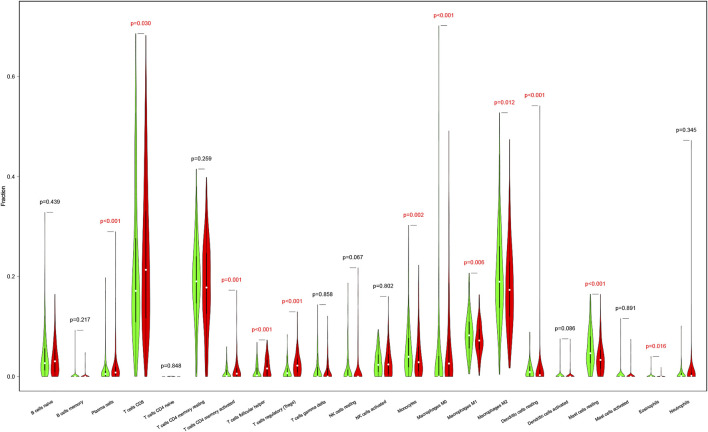
Kidney renal clear cell carcinoma (KIRC) has the highest incidence rate in renal cell carcinoma (RCC). Although bioinformatics is widely used in cancer, few reliable biomarkers of KIRC have been found. Therefore, continued efforts are required to elucidate the potential mechanism of the biogenesis and progression of KIRC. We evaluated the expression of tumor necrosis factor (TNF) family genes in KIRC, and constructed a prognostic signature. We validated the signature by another database and explored the relationship between the signature and progression of KIRC. We assessed the prognostic value, immune infiltration, and tumor mutation burden (TMB) of the signature in KIRC. We selected four key genes (, , , and ) to construct the TNF-related signature. We divided the KIRC patients into high- and low-risk groups based on the signature. Patients with higher risk scores had shorter overall survival and worse prognosis. With another database, we validated the value of the signature. The signature was considered as an independent risk factor. A higher level of risk score was relevant to higher level of immune infiltration, especially T regulatory cells, CD8 T cells, and macrophages. The signature was also associated with TMB scores, and it may have an effect on assessing the efficacy of immunotherapy. This is the first TNF-family-related signature of KIRC and we demonstrated its effectiveness. It played a significant role in predicting the prognosis of patients with KIRC. It also has the potential to become a powerful tool in guiding the immunotherapy of KIRC patients in clinical practice.
肾透明细胞癌(KIRC)在肾细胞癌(RCC)中发病率最高。尽管生物信息学在癌症研究中被广泛应用,但KIRC可靠的生物标志物却鲜有发现。因此,仍需持续努力以阐明KIRC发生发展的潜在机制。我们评估了KIRC中肿瘤坏死因子(TNF)家族基因的表达,并构建了一个预后特征。我们通过另一个数据库验证了该特征,并探讨了其与KIRC进展的关系。我们评估了该特征在KIRC中的预后价值、免疫浸润和肿瘤突变负荷(TMB)。我们选择了四个关键基因(,,,和)构建TNF相关特征。我们根据该特征将KIRC患者分为高风险组和低风险组。风险评分较高的患者总生存期较短,预后较差。通过另一个数据库,我们验证了该特征的价值。该特征被认为是一个独立的风险因素。较高的风险评分水平与较高水平的免疫浸润相关,尤其是调节性T细胞、CD8 T细胞和巨噬细胞。该特征还与TMB评分相关,可能对评估免疫治疗疗效有影响。这是首个与KIRC相关的TNF家族特征,我们证明了其有效性。它在预测KIRC患者预后方面发挥了重要作用。在临床实践中,它也有潜力成为指导KIRC患者免疫治疗的有力工具。