Kühne Michael, Knecht Sven, Spies Florian, Aeschbacher Stefanie, Haaf Philip, Zellweger Michael, Schaer Beat, Osswald Stefan, Sticherling Christian
Department of Cardiology, University Hospital of Basel, Basel, Switzerland.
Front Cardiovasc Med. 2021 May 26;8:664538. doi: 10.3389/fcvm.2021.664538. eCollection 2021.
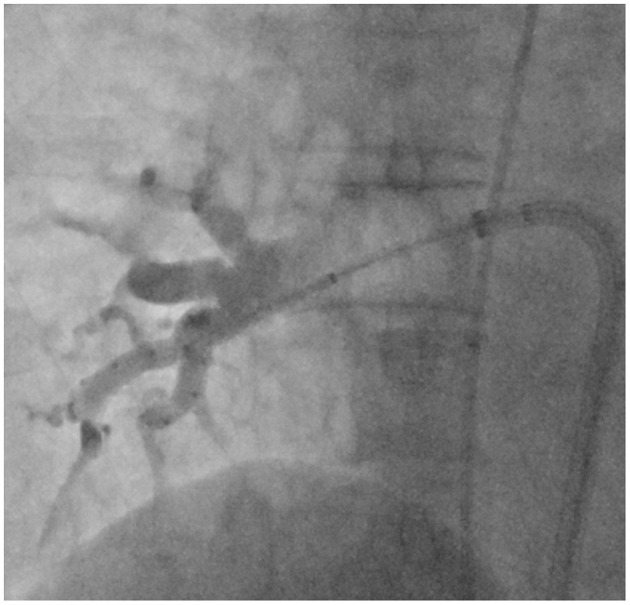
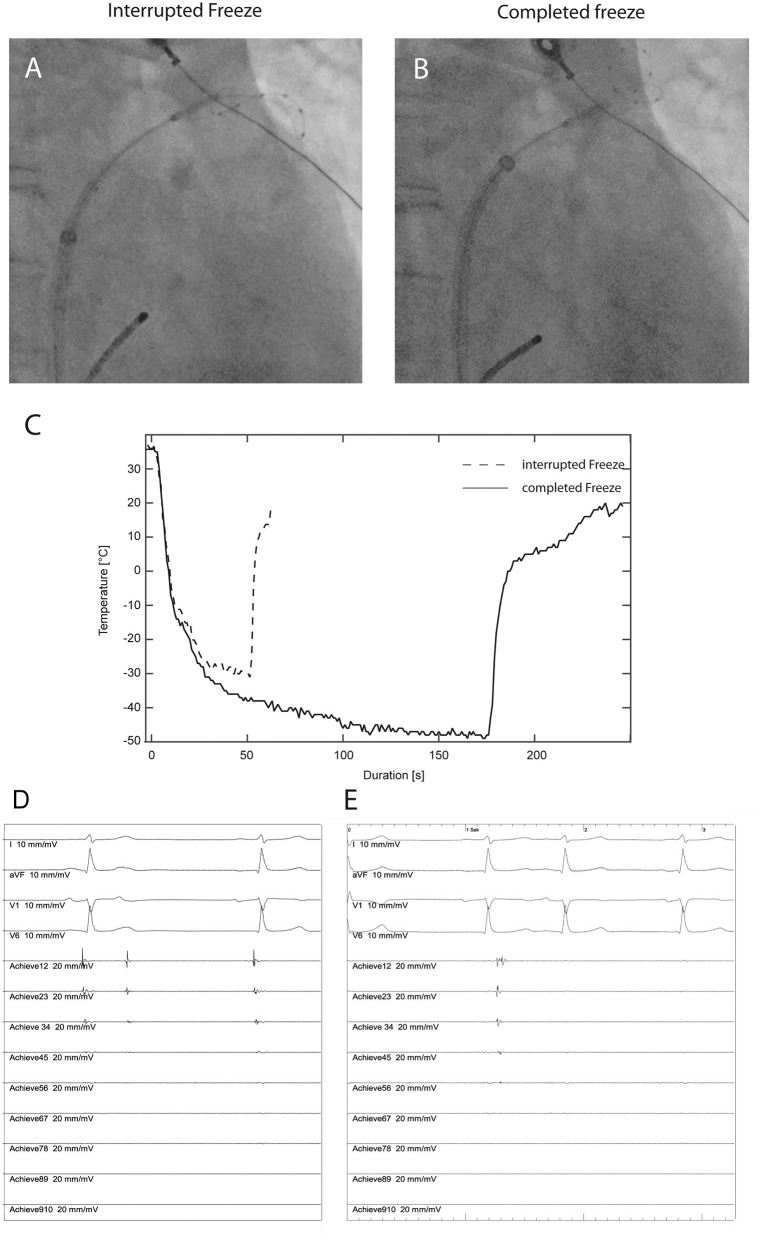
The demonstration of pulmonary vein (PV) occlusion is routinely performed and considered a prerequisite for successful cryoballoon (CB) ablation of atrial fibrillation (AF). The purpose of this study was to assess the feasibility and impact on procedural parameters and outcome of a standardized procedural protocol without demonstrating PV occlusion. Consecutive patients undergoing CB pulmonary vein isolation (PVI) were studied. After cMRI assessment, patients treated by PVI using a novel no-contrast (NC) protocol without routine contrast injections to demonstrate PV occlusion (NC group) were compared to patients undergoing PVI with contrast injections to demonstrate PV occlusion (standard group). One hundred patients with paroxysmal or persistent AF (age 61 ± 10 years, ejection fraction 59 ± 11%, left atrial volume index 37.2 ± 2.0 mL/m) were studied. The NC protocol was feasible in 72 of 75 patients (96%). Total procedure time and fluoroscopy time were 64.0 ± 14.1 min and 11.0 ± 4.6 min in the NC group and 92.0 ± 25.3 min and 18.0 ± 6.0 min in the standard group, respectively (all < 0.001). Dose area product was 368 ± 362 cGycm in the NC group compared to 1928 ± 1541 cGycm in the standard group ( < 0.001). Forty-five of 75 patients (60%) in the NC group and 16 of 25 patients (64%) in the standard group remained in stable sinus rhythm after a single PVI and a 1-year follow-up ( = 0.815). Performing CB ablation without using contrast injections to demonstrate PV occlusion was feasible, resulted in reduced radiation exposure, and increased the efficiency of the procedure.
肺静脉(PV)闭塞的显示是常规进行的,并且被认为是成功进行房颤(AF)冷冻球囊(CB)消融的先决条件。本研究的目的是评估在不显示PV闭塞的情况下标准化操作方案的可行性及其对操作参数和结果的影响。对连续接受CB肺静脉隔离(PVI)的患者进行了研究。在进行心脏磁共振成像(cMRI)评估后,将采用新型无造影剂(NC)方案(不进行常规造影剂注射以显示PV闭塞)进行PVI治疗的患者(NC组)与进行造影剂注射以显示PV闭塞的PVI患者(标准组)进行比较。研究了100例阵发性或持续性房颤患者(年龄61±10岁,射血分数59±11%,左心房容积指数37.2±2.0 mL/m)。NC方案在75例患者中的72例(96%)可行。NC组的总操作时间和透视时间分别为64.0±14.1分钟和11.0±4.6分钟,标准组分别为92.0±25.3分钟和18.0±6.0分钟(均P<0.001)。NC组的剂量面积乘积为368±362 cGycm,而标准组为1928±1541 cGycm(P<0.001)。在单次PVI和1年随访后,NC组75例患者中的45例(60%)和标准组25例患者中的16例(64%)维持窦性心律(P=0.815)。不使用造影剂注射来显示PV闭塞进行CB消融是可行的,可减少辐射暴露并提高操作效率。