School of Pharmaceutical Sciences, Zhejiang Chinese Medical University, Hangzhou, Zhejiang 311402, China.
Biomed Res Int. 2021 Jun 1;2021:6650045. doi: 10.1155/2021/6650045. eCollection 2021.
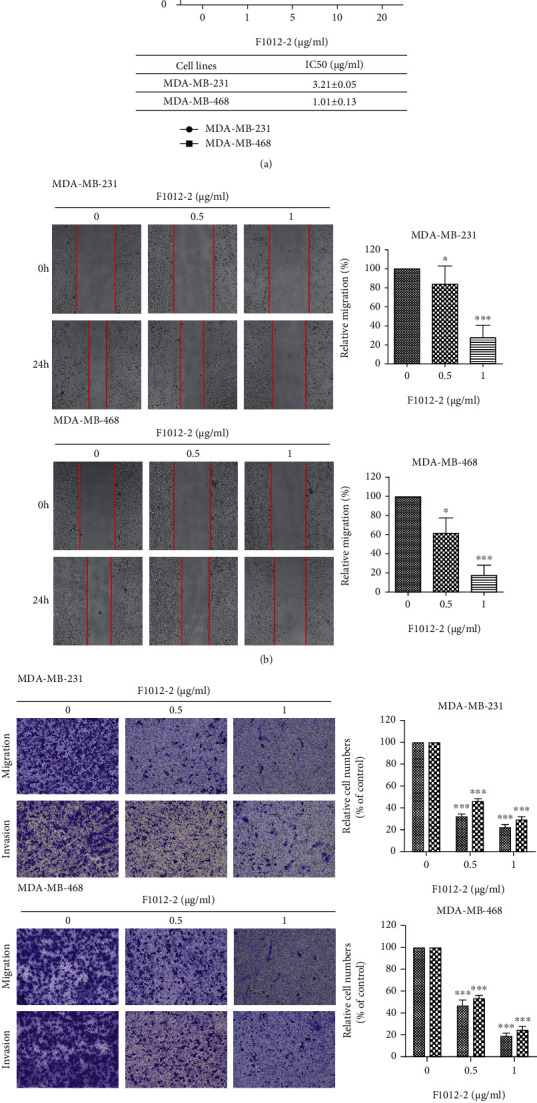
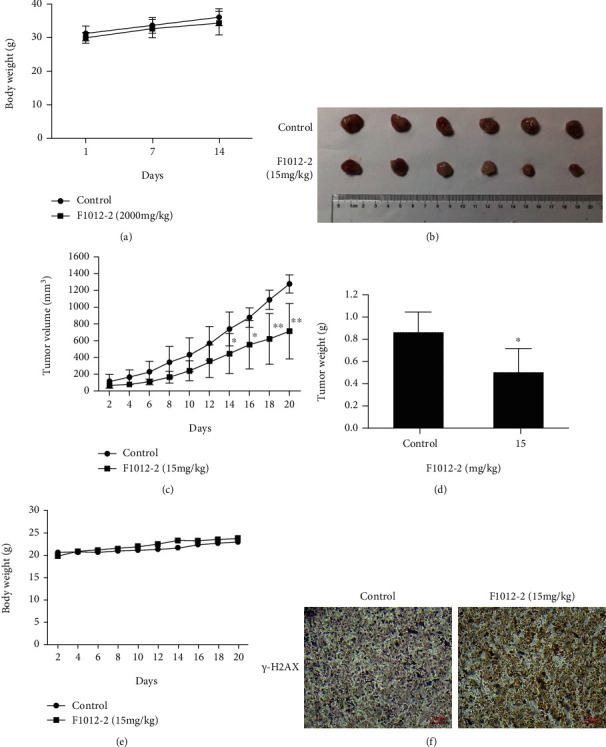
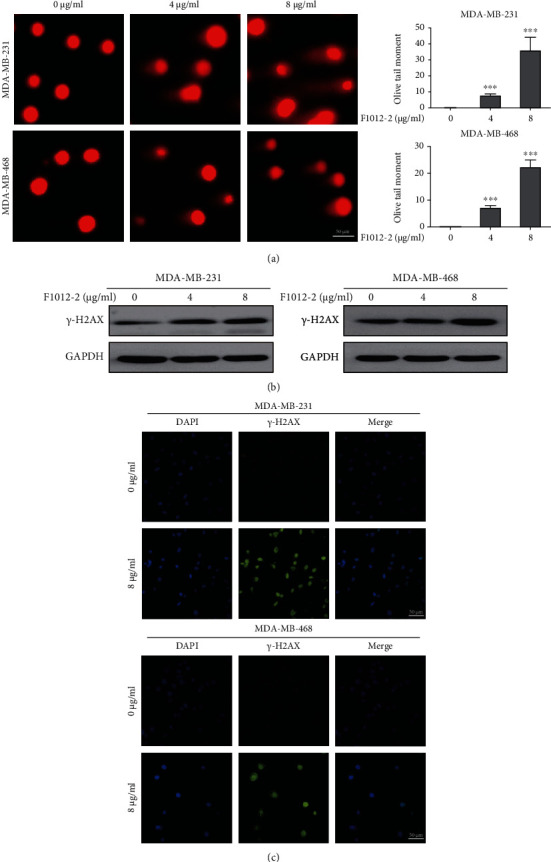
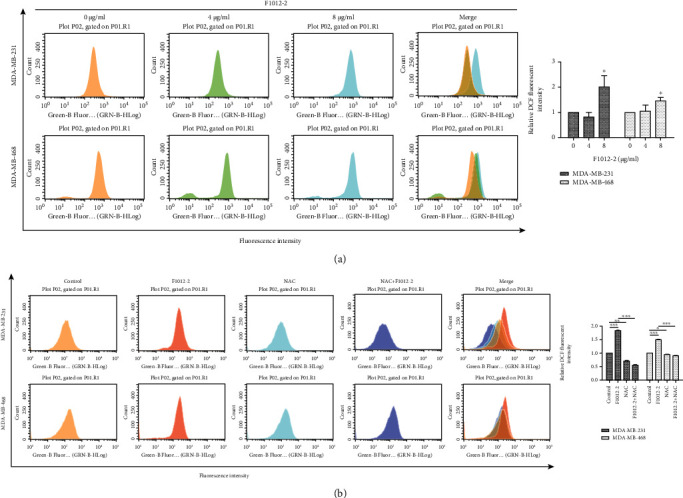
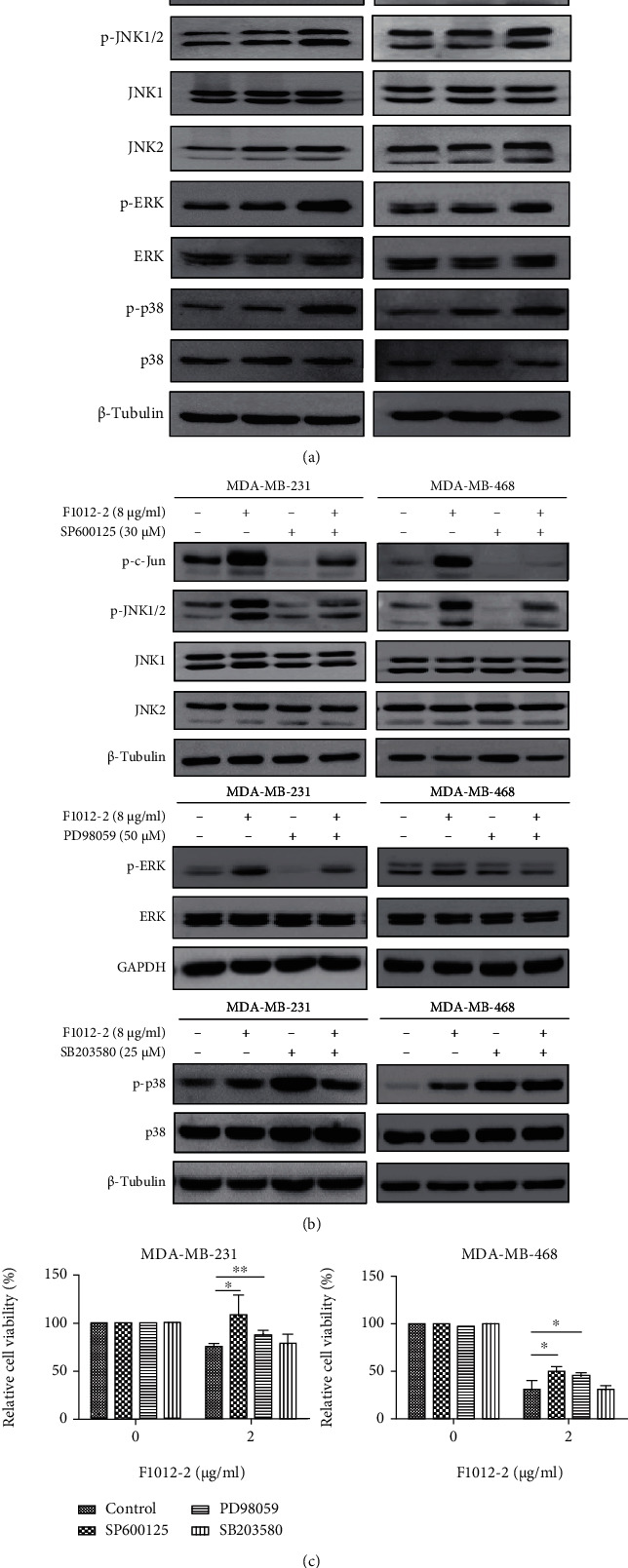
We have previously reported that F1012-2, a sesquiterpene lactone isolated from the Chinese herbal medicine DC., exhibits strong effects against Triple Negative Breast Cancer (TNBC). In this study, we found F1012-2 effectively inhibited cell migration and invasion detected by wound healing and transwell assays. In order to elucidate the potential mechanisms of F1012-2, we further studied its effect on DNA damage in TNBC cell lines. Using single cell gel electrophoresis (comet assay), immunofluorescence, and western blotting assays, we found that F1012-2 treatment induced significant DNA strand breaks and -H2AX activation. Moreover, exposure to F1012-2 led to overproduction of reactive oxygen species (ROS). NAC treatment completely eliminated ROS, which may be due to the interaction between NAC and F1012-2. A further study of the molecular mechanisms demonstrated that the MAPK signaling pathway participated in the anti-TNBC effect of F1012-2. Pretreatment with specific inhibitors targeting JNK (SP600125) and ERK (PD98059) could rescue the decrease in cell viability and inhibit expressions of JNK and ERK phosphorylation, but SB203580 had no effects. Finally, in the acute toxicity experiment, there were no obvious symptoms of poisoning in the F1012-2 treatment group. An study demonstrated that F1012-2 significantly suppressed the tumor growth and induced DNA damage. In conclusion, the activity of F1012-2-induced DNA damage in TNBC was found and , which might trigger the MAPK pathway through ROS accumulation. These results indicate that F1012-2 may be an effective anti-TNBC therapeutic agent.
我们之前曾报道过,从中药 DC 中分离出的倍半萜内酯 F1012-2 对三阴性乳腺癌(TNBC)具有很强的作用。在这项研究中,我们发现 F1012-2 能有效抑制划痕和 Transwell 实验检测到的细胞迁移和侵袭。为了阐明 F1012-2 的潜在机制,我们进一步研究了它对 TNBC 细胞系中 DNA 损伤的影响。通过单细胞凝胶电泳(彗星试验)、免疫荧光和 Western blot 分析,我们发现 F1012-2 处理诱导了明显的 DNA 链断裂和 -H2AX 激活。此外,暴露于 F1012-2 会导致活性氧(ROS)的过度产生。NAC 处理完全消除了 ROS,这可能是由于 NAC 和 F1012-2 之间的相互作用。进一步的分子机制研究表明,MAPK 信号通路参与了 F1012-2 的抗 TNBC 作用。用针对 JNK(SP600125)和 ERK(PD98059)的特异性抑制剂预处理可以挽救细胞活力的降低,并抑制 JNK 和 ERK 磷酸化的表达,但 SB203580 没有效果。最后,在急性毒性实验中,F1012-2 处理组没有出现明显的中毒症状。一项研究表明,F1012-2 显著抑制肿瘤生长并诱导 DNA 损伤。总之,发现 F1012-2 诱导 TNBC 中的 DNA 损伤活性,这可能通过 ROS 积累触发 MAPK 通路。这些结果表明,F1012-2 可能是一种有效的抗 TNBC 治疗剂。