Functional Neurosurgery Research Center, Shohada Tajrish Comprehensive Neurosurgical Center of Excellence, Shahid Beheshti University of Medical Sciences, Tehran, Iran.
Department of Stem Cells and Developmental Biology, Cell Science Research Center, Royan Institute for Stem Cell Biology and Technology, ACECR, Tehran, Iran.
J Immunol Res. 2021 May 22;2021:9912188. doi: 10.1155/2021/9912188. eCollection 2021.
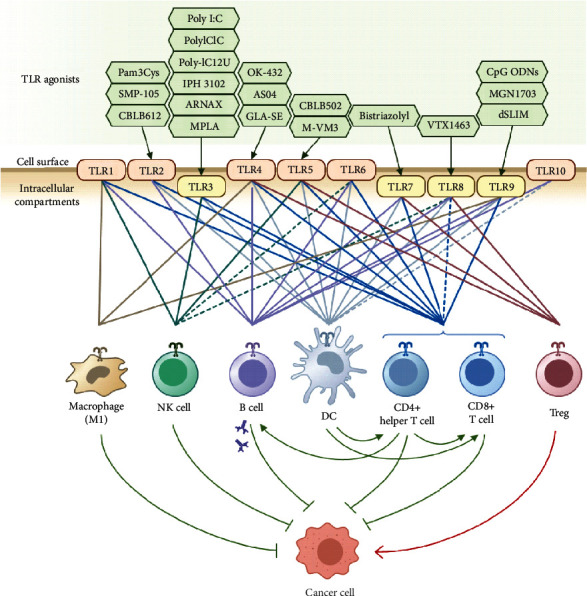
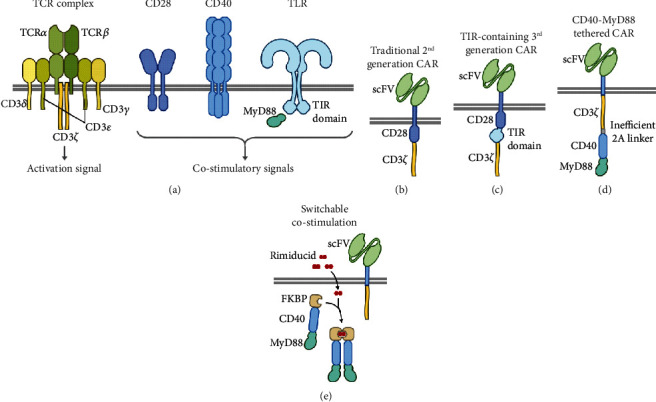
Toll-like receptors (TLRs) are expressed and play multiple functional roles in a variety of immune cell types involved in tumor immunity. There are plenty of data on the pharmacological targeting of TLR signaling using agonist molecules that boost the antitumor immune response. A recent body of research has also demonstrated promising strategies for improving the cell-based immunotherapy methods by inducing TLR signaling. These strategies include systemic administration of TLR antagonist along with immune cell transfer and also genetic engineering of the immune cells using TLR signaling components to improve the function of genetically engineered immune cells such as chimeric antigen receptor-modified T cells. Here, we explore the current status of the cancer immunotherapy approaches based on manipulation of TLR signaling to provide a perspective of the underlying rationales and potential clinical applications. Altogether, reviewed publications suggest that TLRs make a potential target for the immunotherapy of cancer.
Toll 样受体 (TLRs) 在参与肿瘤免疫的多种免疫细胞类型中表达并发挥多种功能作用。有大量关于使用激动剂分子靶向 TLR 信号转导以增强抗肿瘤免疫反应的药理学数据。最近的一系列研究还表明,通过诱导 TLR 信号转导,改善基于细胞的免疫治疗方法的有前途的策略。这些策略包括 TLR 拮抗剂与免疫细胞转移一起全身给药,以及使用 TLR 信号转导成分对免疫细胞进行基因工程改造,以改善嵌合抗原受体修饰 T 细胞等基因工程免疫细胞的功能。在这里,我们探讨了基于 TLR 信号转导操纵的癌症免疫治疗方法的现状,为潜在的基本原理和潜在的临床应用提供了一个视角。总的来说,综述文献表明 TLR 是癌症免疫治疗的潜在靶点。