Molecular and Cellular Physiology, Ochsner-LSU Health Sciences Center, Shreveport, Louisiana, USA.
Obstetrics and Gynecology and Medicine, Ochsner-LSU Health Sciences Center, Shreveport, Louisiana, USA.
Stem Cells. 2021 Oct;39(10):1335-1348. doi: 10.1002/stem.3426. Epub 2021 Jun 22.
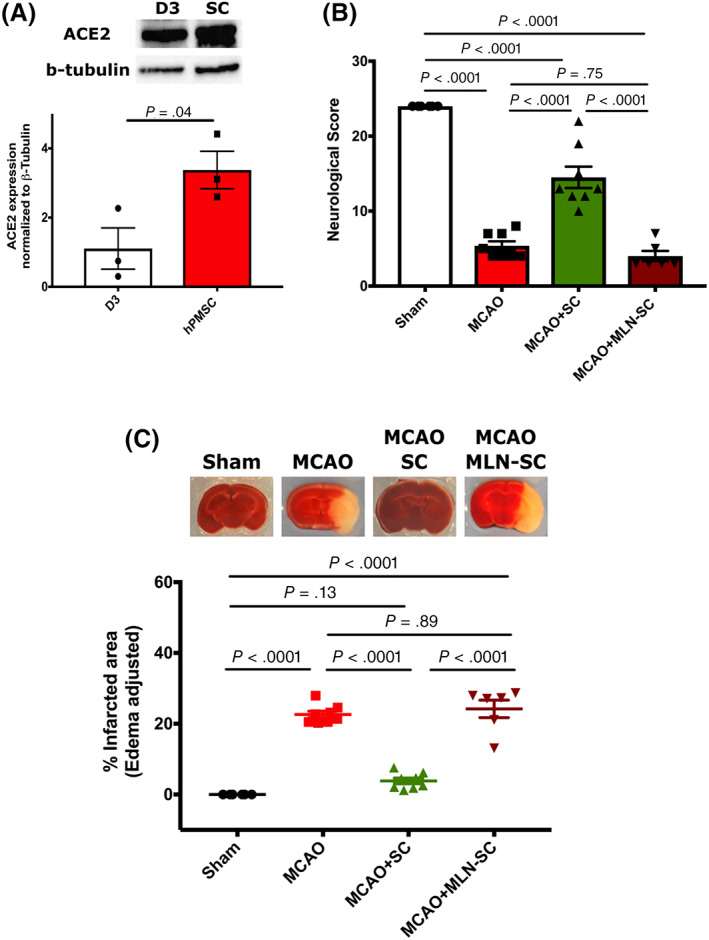
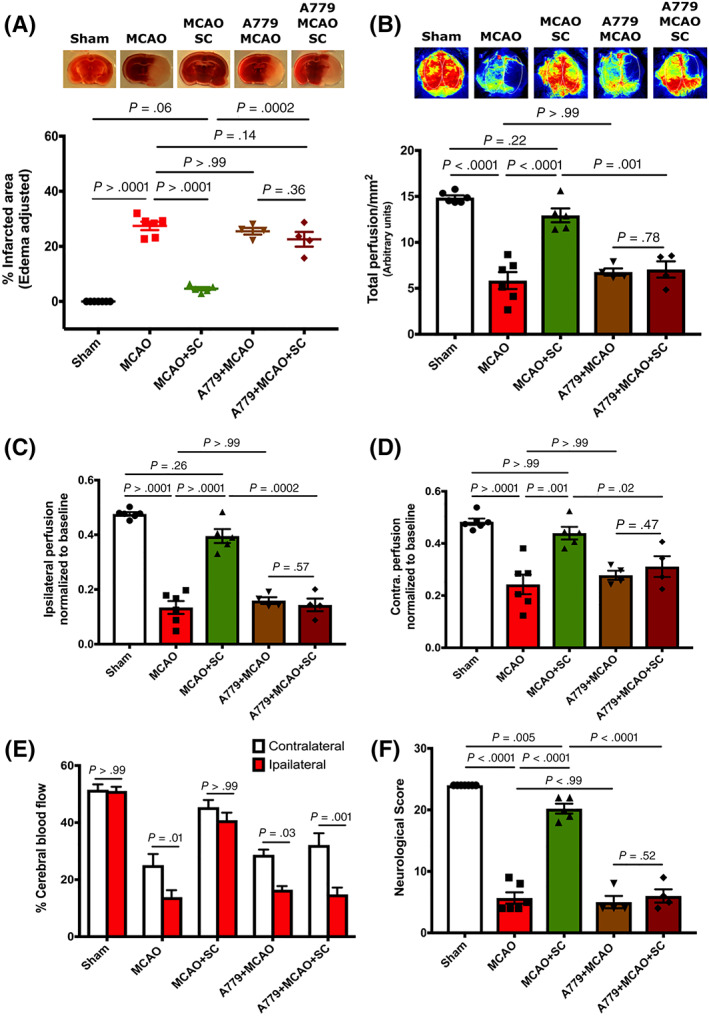
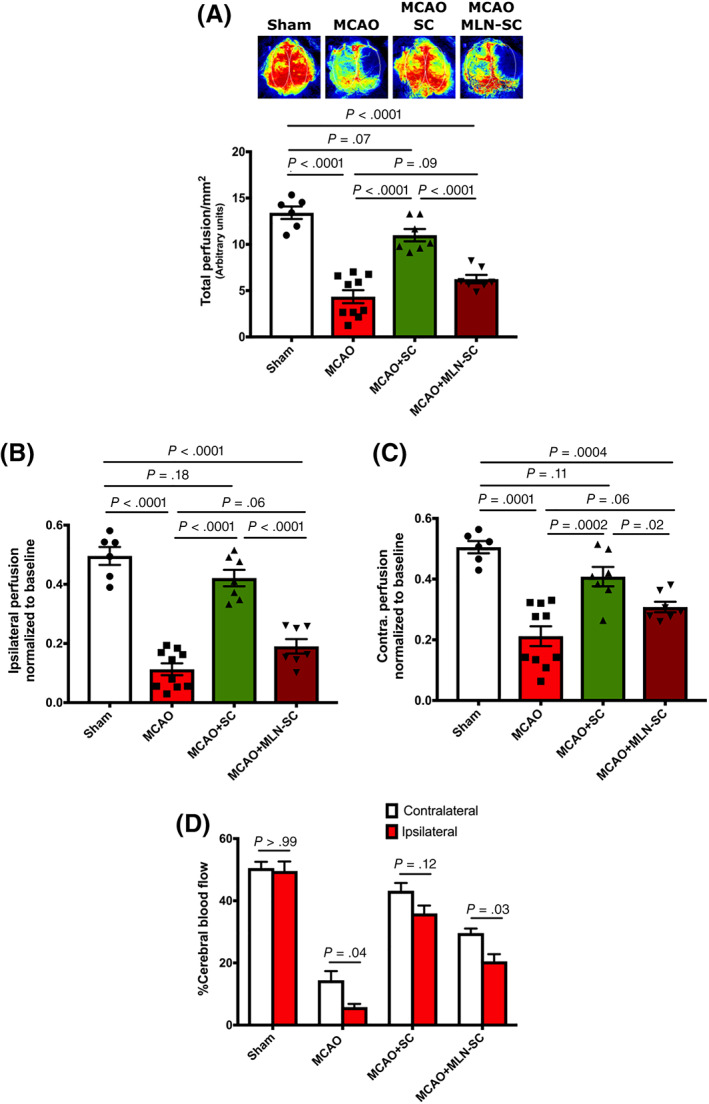
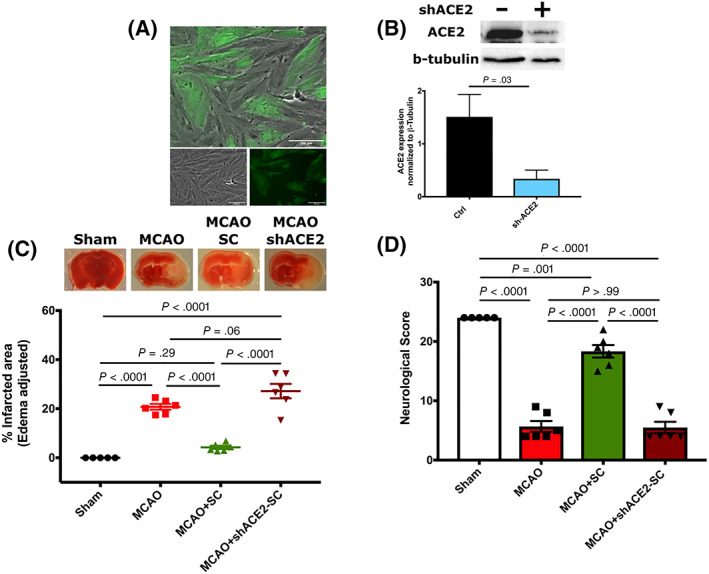
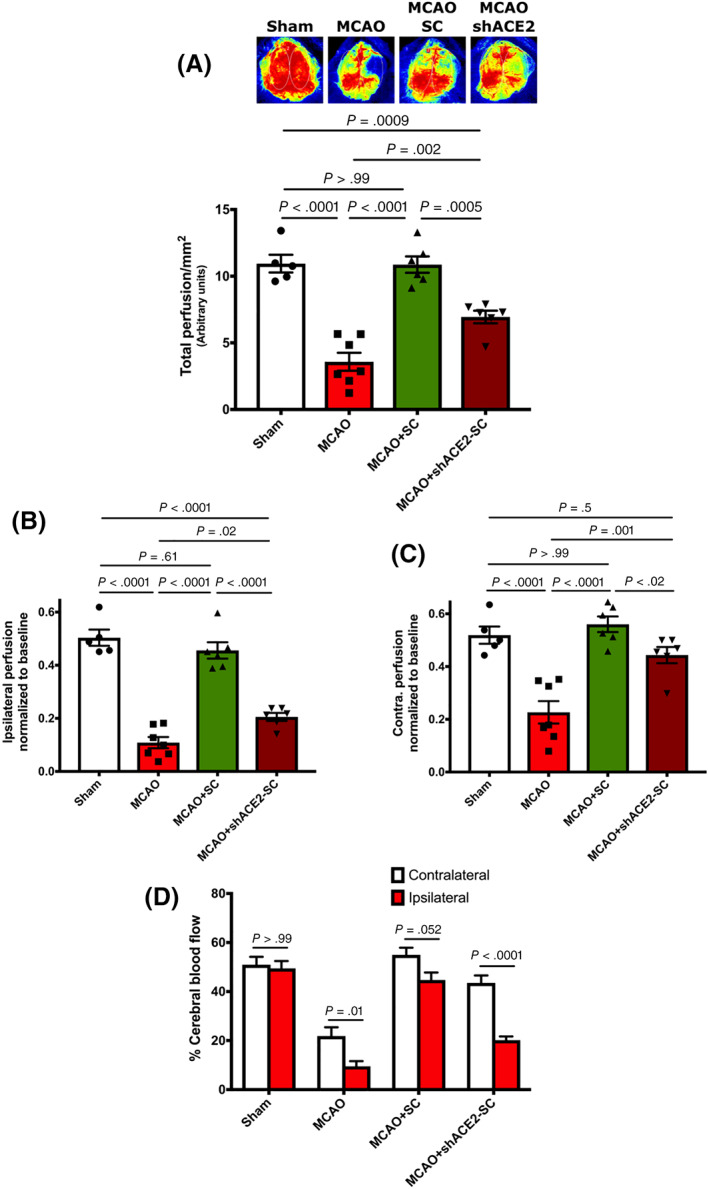
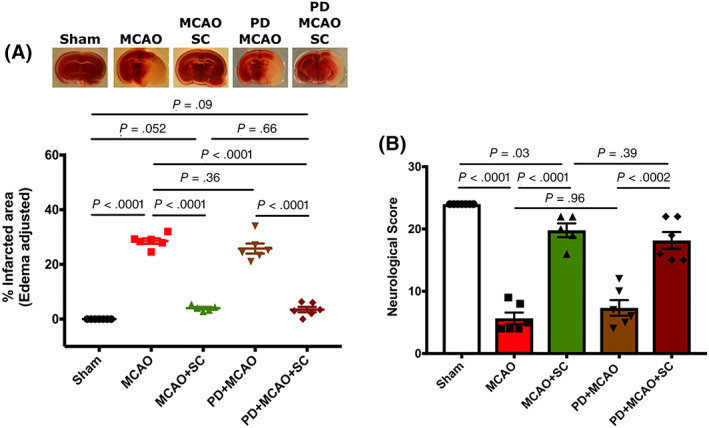
Thromboembolic stroke remains a major cause of neurological disability and death. Current stroke treatments (aspirin, tissue plasminogen activator) are significantly limited by timing and risks for hemorrhage which have driven researchers to explore other approaches. Stem cell-based therapy appears to be an effective option for ischemic stroke. Besides trans-differentiation into neural cells, stem cells also provide acute protection via paracrine signaling pathways through which releasing neuroprotective factors. We previously reported that intraperitoneal administration of human placenta mesenchymal stem cell (hPMSC) therapy upon reperfusion significantly protected the brain against middle cerebral artery occlusion (MCAO)-induced injury. In the present study, we specifically investigated the role of hPMSC-derived angiotensin converting enzyme-2 (ACE-2) in protection of MCAO-induced brain injury by measurement of brain tissue viability, cerebral blood flow, and neurological score. Here, we report for the first time that hPMSC expressing substantial amount of ACE-2, which mediates hPMSC protection in the MCAO model. Strikingly, we found that the protective effects of hPMSC in MCAO-induced brain injury could be attenuated by pretreatment of hPMSCs with MLN-4760, a specific inhibitor of ACE-2 activity, or by transfection of hPMSCs with ACE-2-shRNA-lentivirus. The hPMSC-derived ACE-2 specific protective mechanism was further demonstrated by administration of PD123319, an Angiotensin type-2 receptor antagonist, or A779, a MasR antagonist. Importantly, our study demonstrated that the protective effects of hPMSC in experimental stroke are ACE-2/MasR dependent and this signaling pathway represents an innovative and highly promising approach for targeted stroke therapy.
血栓栓塞性中风仍然是导致神经功能障碍和死亡的主要原因。目前的中风治疗方法(阿司匹林、组织型纤溶酶原激活剂)在时间和出血风险方面受到很大限制,这促使研究人员探索其他方法。基于干细胞的治疗方法似乎是缺血性中风的有效选择。除了向神经细胞转分化外,干细胞还通过旁分泌信号通路提供急性保护,通过该通路释放神经保护因子。我们之前报道过,再灌注时腹腔内给予人胎盘间充质干细胞(hPMSC)治疗可显著保护大脑免受大脑中动脉闭塞(MCAO)引起的损伤。在本研究中,我们特别研究了 hPMSC 衍生的血管紧张素转换酶 2(ACE-2)在保护 MCAO 诱导的脑损伤中的作用,方法是测量脑组织活力、脑血流和神经评分。在这里,我们首次报道 hPMSC 表达大量 ACE-2,ACE-2 介导了 hPMSC 在 MCAO 模型中的保护作用。引人注目的是,我们发现,hPMSC 预处理用 ACE-2 特异性抑制剂 MLN-4760 或用 ACE-2-shRNA 慢病毒转染 hPMSC 可减弱 hPMSC 在 MCAO 诱导的脑损伤中的保护作用。hPMSC 衍生的 ACE-2 特异性保护机制进一步通过给予 PD123319(血管紧张素 II 型受体拮抗剂)或 A779(MasR 拮抗剂)证实。重要的是,我们的研究表明,hPMSC 在实验性中风中的保护作用依赖于 ACE-2/MasR,该信号通路代表了针对中风治疗的创新和极有前途的方法。