Department of Otorhinolaryngology, Head and Neck Surgery Hannover Medical School Hannover Germany.
Institute for Cellular Therapeutics Hannover and Institute of Clinical Immunology Hannover Medical School University of Leipzig as well as Fraunhofer Institute for Cell Therapy and Immunology (IZI) Leipzig Germany.
J Extracell Vesicles. 2021 Jun;10(8):e12094. doi: 10.1002/jev2.12094. Epub 2021 Jun 4.
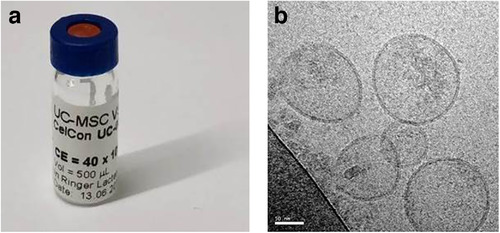
Extracellular vesicles (EVs) derived from the secretome of human mesenchymal stromal cells (MSC) contain numerous factors that are known to exert anti-inflammatory effects. MSC-EVs may serve as promising cell-based therapeutics for the inner ear to attenuate inflammation-based side effects from cochlear implantation which represents an unmet clinical need. In an individual treatment performed on a 'named patient basis', we intraoperatively applied allogeneic umbilical cord-derived MSC-EVs (UC-MSC-EVs) produced according to good manufacturing practice. A 55-year-old patient suffering from Menière's disease was treated with intracochlear delivery of EVs prior to the insertion of a cochlear implant. This first-in-human use of UC-MSC-EVs demonstrates the feasibility of this novel adjuvant therapeutic approach. The safety and efficacy of intracochlear EV-application to attenuate side effects of cochlea implants have to be determined in controlled clinical trials.
来源于人间质基质细胞(MSC)的分泌组的细胞外囊泡(EVs)包含众多已知具有抗炎作用的因子。MSC-EVs 可能作为有前途的基于细胞的治疗方法,用于内耳以减轻耳蜗植入引起的炎症相关副作用,这是一种未满足的临床需求。在一项基于“指定患者”的个体化治疗中,我们在手术过程中应用了根据良好生产规范生产的同种异体脐带来源的 MSC-EVs(UC-MSC-EVs)。一名患有梅尼埃病的 55 岁患者在植入人工耳蜗前接受了 EV 腔内给药治疗。这是首次在人体中使用 UC-MSC-EVs,证明了这种新型辅助治疗方法的可行性。腔内应用 EV 以减轻人工耳蜗植入副作用的安全性和有效性需要在对照临床试验中确定。