Zhao Qin, Shi Miusi, Yin Chengcheng, Zhao Zifan, Zhang Jinglun, Wang Jinyang, Shen Kailun, Zhang Lingling, Tang Hua, Xiao Yin, Zhang Yufeng
The State Key Laboratory Breeding Base of Basic Science of Stomatology (Hubei-MOST) and Key Laboratory of Oral Biomedicine, Ministry of Education, School and Hospital of Stomatology, Wuhan University, Wuhan, 430079, People's Republic of China.
Medical Research Institute, School of Medicine, Wuhan University, Wuhan, 430071, People's Republic of China.
Nanomicro Lett. 2020 Nov 21;13(1):28. doi: 10.1007/s40820-020-00540-z.
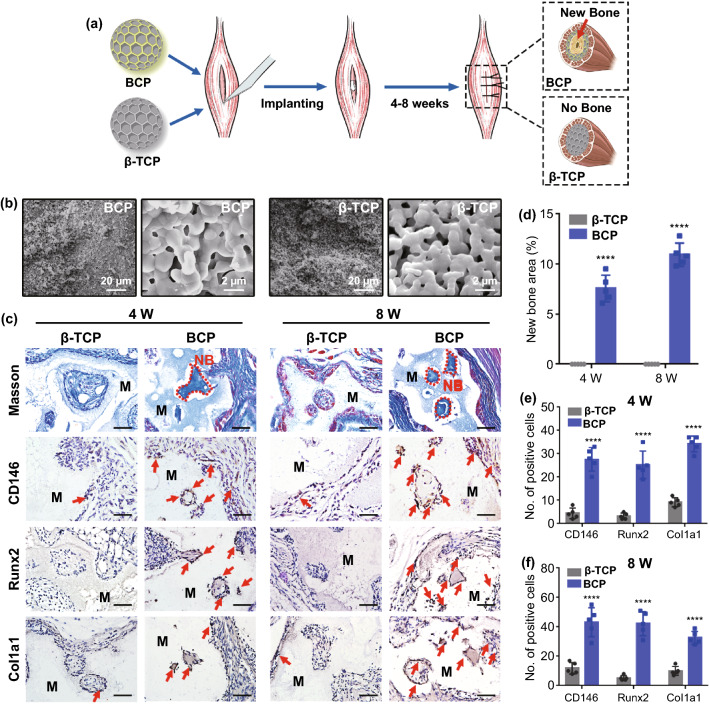
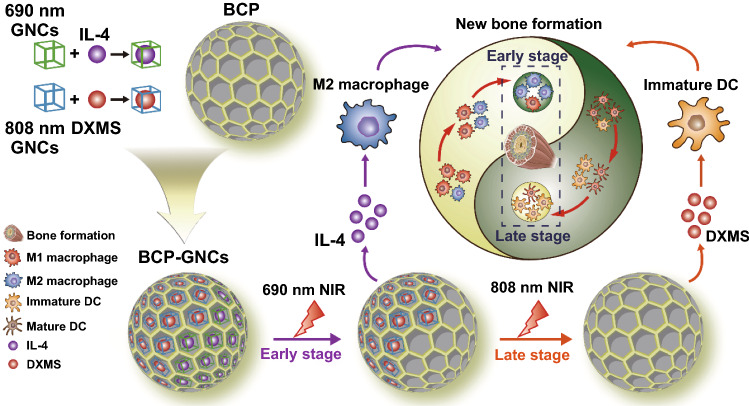
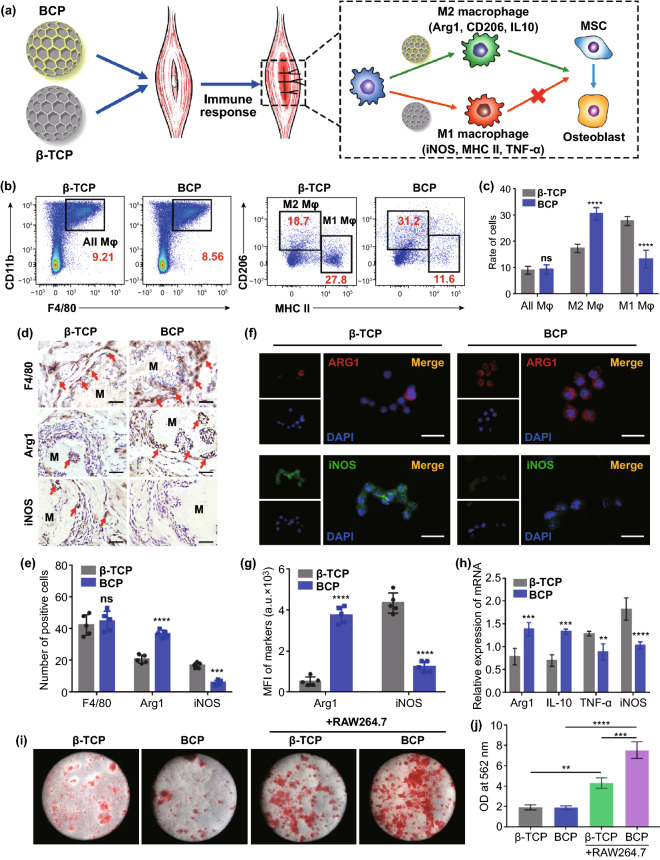
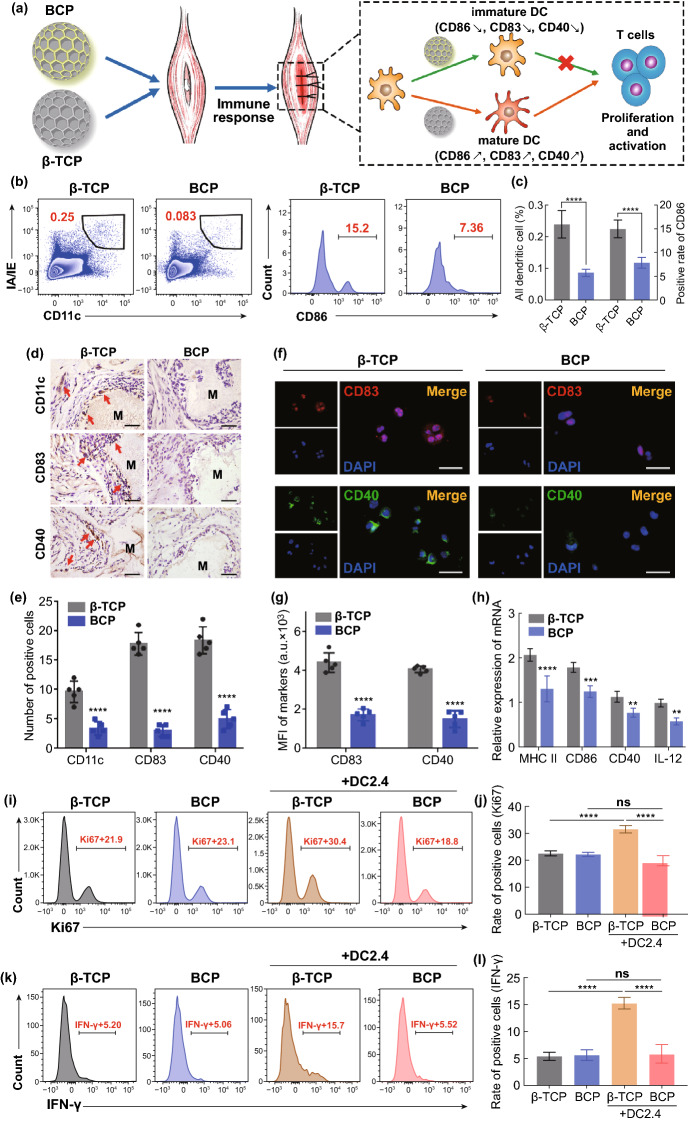
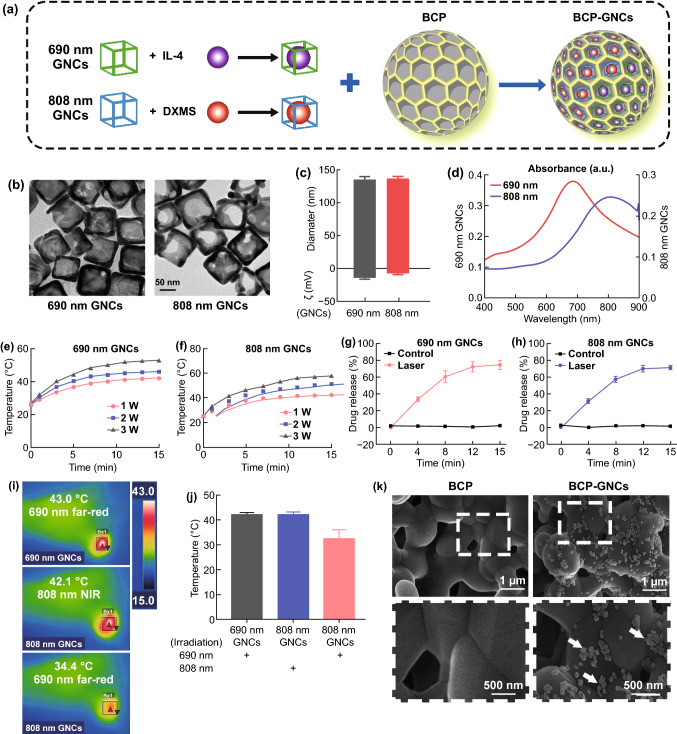
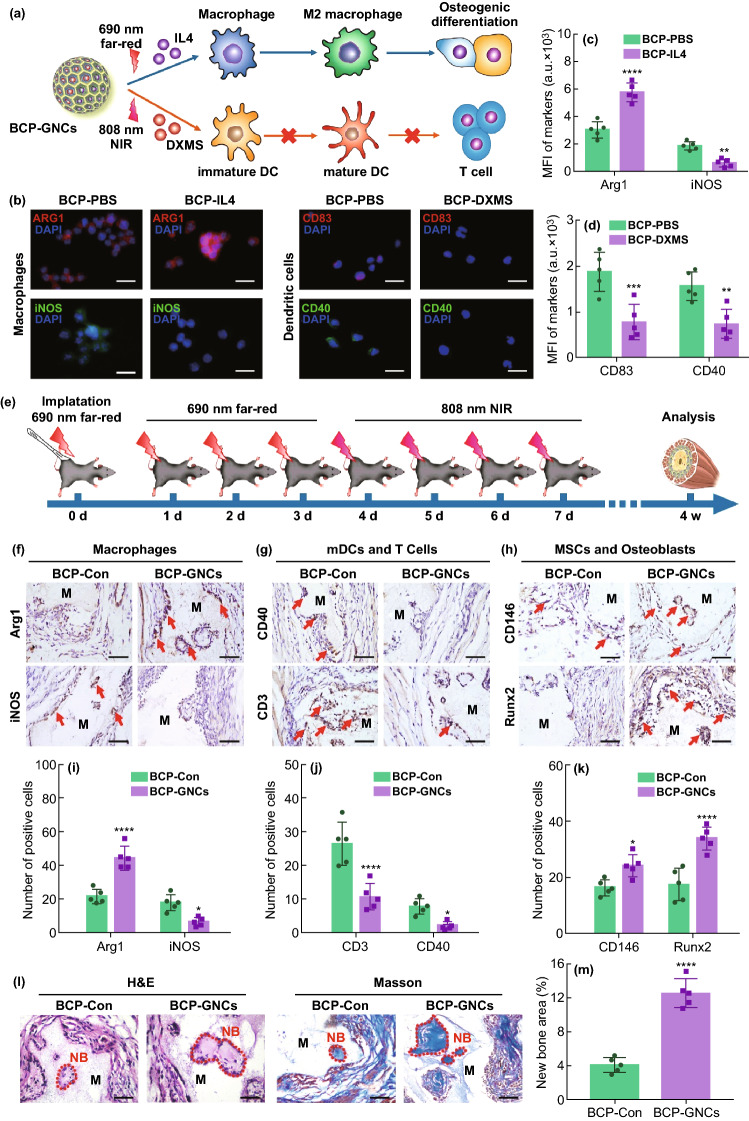
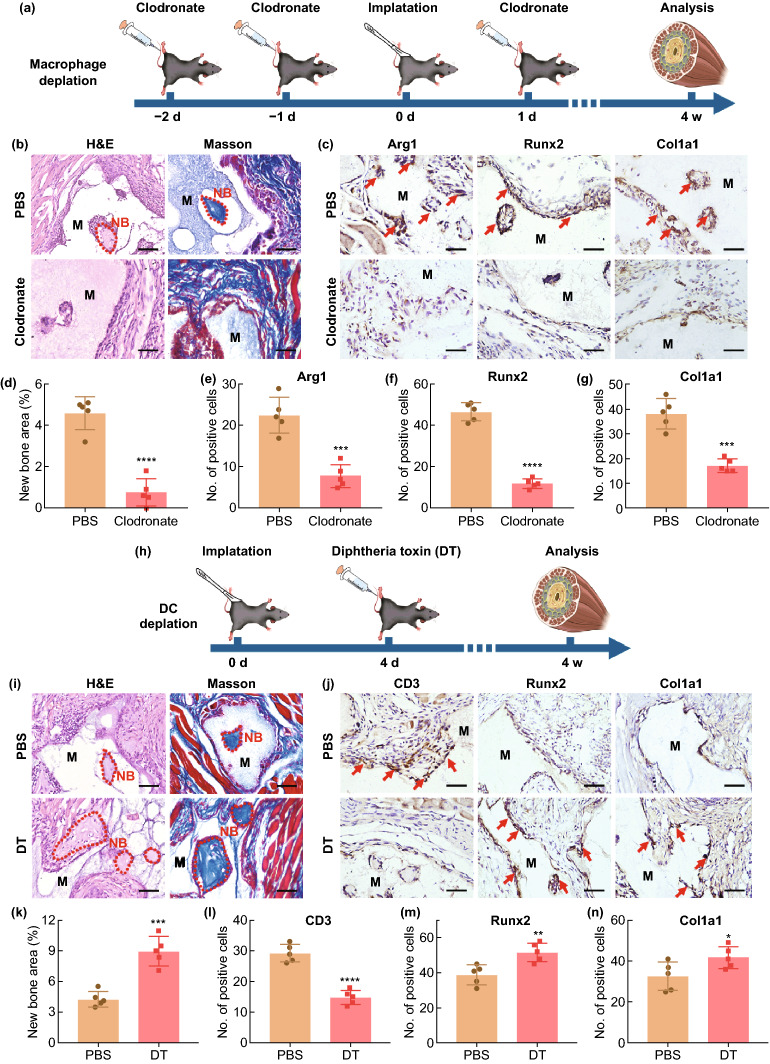
The immune response of a biomaterial determines its osteoinductive effect. Although the mechanisms by which some immune cells promote regeneration have been revealed, the biomaterial-induced immune response is a dynamic process involving multiple cells. Currently, it is challenging to accurately regulate the innate and adaptive immune responses to promote osteoinduction in biomaterials. Herein, we investigated the roles of macrophages and dendritic cells (DCs) during the osteoinduction of biphasic calcium phosphate (BCP) scaffolds. We found that osteoinductive BCP directed M2 macrophage polarization and inhibited DC maturation, resulting in low T cell response and efficient osteogenesis. Accordingly, a dual-targeting nano-in-micro scaffold (BCP loaded with gold nanocage, BCP-GNC) was designed to regulate the immune responses of macrophages and DCs. Through a dual-wavelength photosensitive switch, BCP-GNC releases interleukin-4 in the early stage of osteoinduction to target M2 macrophages and then releases dexamethasone in the later stage to target immature DCs, creating a desirable inflammatory environment for osteogenesis. This study demonstrates that biomaterials developed to have specific regulatory capacities for immune cells can be used to control the early inflammatory responses of implanted materials and induce osteogenesis.
生物材料的免疫反应决定其骨诱导效应。尽管一些免疫细胞促进再生的机制已被揭示,但生物材料诱导的免疫反应是一个涉及多种细胞的动态过程。目前,准确调节固有免疫和适应性免疫反应以促进生物材料中的骨诱导具有挑战性。在此,我们研究了巨噬细胞和树突状细胞(DCs)在双相磷酸钙(BCP)支架骨诱导过程中的作用。我们发现具有骨诱导性的BCP引导M2巨噬细胞极化并抑制DC成熟,导致低T细胞反应和高效骨生成。因此,设计了一种双靶向微纳支架(负载金纳米笼的BCP,BCP-GNC)来调节巨噬细胞和DCs的免疫反应。通过双波长光敏开关,BCP-GNC在骨诱导早期释放白细胞介素-4以靶向M2巨噬细胞,然后在后期释放地塞米松以靶向未成熟DCs,为骨生成创造理想的炎症环境。这项研究表明,开发具有对免疫细胞特定调节能力的生物材料可用于控制植入材料的早期炎症反应并诱导骨生成。