Department of Psychology, Stanford University, Stanford, CA, USA.
Princeton Neuroscience Institute, Princeton University, Princeton, NJ, USA.
Nat Hum Behav. 2021 Dec;5(12):1686-1697. doi: 10.1038/s41562-021-01141-5. Epub 2021 Jun 17.
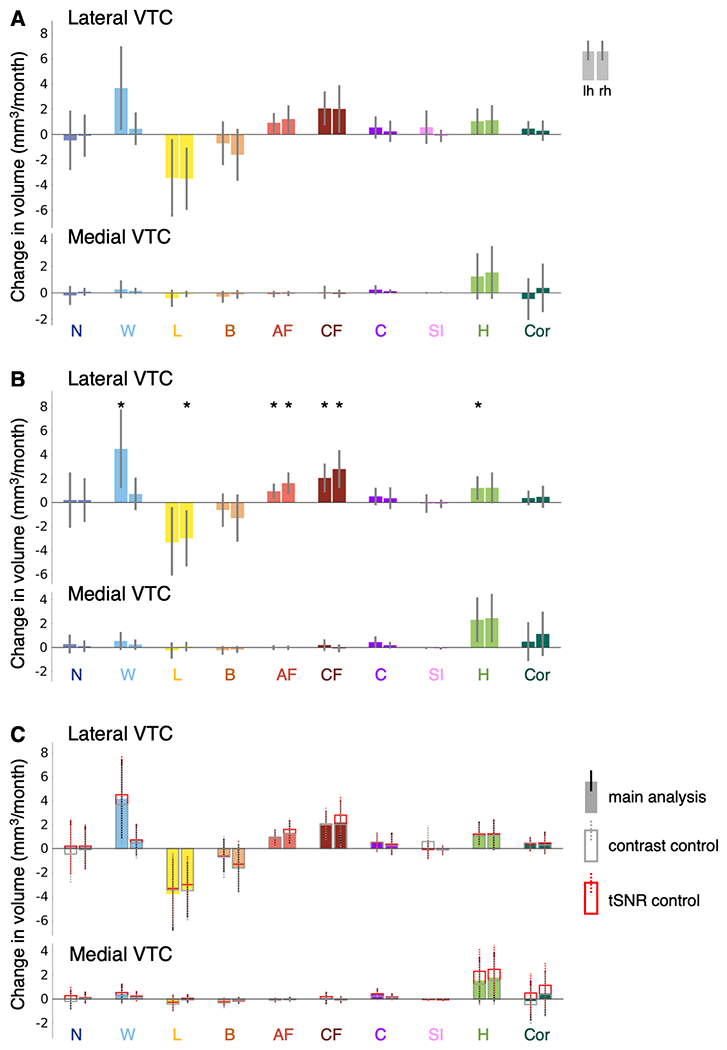
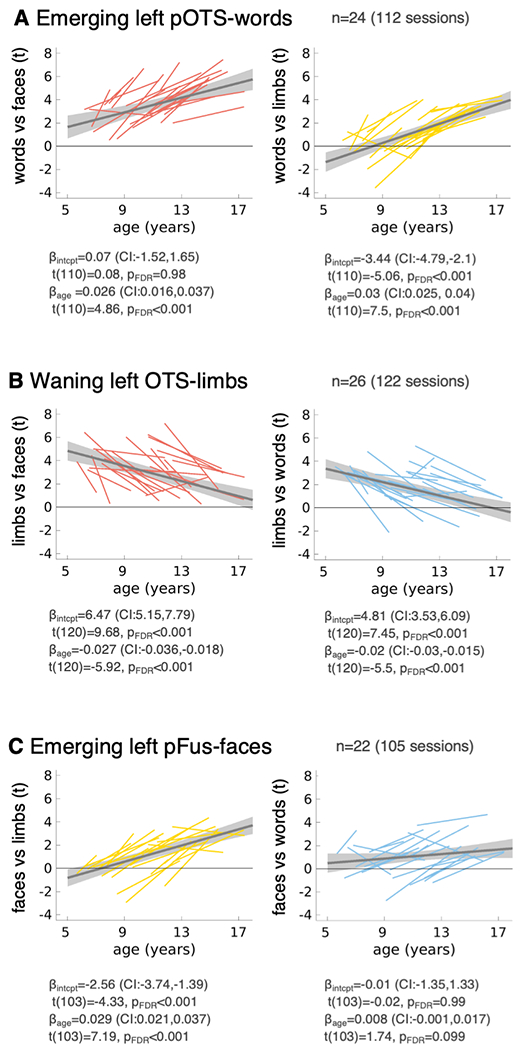
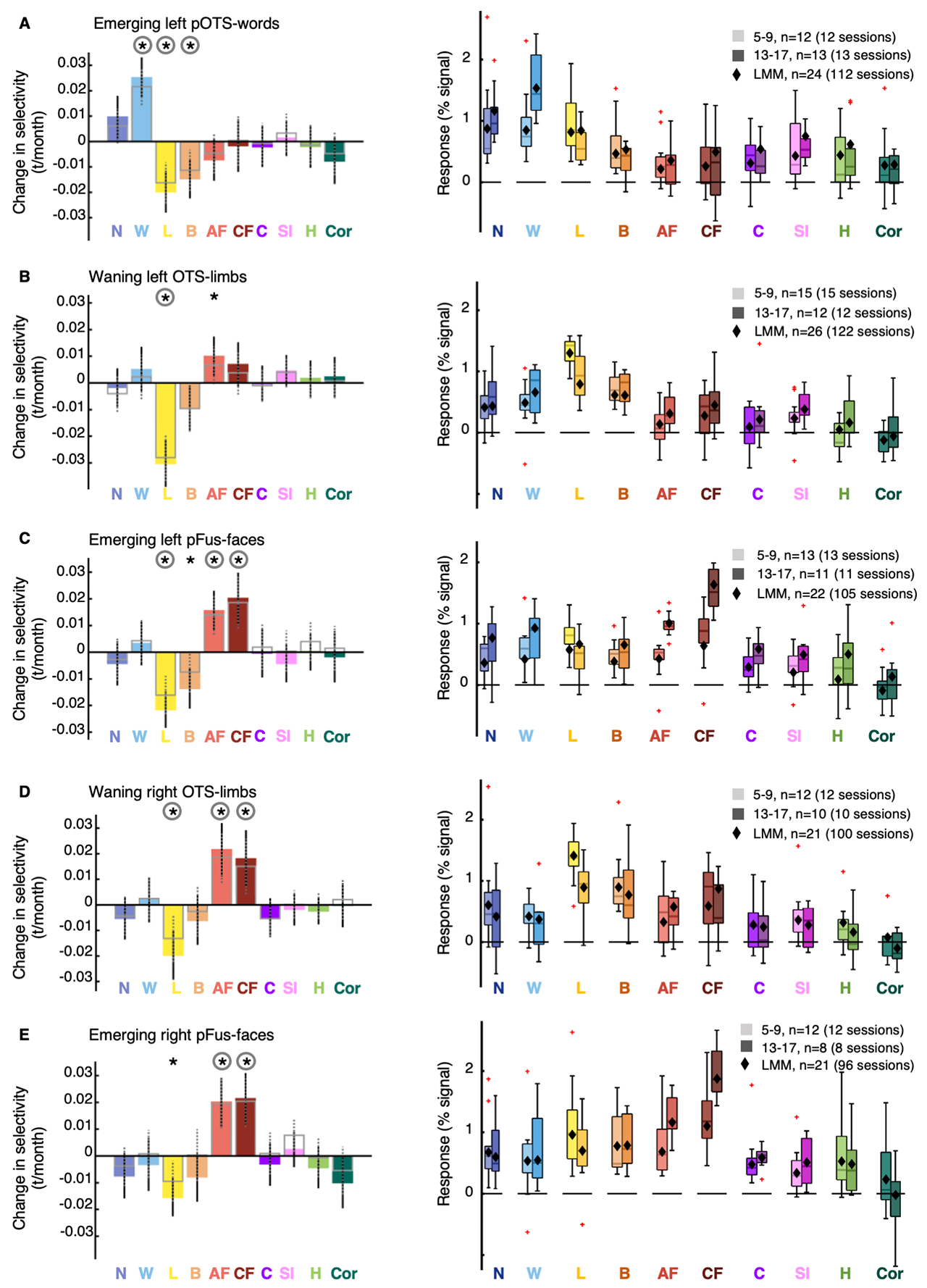
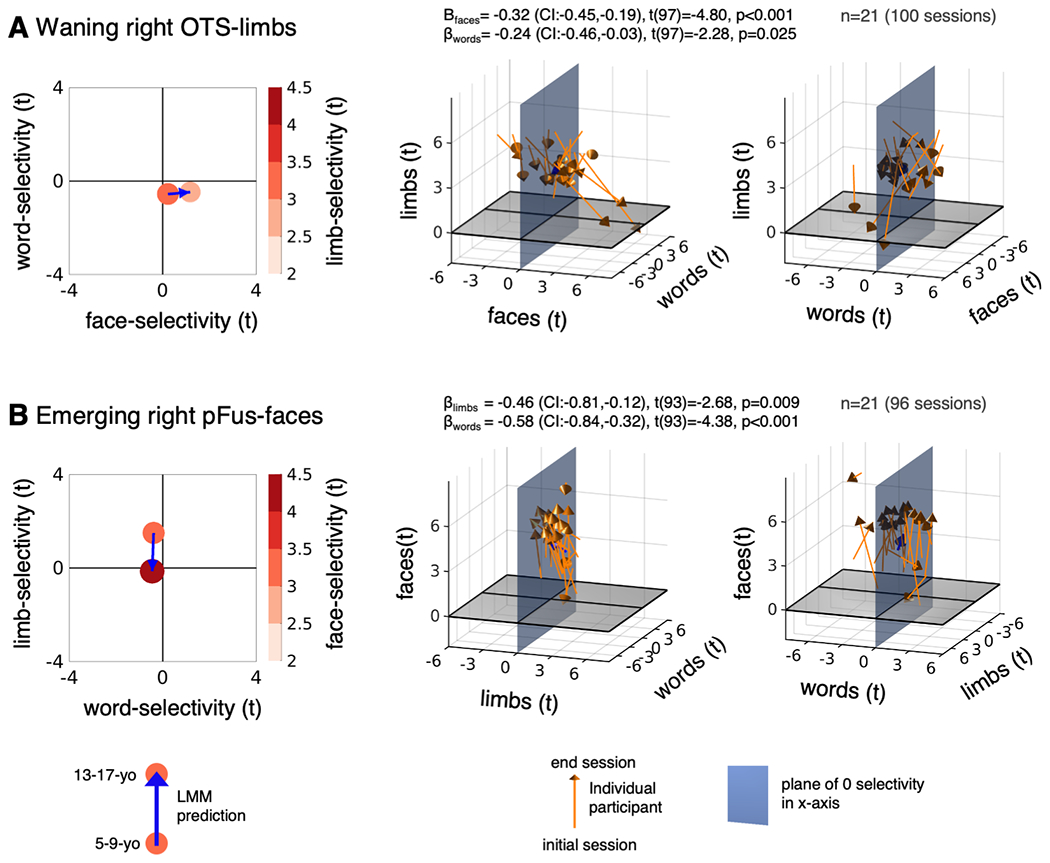
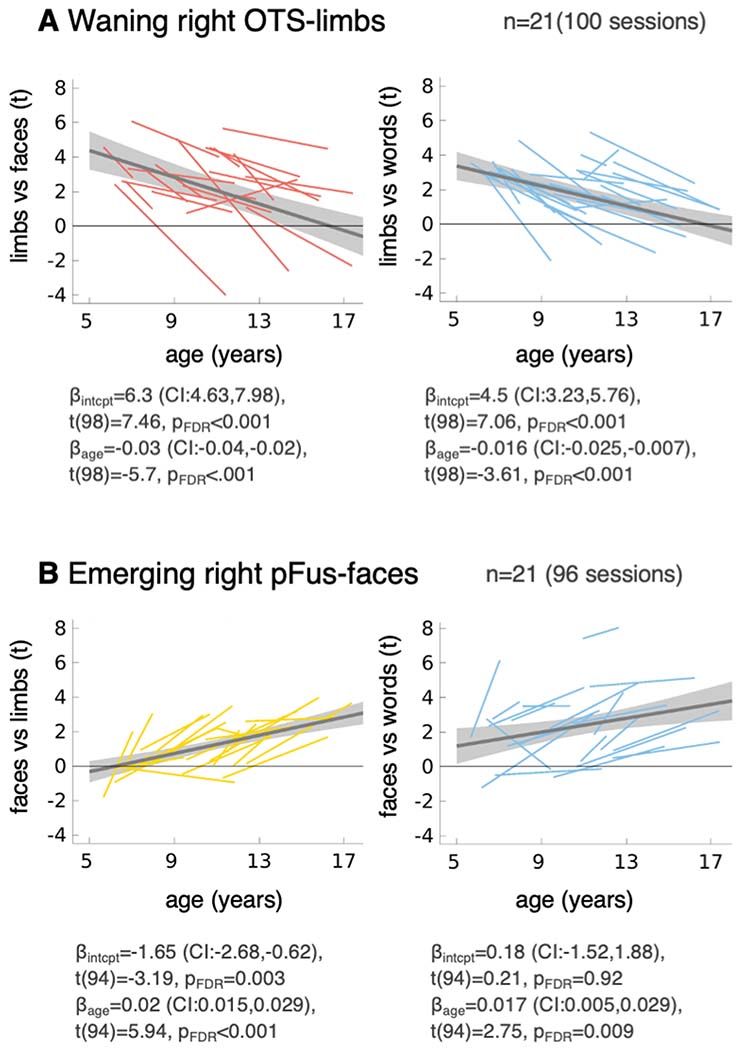
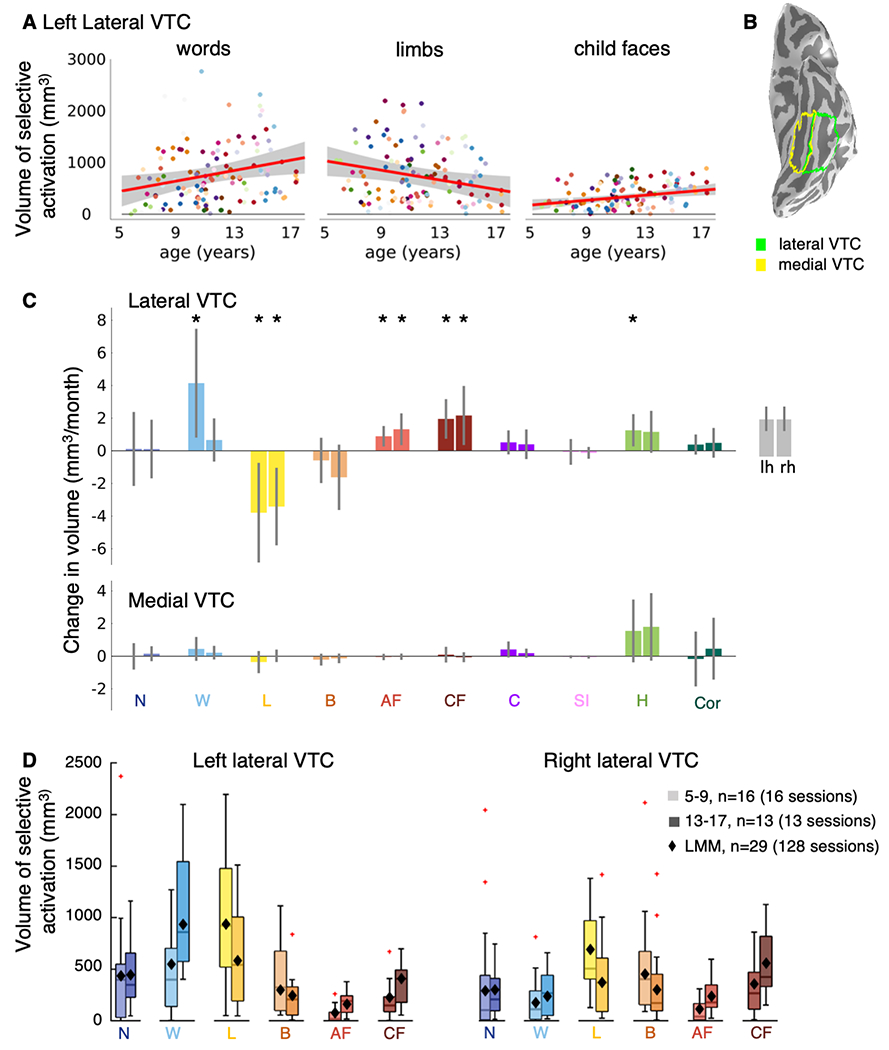
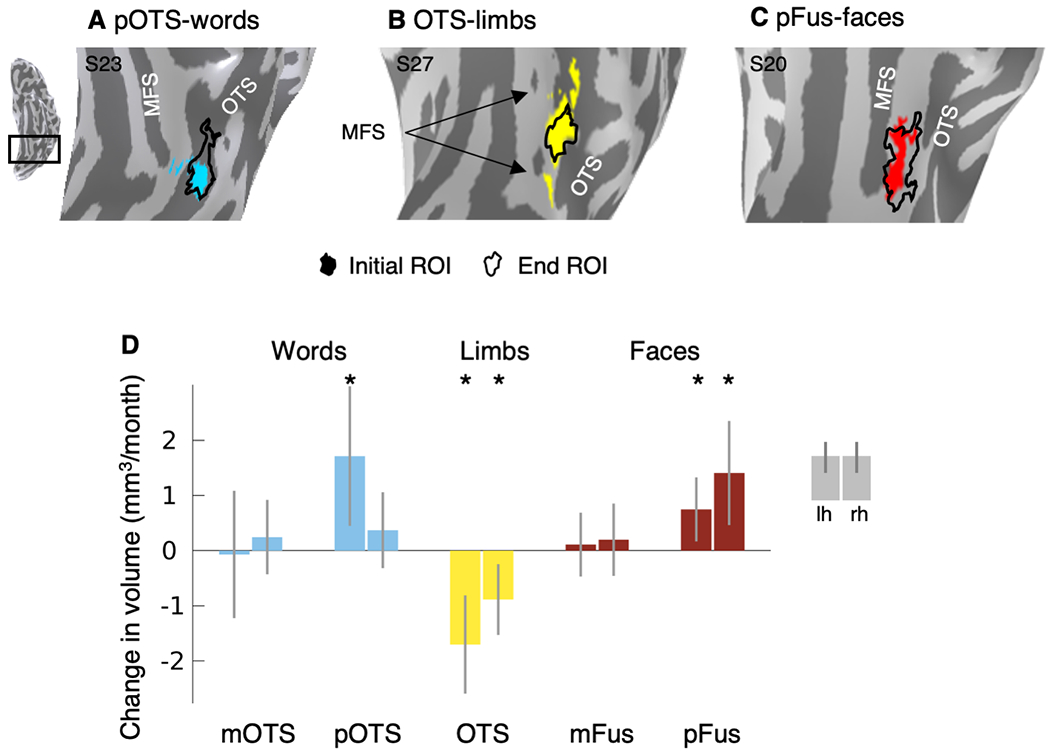
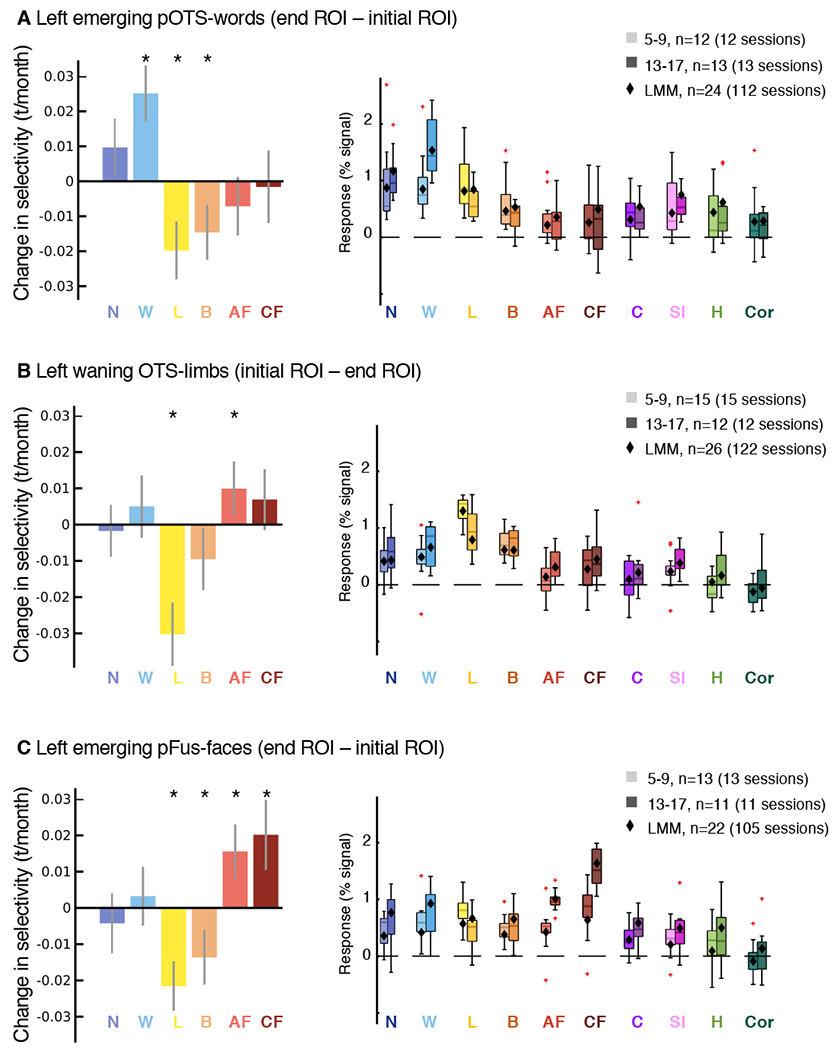
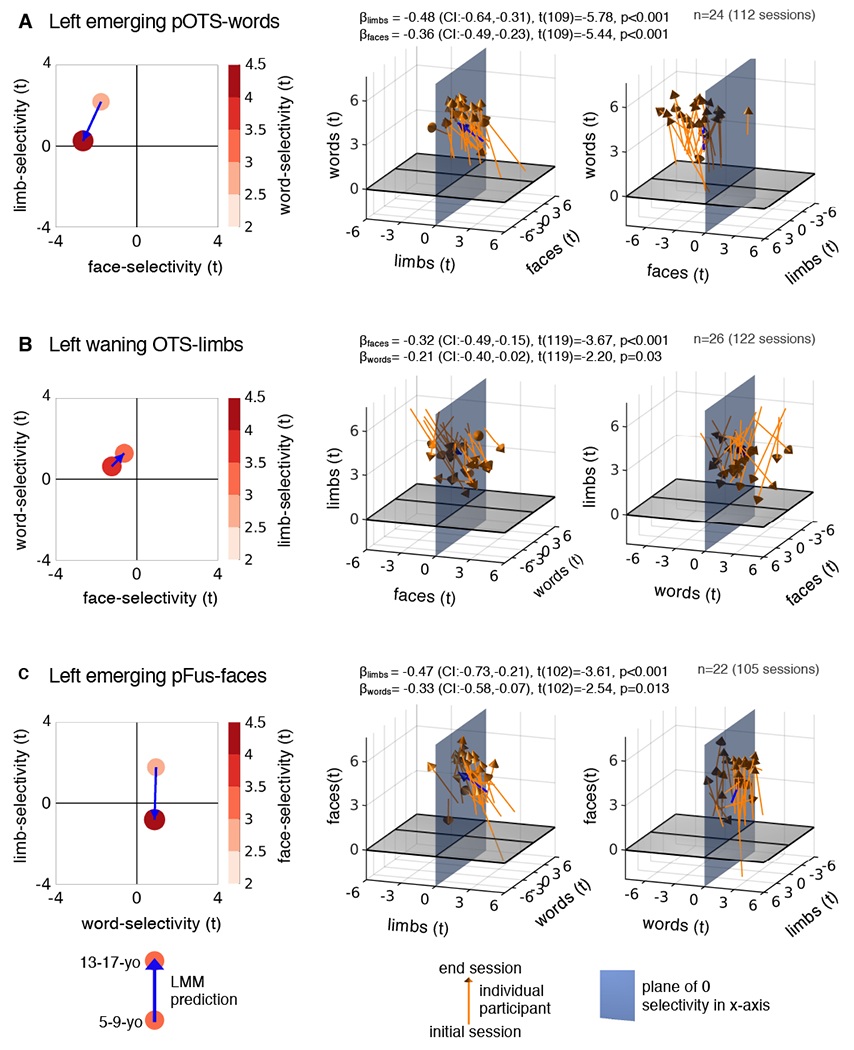
Human ventral temporal cortex contains category-selective regions that respond preferentially to ecologically relevant categories such as faces, bodies, places and words and that are causally involved in the perception of these categories. How do these regions develop during childhood? We used functional magnetic resonance imaging to measure longitudinal development of category selectivity in school-age children over 1 to 5 years. We discovered that, from young childhood to the teens, face- and word-selective regions in ventral temporal cortex expand and become more category selective, but limb-selective regions shrink and lose their preference for limbs. Critically, as a child develops, increases in face and word selectivity are directly linked to decreases in limb selectivity, revealing that during childhood, limb selectivity in ventral temporal cortex is repurposed into word and face selectivity. These data provide evidence for cortical recycling during childhood development. This has important implications for understanding typical as well as atypical brain development and necessitates a rethinking of how cortical function develops during childhood.
人类腹侧颞叶皮层包含类别选择性区域,这些区域对生态相关的类别(如面孔、身体、地点和单词)有优先反应,并在这些类别的感知中起因果作用。这些区域在儿童时期是如何发展的?我们使用功能磁共振成像来测量学龄儿童在 1 到 5 年内的类别选择性的纵向发展。我们发现,从幼儿期到青少年期,腹侧颞叶皮层中的面孔和单词选择性区域会扩大并变得更具选择性,但肢体选择性区域会缩小并失去对肢体的偏好。关键的是,随着孩子的成长,面孔和单词选择性的增加与肢体选择性的减少直接相关,这表明在儿童时期,腹侧颞叶皮层的肢体选择性被重新用于面孔和单词的选择性。这些数据为儿童发育过程中的皮质再利用提供了证据。这对于理解典型和非典型的大脑发育都有重要意义,也需要重新思考皮质功能在儿童时期是如何发展的。