Department of Orthodontics, University Medical Centre of Regensburg, Regensburg, Germany.
Institute of Clinical Microbiology and Hygiene, University Hospital of Regensburg, Regensburg, Germany.
J Orofac Orthop. 2022 Nov;83(6):361-375. doi: 10.1007/s00056-021-00309-y. Epub 2021 Jun 17.
Apart from other risk factors, mechanical stress on joints can promote the development of osteoarthritis (OA), which can also affect the temporomandibular joint (TMJ), resulting in cartilage degeneration and synovitis. Synovial fibroblasts (SF) play an important role in upkeeping joint homeostasis and OA pathogenesis, but mechanical stress as a risk factor might act differently depending on the type of joint. We thus investigated the relative impact of mechanical stress on the gene expression pattern of SF from TMJs and knee joints to provide new insights into OA pathogenesis.
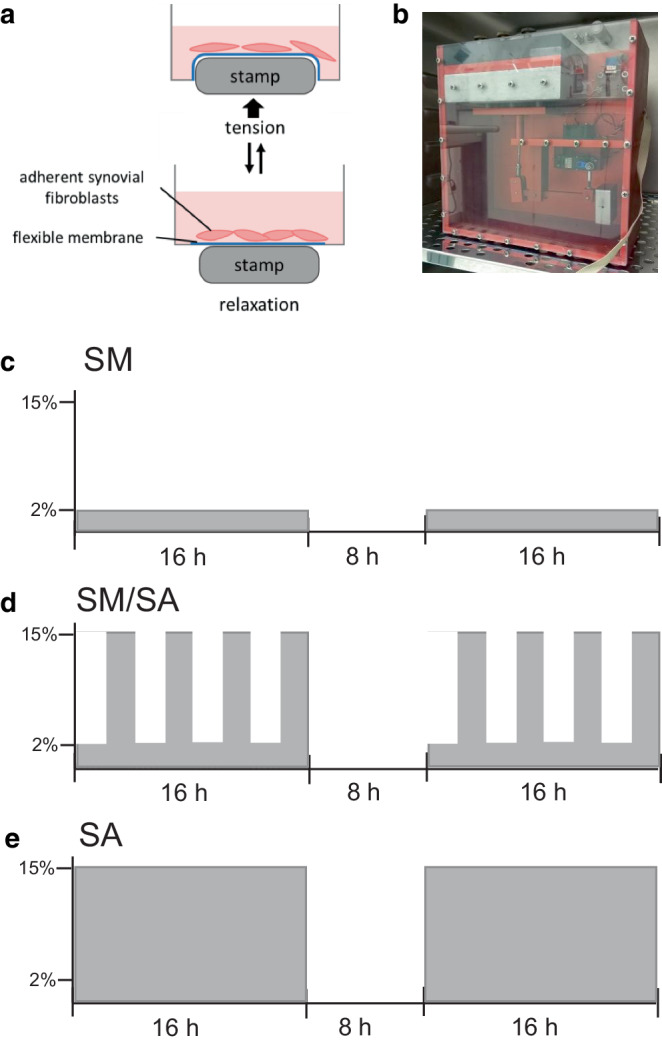
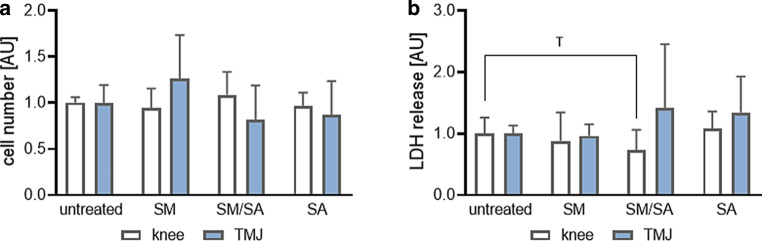
Primary SF isolated from TMJs and knee joints of mice were exposed to mechanical strain of varying magnitudes. Thereafter, the expression of marker genes of the extracellular matrix (ECM), inflammation and bone remodelling were analysed by quantitative real-time polymerase chain reaction (RT-qPCR).
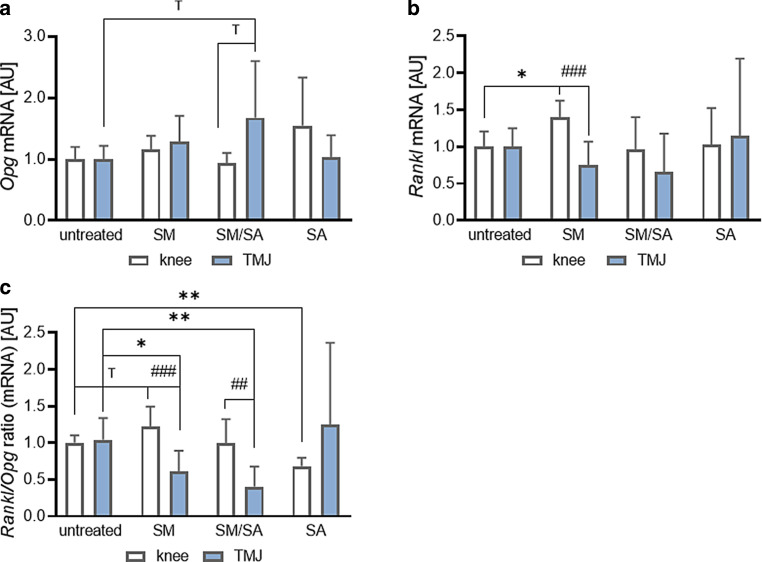
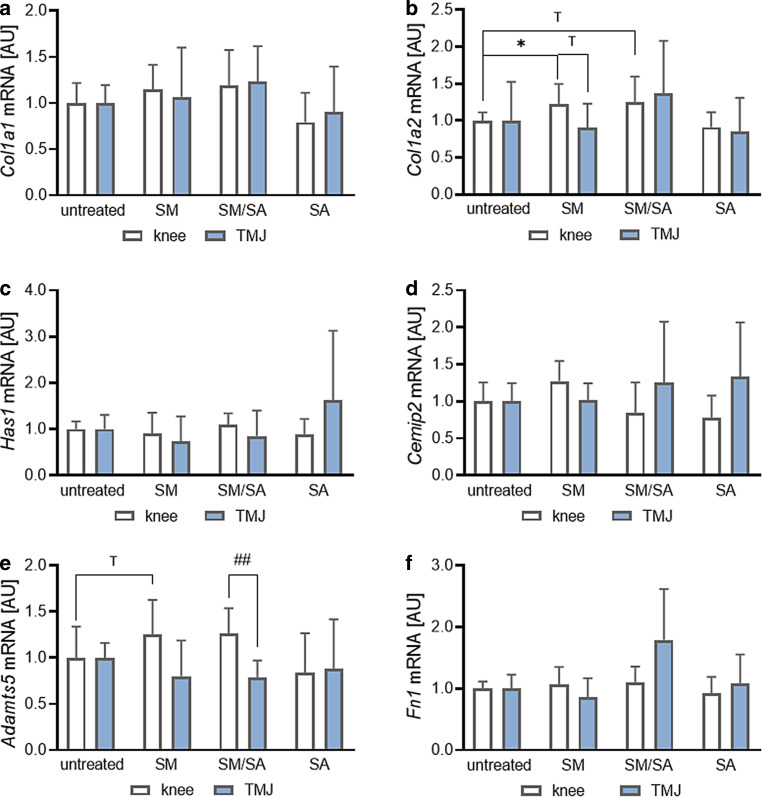
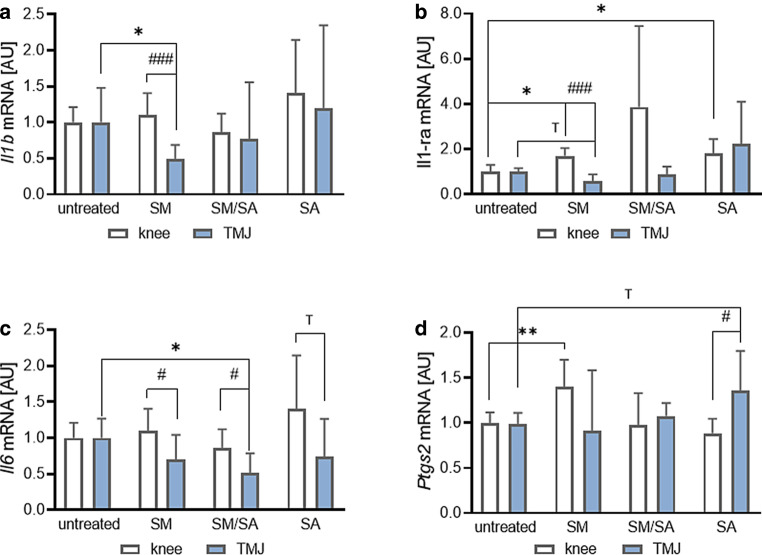
SF from the knee joints showed increased expression of genes associated with ECM remodelling, inflammation and bone remodelling after mechanical loading, whereas TMJ-derived SF showed reduced expression of genes associated with inflammation and bone remodelling. SF from the TMJ differed from knee-derived SF with regard to expression of ECM, inflammatory and osteoclastogenesis-promoting marker genes during mechanical strain.
Osteoarthritis-related ECM remodelling markers experience almost no changes in strain-induced gene expression, whereas inflammation and bone remodelling processes seem to differ depending on synovial fibroblast origin. Our data indicate that risk factors for the development and progression of osteoarthritis such as mechanical overuse have a different pathological impact in the TMJ compared to the knee joint.
除其他危险因素外,关节的机械应力可促进骨关节炎(OA)的发展,这也会影响颞下颌关节(TMJ),导致软骨退化和滑膜炎。滑膜成纤维细胞(SF)在维持关节内稳态和 OA 发病机制中起着重要作用,但作为危险因素的机械应力可能因关节类型而异。因此,我们研究了机械应力对来自 TMJ 和膝关节的 SF 基因表达模式的相对影响,为 OA 发病机制提供新的见解。
从小鼠 TMJ 和膝关节分离原代 SF,使其受到不同幅度的机械应变。然后,通过定量实时聚合酶链反应(RT-qPCR)分析细胞外基质(ECM)、炎症和骨重塑相关标记基因的表达。
在机械加载后,膝关节来源的 SF 中与 ECM 重塑、炎症和骨重塑相关的基因表达增加,而 TMJ 来源的 SF 中与炎症和骨重塑相关的基因表达减少。TMJ 来源的 SF 在机械应变过程中与 ECM、炎症和破骨细胞生成促进标记基因的表达与膝关节来源的 SF 不同。
与 OA 相关的 ECM 重塑标记基因在应变诱导的基因表达中几乎没有变化,而炎症和骨重塑过程似乎因滑膜成纤维细胞起源而异。我们的数据表明,OA 发展和进展的危险因素,如机械过度使用,在 TMJ 与膝关节相比具有不同的病理影响。