Cambon Linda, Alla François
Chaire de Prévention ISPED/SPF, Université de Bordeaux, Bordeaux, France.
Centre Inserm Université de Bordeaux U1219, BPH, Bordeaux, France.
Health Res Policy Syst. 2021 Jun 19;19(1):95. doi: 10.1186/s12961-021-00743-9.
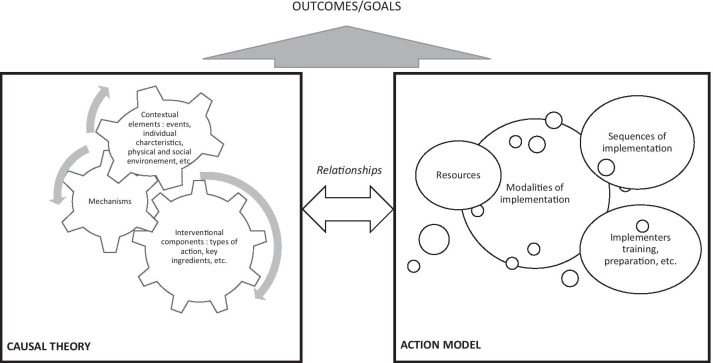
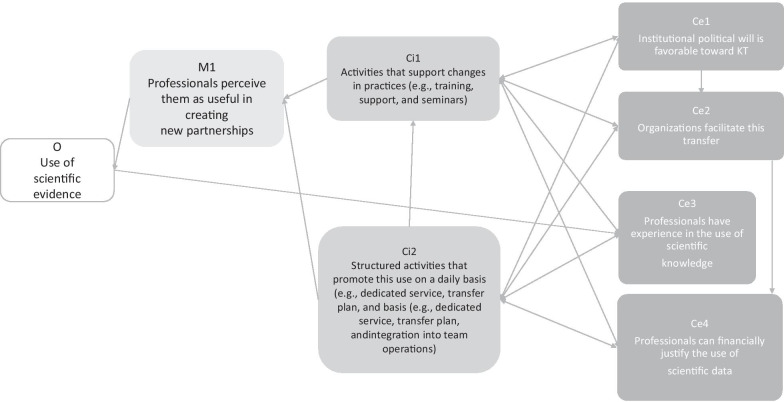
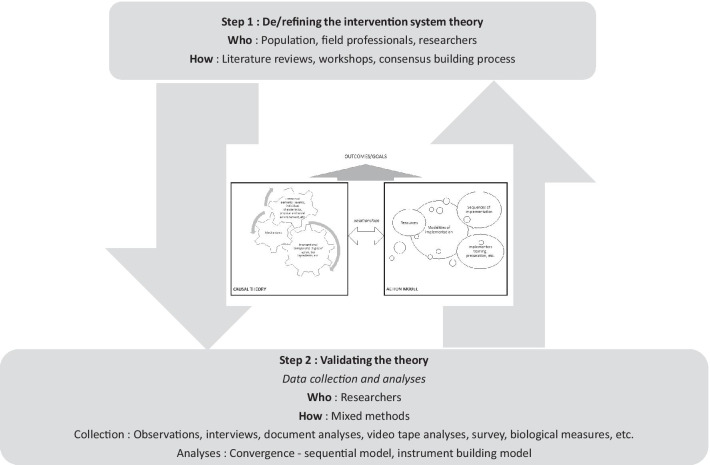
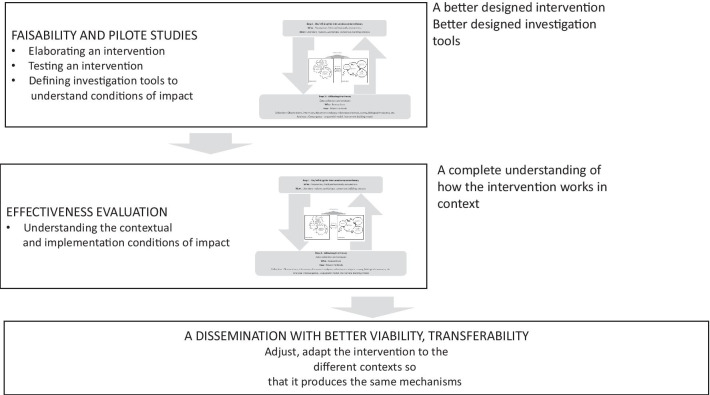
Given their inherent complexity, we need a better understanding of what is happening inside the "black box" of population health interventions. The theory-driven intervention/evaluation paradigm is one approach to addressing this question. However, barriers related to semantic or practical issues stand in the way of its complete integration into evaluation designs. In this paper, we attempt to clarify how various theories, models and frameworks can contribute to developing a context-dependent theory, helping us to understand the black box of population health interventions and to acknowledge their complexity. To achieve this goal, we clarify what could be referred to as "theory" in the theory-driven evaluation of the interventional system, distinguishing it from other models, frameworks and classical theories. In order to evaluate the interventional system with a theory-driven paradigm, we put forward the concept of interventional system theory (ISyT), which combines a causal theory and an action model. We suggest that an ISyT could guide evaluation processes, whatever evaluation design is applied, and illustrate this alternative method through different examples of studies. We believe that such a clarification can help to promote the use of theories in complex intervention evaluations, and to identify ways of considering the transferability and scalability of interventions.
鉴于其内在的复杂性,我们需要更好地理解人群健康干预措施这个 “黑匣子” 内部正在发生的事情。理论驱动的干预 / 评估范式是解决这个问题的一种方法。然而,与语义或实际问题相关的障碍阻碍了它完全融入评估设计。在本文中,我们试图阐明各种理论、模型和框架如何有助于构建一个依赖于具体情境的理论,帮助我们理解人群健康干预措施的 “黑匣子” 并认识到其复杂性。为实现这一目标,我们明确了在干预系统的理论驱动评估中可被称为 “理论” 的内容,并将其与其他模型、框架和经典理论区分开来。为了用理论驱动范式评估干预系统,我们提出了干预系统理论(ISyT)的概念,它结合了因果理论和行动模型。我们认为,无论采用何种评估设计,干预系统理论都可以指导评估过程,并通过不同的研究实例来说明这种替代方法。我们相信,这样的阐释有助于促进理论在复杂干预评估中的应用,并确定考虑干预措施可转移性和可扩展性的方法。