Luo Jiahui, Xu Tao, Sun Kai
The Center for Biomedical Research, Tongji Hospital, Tongji Medical College, Huazhong University of Science and Technology, Wuhan, China.
Department of Rehabilitation, Tongji Hospital, Tongji Medical College, Huazhong University of Science and Technology, Wuhan, China.
Front Cell Dev Biol. 2021 Jun 4;9:670711. doi: 10.3389/fcell.2021.670711. eCollection 2021.
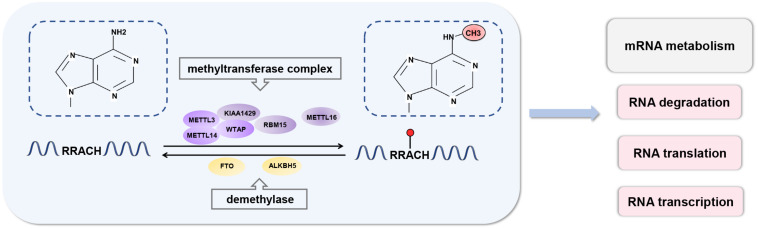
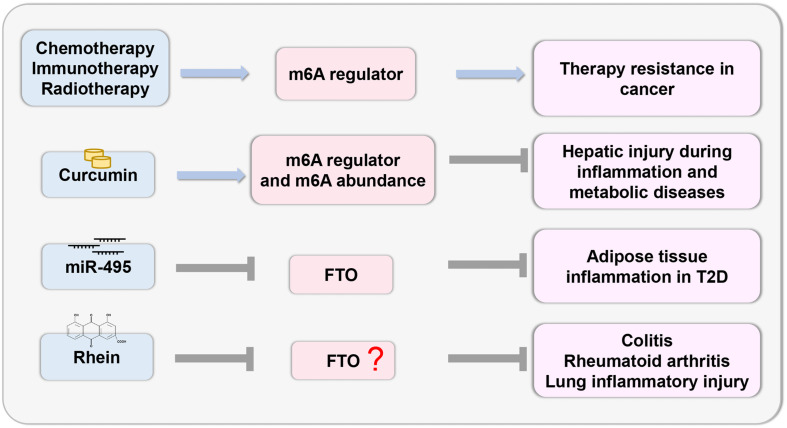
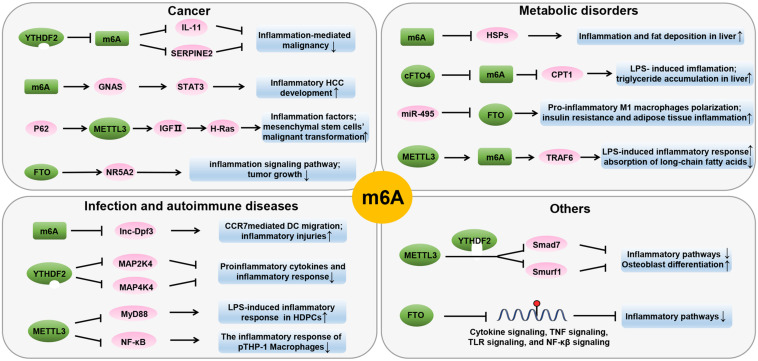
N6-methyladenosine (m6A) is the most prevalent internal mRNA modification. m6A can be installed by the methyltransferase complex and removed by demethylases, which are involved in regulating post-transcriptional expression of target genes. RNA methylation is linked to various inflammatory states, including autoimmunity, infection, metabolic disease, cancer, neurodegenerative diseases, heart diseases, and bone diseases. However, systematic knowledge of the relationship between m6A modification and inflammation in human diseases remains unclear. In this review, we will discuss the association between m6A modification and inflammatory response in diseases, especially the role, mechanisms, and potential clinical application of m6A as a biomarker and therapeutic target for inflammatory diseases.
N6-甲基腺苷(m6A)是最普遍的内部mRNA修饰。m6A可由甲基转移酶复合物安装,并由去甲基酶去除,这些酶参与调节靶基因的转录后表达。RNA甲基化与多种炎症状态相关,包括自身免疫、感染、代谢性疾病、癌症、神经退行性疾病、心脏病和骨病。然而,关于m6A修饰与人类疾病炎症之间关系的系统知识仍不清楚。在本综述中,我们将讨论m6A修饰与疾病炎症反应之间的关联,特别是m6A作为炎症性疾病的生物标志物和治疗靶点的作用、机制及潜在临床应用。