Ueda Yu, Kovacs Samantha, Reader Rachel, Roberts Jeffrey A, Stern Joshua A
Department of Clinical Sciences, College of Veterinary Medicine, North Carolina State University, Raleigh, NC, United States.
Department of Medicine & Epidemiology, School of Veterinary Medicine, University of California, Davis, Davis, CA, United States.
Front Vet Sci. 2021 Jun 2;8:540493. doi: 10.3389/fvets.2021.540493. eCollection 2021.
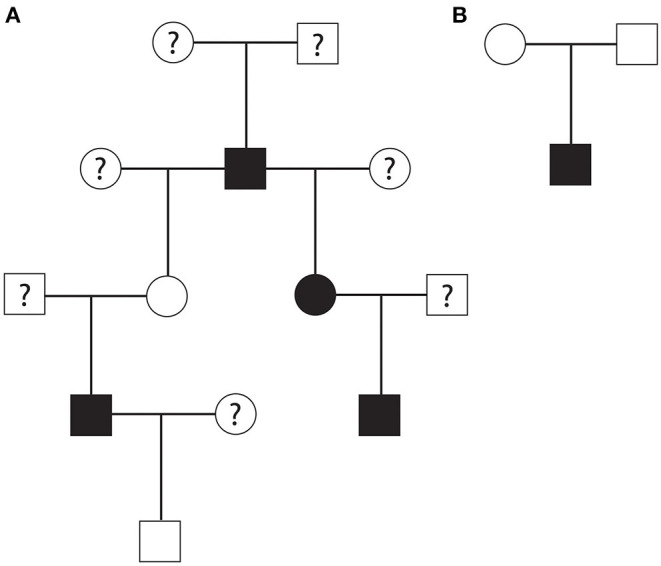
In a colony of rhesus macaques at California National Primate Research Center (CNPRC), naturally occurring hypertrophic cardiomyopathy (HCM) classified by left ventricular hypertrophy without obvious underlying diseases has been identified during necropsy over the last two decades. A preliminary pedigree analysis suggested a strong genetic predisposition of this disease with a founder effect. However, the mode of inheritance was undetermined due to insufficient pedigree data. Since 2015, antemortem examination using echocardiographic examination as well as other cardiovascular analyses have been performed on large numbers of rhesus macaques at the colony. Based on antemortem examination, HCM was diagnosed in additional 65 rhesus macaques. Using HCM cases diagnosed based on antemortem and postmortem examinations, the heritability (h) was estimated to determine the degree of genetic and environmental contributions to the development of HCM in rhesus macaques at the CNPRC. The calculated mean and median heritability (h) of HCM in this colony of rhesus macaques were 0.5 and 0.51 (95% confidence interval; 0.14-0.82), respectively. This suggests genetics influence development of HCM in the colony of rhesus macaques. However, post-translational modifications and environmental factors are also likely to contribute the variability of phenotypic expression. Based on the pedigree analysis, an autosomal recessive trait was suspected, but an autosomal dominant mode of inheritance with incomplete penetrance was also possible. Further investigation with more data from siblings, offspring, and parents of HCM-affected rhesus macaques are warranted. Importantly, the findings of the present study support conducting genetic investigations such as whole genome sequencing to identify the causative variants of inherited HCM in rhesus macaques.
在加利福尼亚国家灵长类动物研究中心(CNPRC)的一群恒河猴中,在过去二十年的尸检过程中发现了自然发生的肥厚性心肌病(HCM),其特征为左心室肥厚且无明显潜在疾病。初步的系谱分析表明,这种疾病具有很强的遗传易感性且存在奠基者效应。然而,由于系谱数据不足,遗传模式尚未确定。自2015年以来,对该群体中的大量恒河猴进行了使用超声心动图检查以及其他心血管分析的生前检查。基于生前检查,又有65只恒河猴被诊断出患有HCM。利用基于生前和死后检查诊断出的HCM病例,估计了遗传力(h),以确定遗传和环境因素对CNPRC恒河猴HCM发生发展的影响程度。在这群恒河猴中,计算得出的HCM平均遗传力(h)和中位数遗传力(h)分别为0.5和0.51(95%置信区间;0.14 - 0.82)。这表明遗传因素影响恒河猴群体中HCM的发生发展。然而,翻译后修饰和环境因素也可能导致表型表达的变异性。基于系谱分析,怀疑是常染色体隐性性状,但也有可能是具有不完全外显率的常染色体显性遗传模式。有必要对受HCM影响的恒河猴的兄弟姐妹、后代和父母进行更多数据的进一步调查。重要的是,本研究结果支持进行全基因组测序等遗传调查,以确定恒河猴遗传性HCM的致病变异。