Mills Jane K, Henderson Melissa A, Giuffrida Lauren, Petrone Pasquale, Westwood Jennifer A, Darcy Phillip K, Neeson Paul J, Kershaw Michael H, Gyorki David E
Cancer Immunology Program, Peter MacCallum Cancer Centre, Melbourne, Australia.
Department of Cancer Surgery, Peter MacCallum Cancer Centre, 305 Grattan Street, Melbourne, Victoria 3000, Australia.
Ther Adv Vaccines Immunother. 2021 May 31;9:25151355211017119. doi: 10.1177/25151355211017119. eCollection 2021.
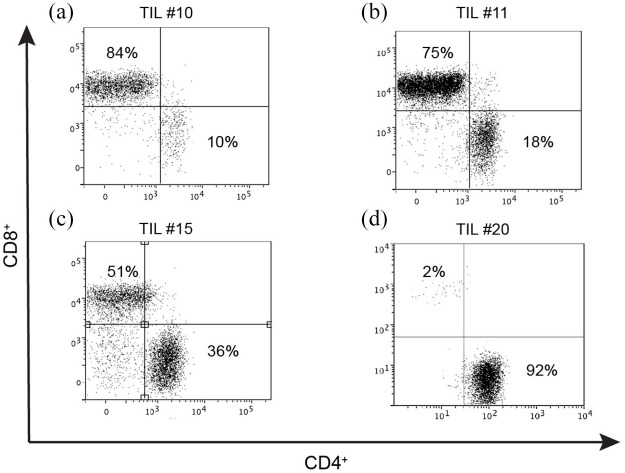
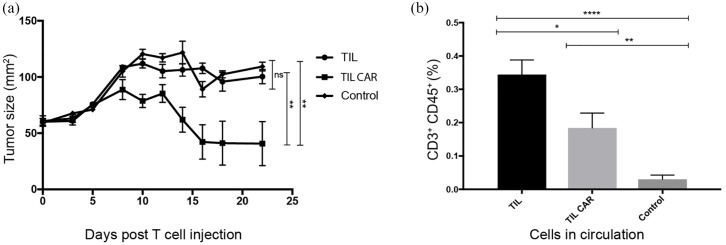
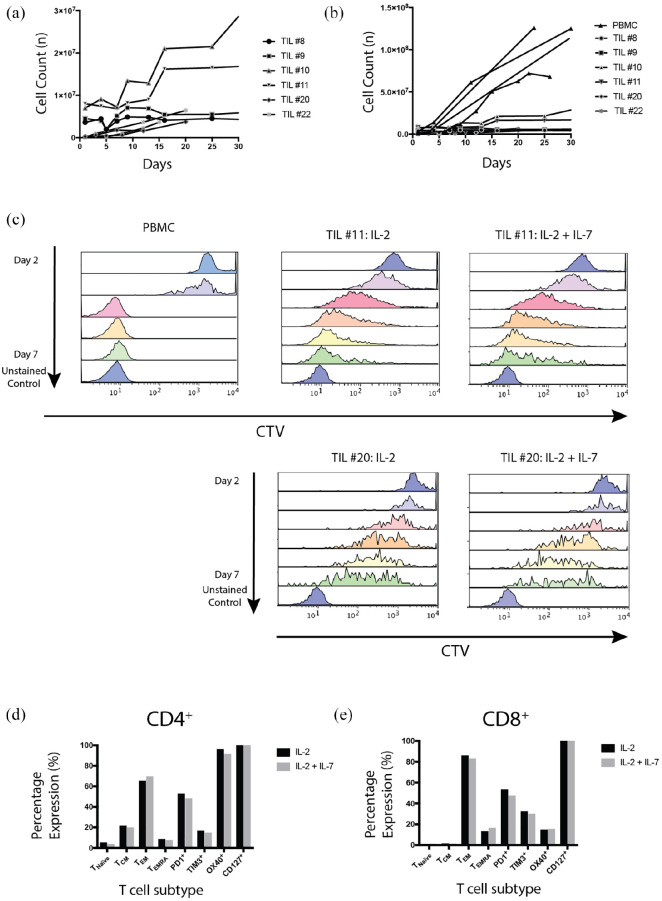
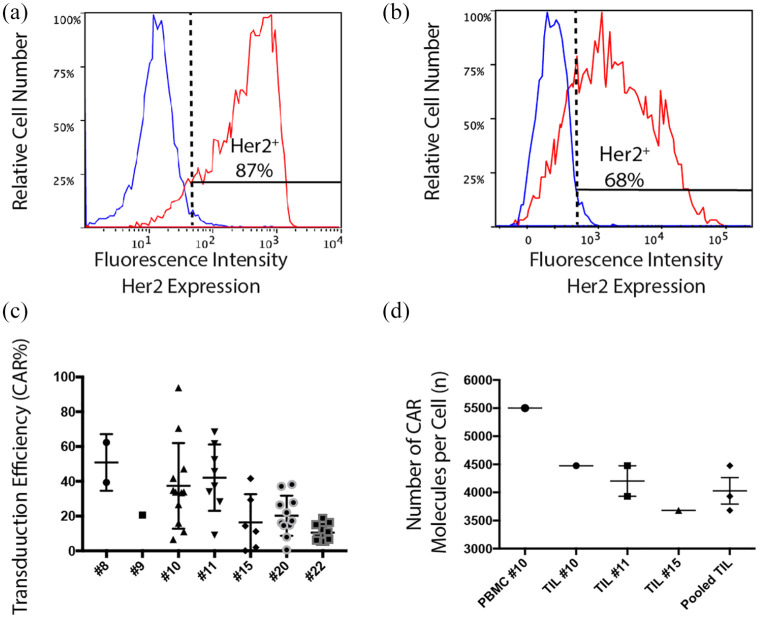
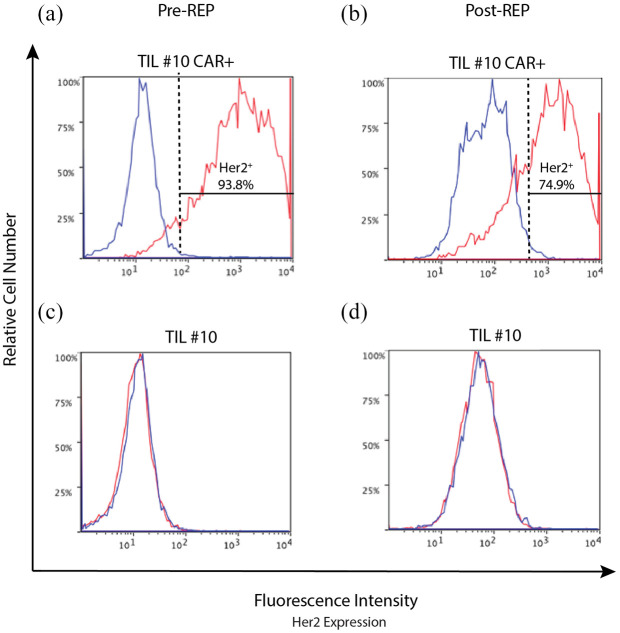
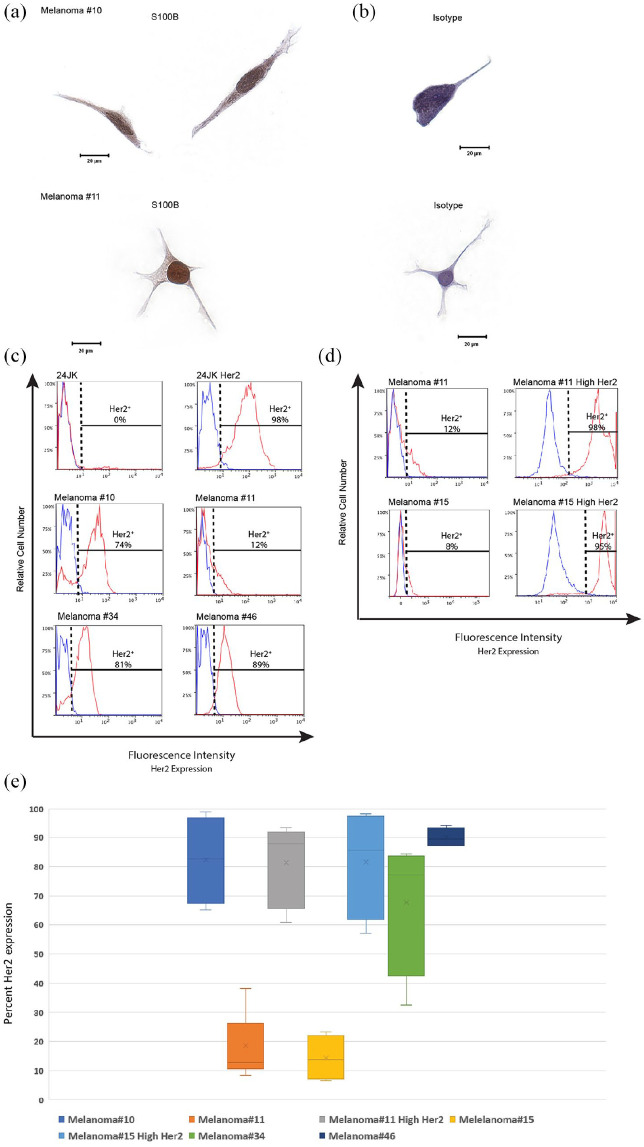
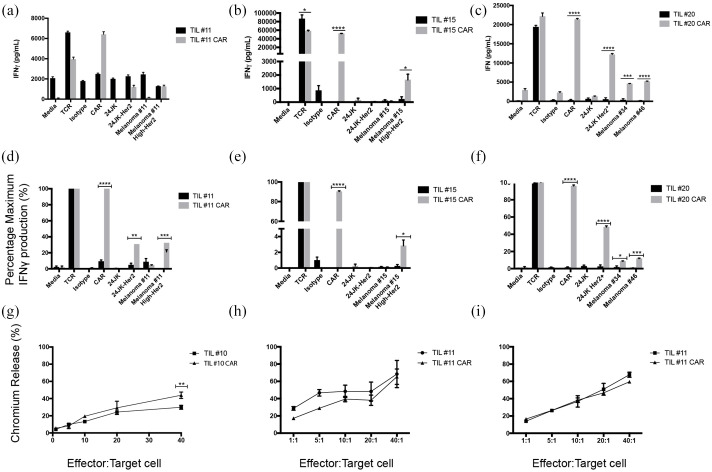
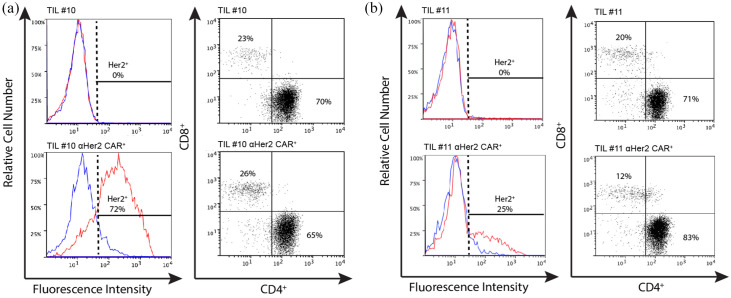
Tumor-infiltrating lymphocytes (TILs) and chimeric antigen receptor (CAR) T-cell therapies have demonstrated promising, though limited, efficacy against melanoma. We designed a model system to explore the efficacy of dual specific T cells derived from melanoma patient TILs by transduction with a Her2-specific CAR. Metastatic melanoma cells in our biobank constitutively expressed Her2 antigen. CAR-TIL produced greater amounts of IFN compared with parental TIL, when co-cultured with Her2 expressing tumor lines, including autologous melanoma tumor lines, although no consistent increase in cytotoxicity by TIL was afforded by expression of a CAR. Results of an study in NSG mice demonstrated tumor shrinkage when CAR-TILs were used in an adoptive cell therapy protocol. Potential limitations of transduced TIL in our study included limited proliferative potential and a terminally differentiated phenotype, which would need addressing in further work before consideration of clinical translation.
肿瘤浸润淋巴细胞(TILs)和嵌合抗原受体(CAR)T细胞疗法已显示出对黑色素瘤有一定疗效,尽管疗效有限。我们设计了一个模型系统,通过用HER2特异性CAR转导,探索源自黑色素瘤患者TILs的双特异性T细胞的疗效。我们生物样本库中的转移性黑色素瘤细胞持续表达HER2抗原。与亲本TIL相比,当CAR-TIL与表达HER2的肿瘤细胞系(包括自体黑色素瘤肿瘤细胞系)共培养时,会产生更多的干扰素,尽管CAR的表达并未使TIL的细胞毒性持续增加。在NSG小鼠中进行的一项研究结果表明,当采用过继性细胞治疗方案使用CAR-TIL时,肿瘤会缩小。我们研究中转导TIL的潜在局限性包括增殖潜力有限和终末分化表型,在考虑临床转化之前,需要在进一步的研究中解决这些问题。