Centre for Injury Prevention and Research, Bangladesh (CIPRB), Mohakhali, Dhaka, Bangladesh.
Bangladesh University of Health Sciences, Dhaka, Bangladesh.
Inquiry. 2021 Jan-Dec;58:469580211023464. doi: 10.1177/00469580211023464.
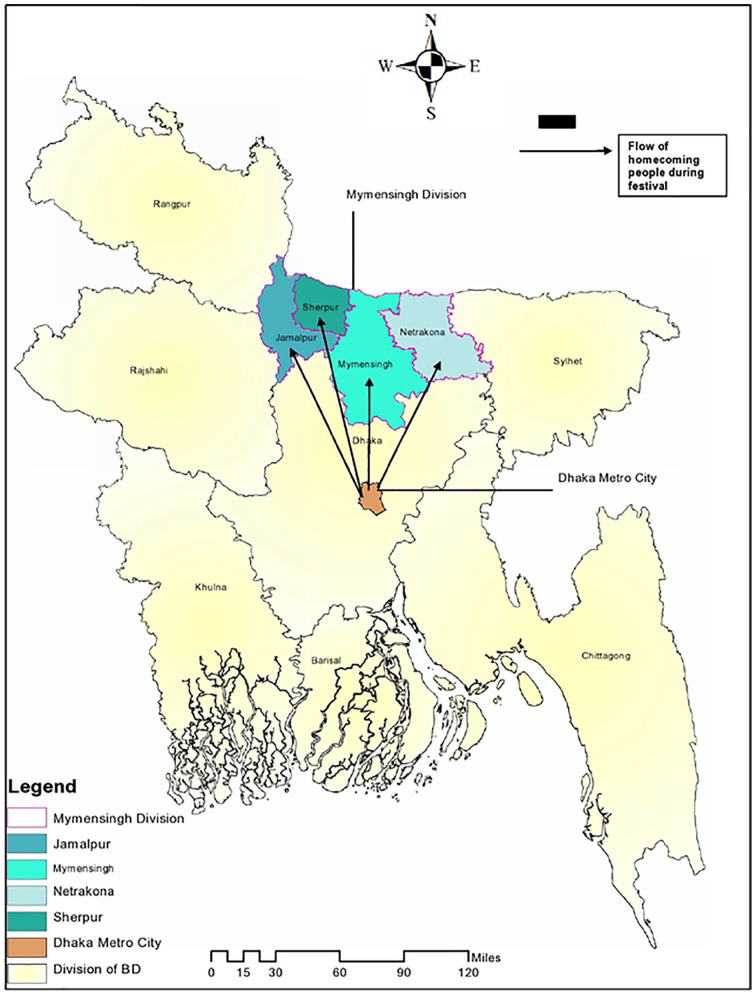
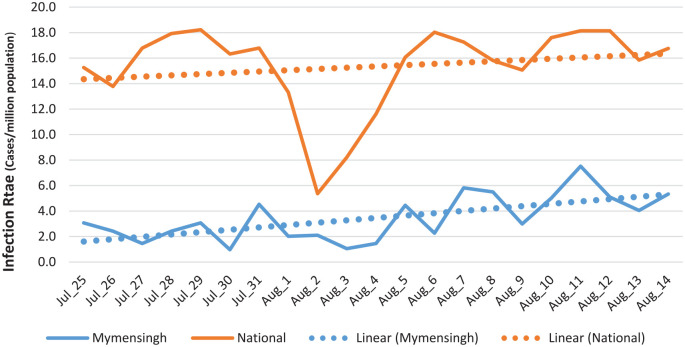
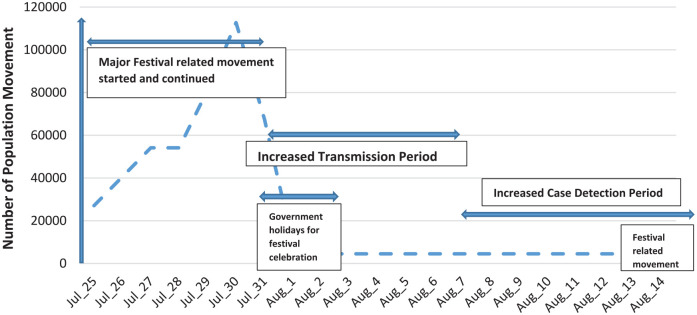
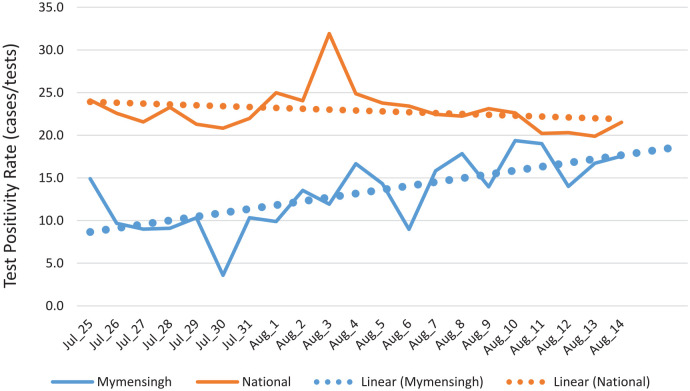
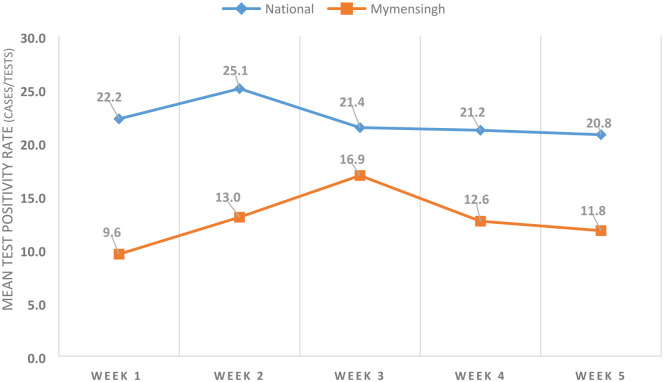
Festivals traditionally result in mass public mobility from large cities to rural or semi-urban areas in low- and middle-Income Countries (LMIC), which are inadequately prepared for tackling the consequences of the COVID-19 pandemic. This study aimed to explore the trend of COVID-19 infection in a peripheral region of Bangladesh during one of the largest festivals to develop an evidence-based hypothesis for its influence on the transmission rate of COVID-19. This study conducted a quantitative analysis of secondary data on COVID-19 collected from the Directorate General of Health Services Bangladesh (DGHS) and divisional director's office in the Mymensingh division. To explore the influence of one of the biggest festivals (Eid-ul-Adha) on the trend of COVID-19 infection, we analyzed data from a week before the festival to 2 weeks following the festival. The infection rate (positive cases per million of the population) and the test positivity rate (positive cases among the total number of conducted diagnostic tests) of each day during this period were calculated both for the Mymensingh region and national level. Both the test positivity rate (TPR) and infection rates in the Mymensingh region demonstrated an increasing trend. The mean test positivity rate of the Mymensingh region on the week before the festival was 9.5%. It increased to a mean test positivity rate of 13% in the following week and further rose to a rate of 17% in the next week. The infection rate of Mymensingh also increased more than 2 folds from the day of the festival (2.0-5.3 cases per million) within the next 2 weeks. The TPR and infection rate on the national level remained similar throughout the study period. Mass mobility during Eid-ul-Adha influences the increased transmission of COVID-19 among the peripheral regions of Bangladesh from the central capital city Dhaka. The findings will help policymakers plan and implement travel restrictions during festivals during the pandemic in LMICs.
节日期间,大量民众从大城市前往低收入和中等收入国家(LMIC)的农村或半城市地区,而这些地区对 COVID-19 大流行的后果应对不足。本研究旨在探讨孟加拉国一个偏远地区在该国最大节日之一期间 COVID-19 感染的趋势,以形成一个基于证据的假说,说明其对 COVID-19 传播率的影响。本研究对孟加拉国卫生服务总局(DGHS)和迈门辛分区主任办公室收集的 COVID-19 二级数据进行了定量分析。为了探讨其中一个最大节日(开斋节)对 COVID-19 感染趋势的影响,我们分析了节日前一周到节日后两周的数据。在此期间,我们计算了迈门辛地区和全国范围内每天的感染率(每百万人口中的阳性病例数)和检测阳性率(总检测数中的阳性病例数)。在此期间,迈门辛地区和全国的检测阳性率(TPR)和感染率均呈上升趋势。节日前一周,迈门辛地区的平均检测阳性率为 9.5%。接下来一周,平均检测阳性率上升至 13%,再下一周进一步上升至 17%。从节日当天(每百万 2.0-5.3 例)开始,迈门辛的感染率在接下来的两周内增加了两倍多。在整个研究期间,全国的 TPR 和感染率保持相似。开斋节期间的大规模人口流动影响了孟加拉国从首都达卡到偏远地区 COVID-19 的传播。这些发现将有助于决策者在大流行期间规划和实施 LMIC 节日期间的旅行限制。