Department of Pathology, Herlev-Gentofte University Hospital, Herlev, Denmark.
Institute of Pathology, Locarno, Switzerland.
PLoS One. 2021 Jun 24;16(6):e0253687. doi: 10.1371/journal.pone.0253687. eCollection 2021.
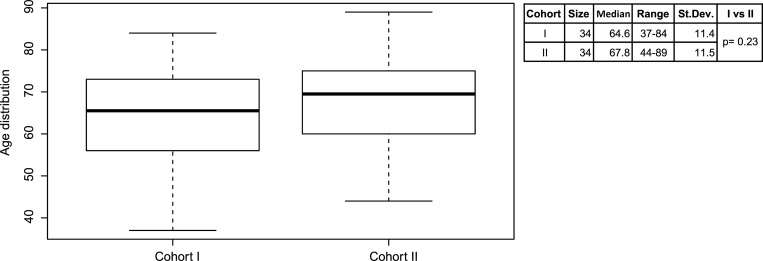
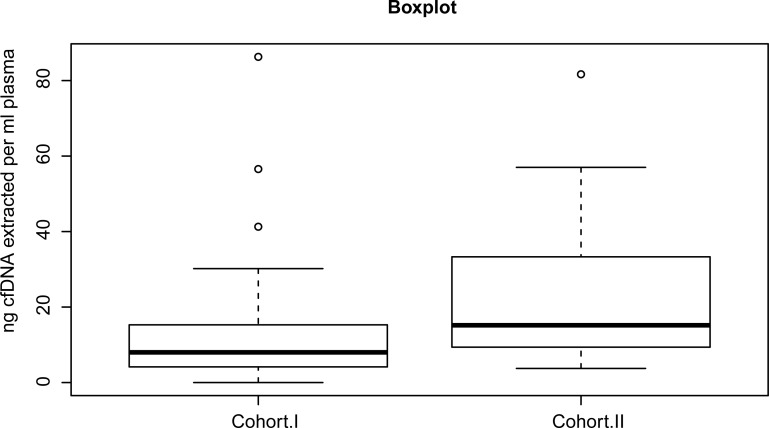
A major perspective for the use of circulating tumor DNA (ctDNA) in the clinical setting of non-small cell lung cancer (NSCLC) is expected as predictive factor for resistance and response to EGFR TKI therapy and, especially, as a non-invasive alternative to tissue biopsy. However, ctDNA is both highly fragmented and mostly low concentrated in plasma and serum. On this basis, it is important to use a platform characterized by high sensitivity and linear performance in the low concentration range. This motivated us to evaluate the newly developed and commercially available SensiScreen® EGFR Liquid assay platform (PentaBase) with regard to sensitivity, linearity, repeatability and accuracy and finally to compare it to our already implemented methods. The validation was made in three independent European laboratories using two cohorts on a total of 68 unique liquid biopsies.
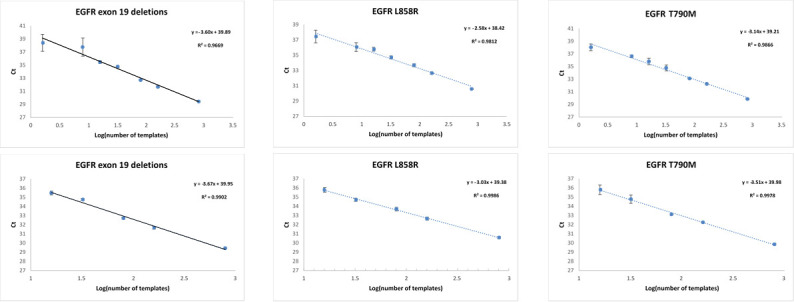
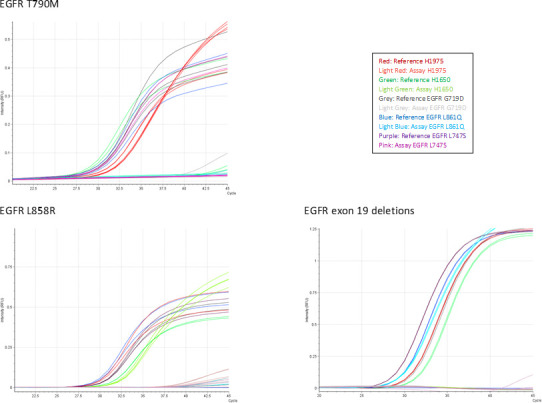
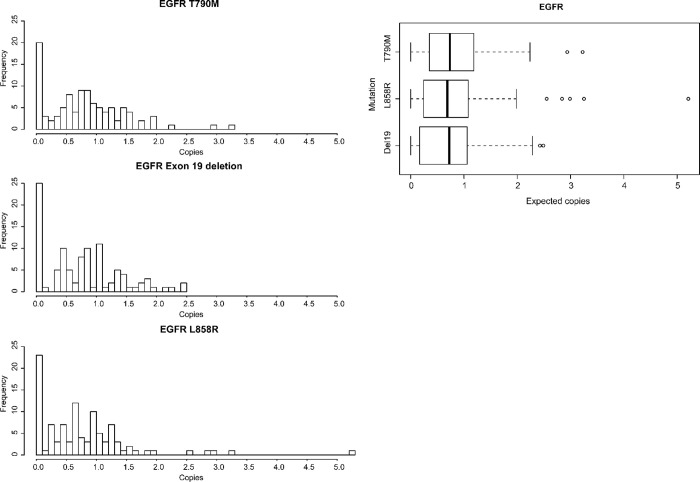
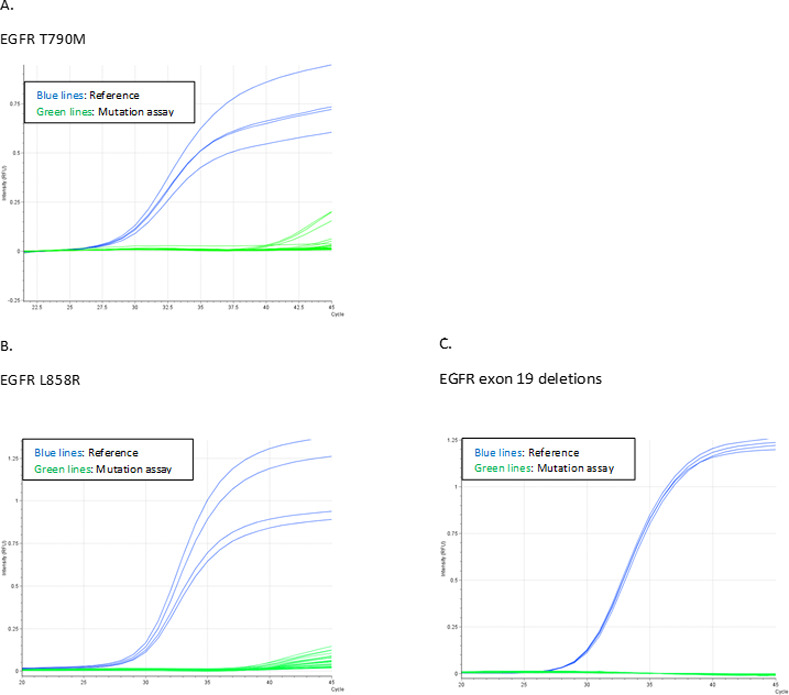
Using artificial samples containing 1600 copies of WT DNA spiked with 50% - 0.1% of mutant copies across a seven-log dilution scale, we assessed the sensitivity, linearity, repeatability and accuracy for the p.T790M, p.L858R and exon 19 deletion assays of the SensiScreen® EGFR Liquid assay platform. The lowest value detectable ranged from 0.5% to 0.1% with R2≥0,97 indicating good linearity. High PCR efficiency was shown for all three assays. In 102 single PCRs each containing theoretical one copy of the mutant at initiating, assays showed repeatable positivity in 75.5% - 80.4% of reactions. At low ctDNA levels, as in plasma, the SensiScreen® EGFR Liquid assay platform showed better sensitivity than the Therascreen® EGFR platform (Qiagen) and equal performance to the ctEGFR Mutation Detection Kit (EntroGen) and the IOT® Oncomine cell-free nucleic acids assay (Thermo Fisher Scientific) with 100% concordance at the sequence level.
For profiling clinical plasma samples, characterized by low ctDNA abundance, the SensiScreen® EGFR Liquid assay is able to identify down to 1 copy of mutant alleles and with its high sensitivity, linearity and accuracy it may be a competitive platform of choice.
在非小细胞肺癌(NSCLC)的临床环境中,循环肿瘤 DNA(ctDNA)有望作为预测 EGFR TKI 治疗耐药性和反应的因素,特别是作为组织活检的非侵入性替代方法。然而,ctDNA 在血浆和血清中高度碎片化且浓度较低。在此基础上,使用具有高灵敏度和线性性能的平台来检测低浓度范围非常重要。这促使我们评估新开发的商业可用的 SensiScreen® EGFR 液体分析平台(PentaBase)的灵敏度、线性度、重复性和准确性,并最终将其与我们已实施的方法进行比较。该验证在三个独立的欧洲实验室中使用两个共包含 68 个独特液体活检样本的队列进行。
使用包含 WT DNA 的人工样本,这些样本经过 7 个对数稀释度的调整,包含 1600 个拷贝的 WT DNA 并混入 50%-0.1%的突变拷贝,我们评估了 SensiScreen® EGFR 液体分析平台的 p.T790M、p.L858R 和外显子 19 缺失检测的灵敏度、线性度、重复性和准确性。可检测的最低值范围为 0.5%-0.1%,R2≥0.97,表明具有良好的线性度。所有三个检测均显示出高 PCR 效率。在每个包含起始时理论上一个突变拷贝的 102 个单 PCR 中,75.5%-80.4%的反应中检测结果可重复为阳性。在血浆等低 ctDNA 水平下,SensiScreen® EGFR 液体分析平台的灵敏度优于 Therascreen® EGFR 平台(Qiagen),与 ctEGFR 突变检测试剂盒(EntroGen)和 IOT® Oncomine 游离核酸检测(Thermo Fisher Scientific)相当,在序列水平上具有 100%的一致性。
对于低 ctDNA 丰度的临床血浆样本进行分析,SensiScreen® EGFR 液体分析可以识别低至 1 个拷贝的突变等位基因,其高灵敏度、线性度和准确性使其成为一个有竞争力的选择平台。