Department of Infectious Diseases and Microbiology, University of Lübeck, Lübeck, Germany.
Front Immunol. 2021 Jun 8;12:636954. doi: 10.3389/fimmu.2021.636954. eCollection 2021.
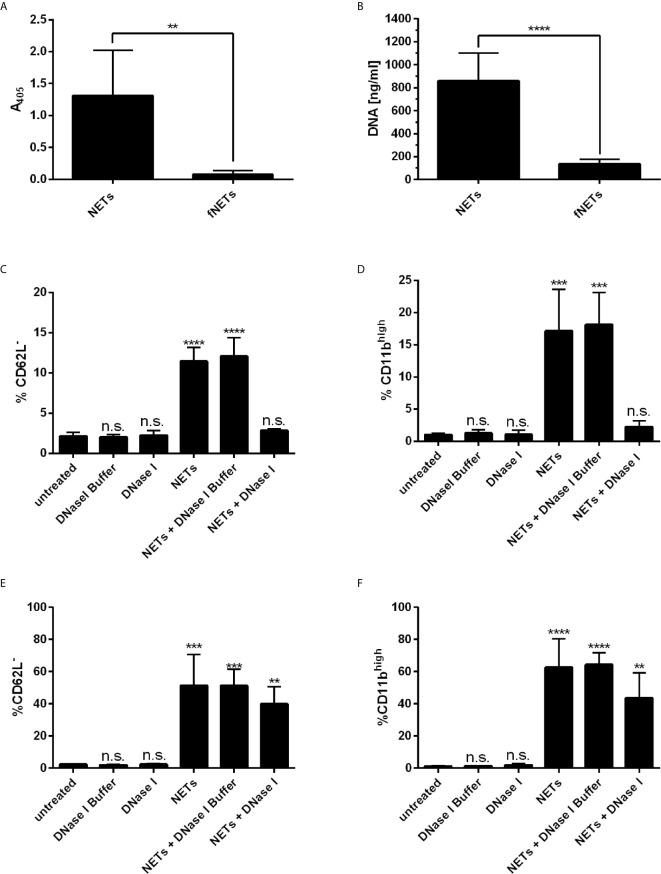
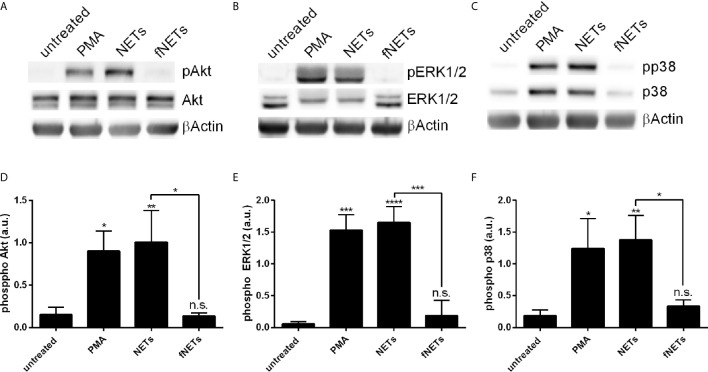
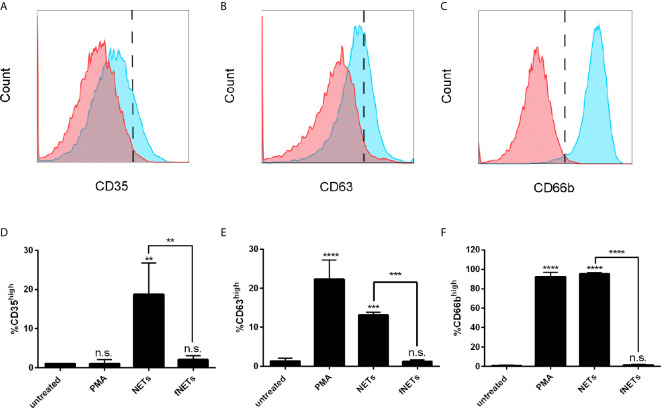
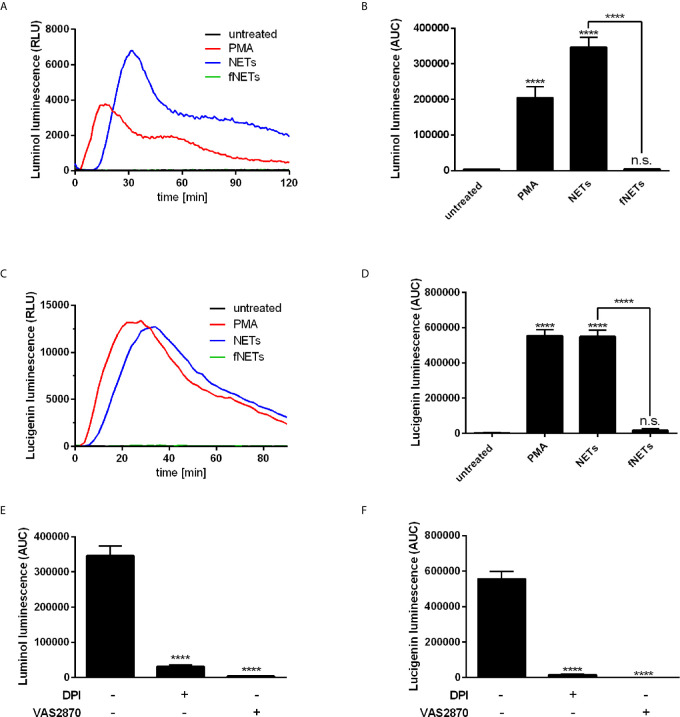
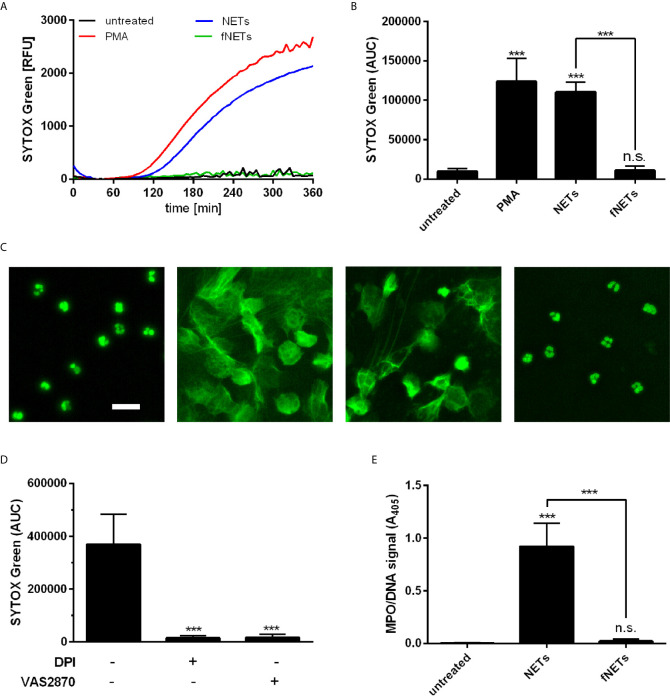
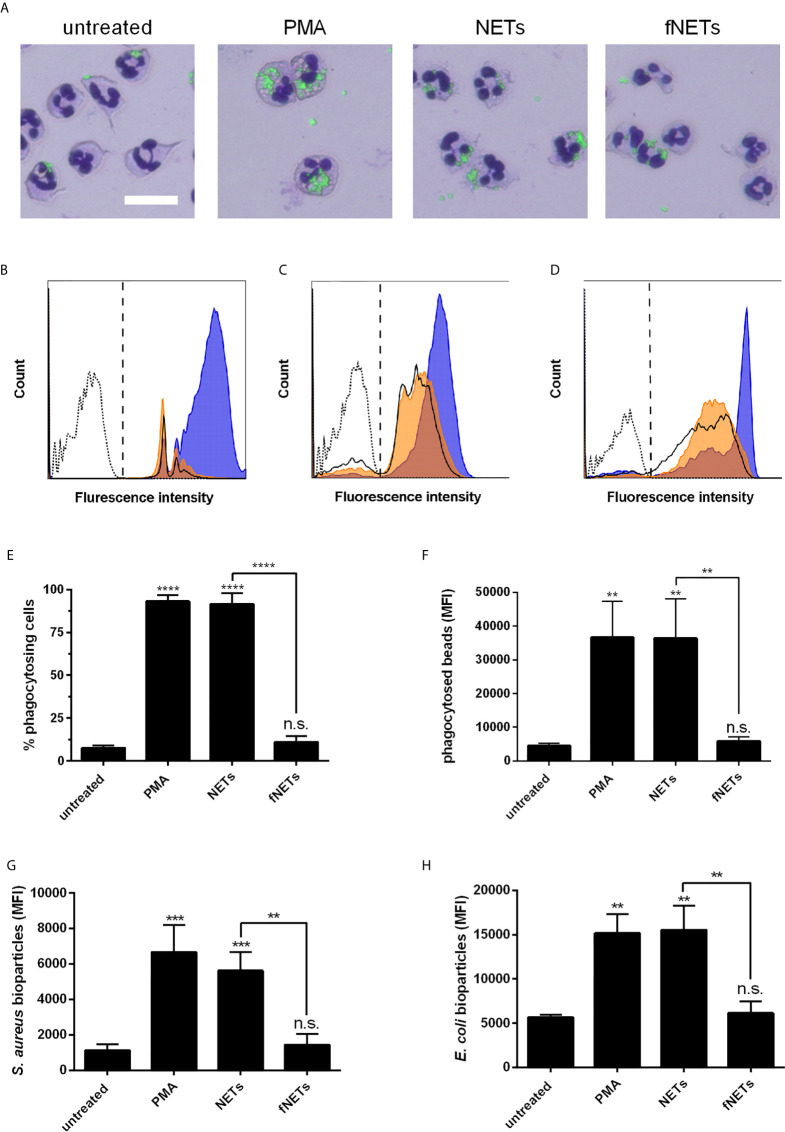
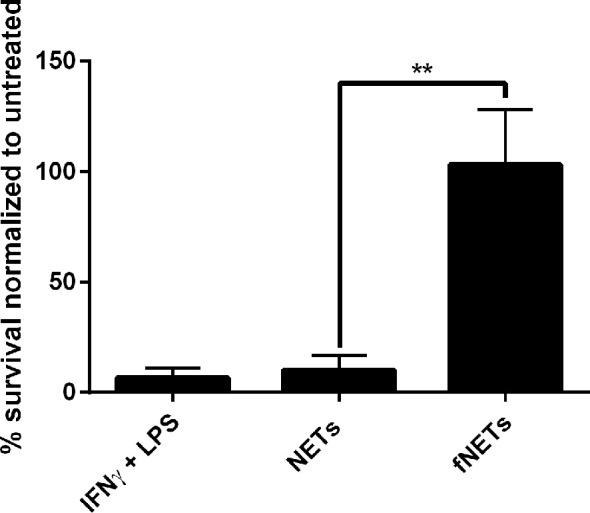
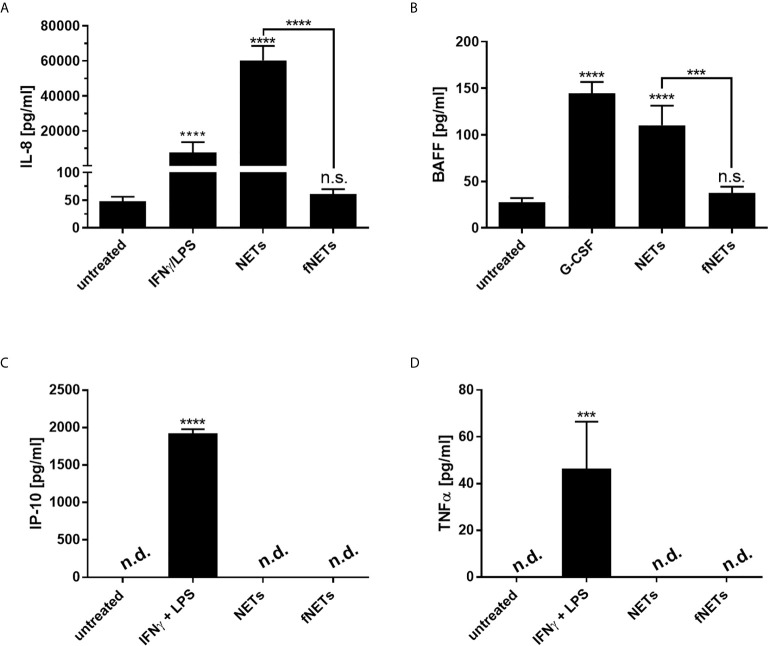
Neutrophil extracellular traps (NETs) consist of decondensed nuclear chromatin that is associated with proteins and are released by neutrophils during an inflammatory response. Released NETs are able to capture pathogens, prevent their dissemination and potentially kill them antimicrobial peptides and proteins that are associated with the decondensed chromatin. In addition to their antimicrobial functions, NETs have also been shown to exert immunomodulatory effects by activation and differentiation of macrophages, dendritic cells and T cells. However, the effect of NETs on neutrophil functions is poorly understood. Here we report the first comprehensive study regarding the effects of NETs on human primary neutrophils . NETs were isolated from cultures of PMA-exposed neutrophils. Exposure of neutrophils to isolated NETs resulted in the activation of several neutrophil functions in a concentration-dependent manner. NETs induced exocytosis of granules, the production of reactive oxygen species (ROS) by the NADPH oxidase NOX2, NOX2-dependent NET formation, increased the phagocytosis and killing of microbial pathogens. Furthermore, NETs induced the secretion of the proinflammatory chemokine IL-8 and the B-cell-activating cytokine BAFF. We could show that the NET-induced activation of neutrophils occurs by pathways that involve the phosphorylation of Akt, ERK1/2 and p38. Taken together our results provide further insights into the proinflammatory role of NETs by activating neutrophil effector function and further supports the view that NETs can amplify inflammatory events. On the one hand the amplified functions enhance the antimicrobial defense. On the other hand, NET-amplified neutrophil functions can be involved in the pathophysiology of NET-associated diseases. In addition, NETs can connect the innate and adaptive immune system by inducing the secretion of the B-cell-activating cytokine BAFF.
中性粒细胞胞外诱捕网(NETs)由解聚的核染色质组成,与蛋白质相关,并在炎症反应期间由中性粒细胞释放。释放的 NETs 能够捕获病原体,防止其传播,并潜在地杀死它们——与解聚染色质相关的抗菌肽和蛋白质。除了其抗菌功能外,NETs 还通过激活和分化巨噬细胞、树突状细胞和 T 细胞来发挥免疫调节作用。然而,NETs 对中性粒细胞功能的影响知之甚少。在这里,我们首次全面研究了 NETs 对人原代中性粒细胞的影响。NETs 是从 PMA 暴露的中性粒细胞培养物中分离出来的。中性粒细胞暴露于分离的 NETs 会导致几种中性粒细胞功能以浓度依赖的方式被激活。NETs 诱导颗粒的胞吐作用、NADPH 氧化酶 NOX2 产生的活性氧(ROS)、NOX2 依赖性 NET 形成、增加微生物病原体的吞噬和杀伤。此外,NETs 诱导促炎趋化因子 IL-8 和 B 细胞激活细胞因子 BAFF 的分泌。我们可以证明,NET 诱导的中性粒细胞激活是通过涉及 Akt、ERK1/2 和 p38 磷酸化的途径发生的。总之,我们的研究结果提供了关于 NETs 通过激活中性粒细胞效应功能发挥促炎作用的进一步见解,并进一步支持了 NETs 可以放大炎症事件的观点。一方面,放大的功能增强了抗菌防御。另一方面,NET 放大的中性粒细胞功能可能参与与 NET 相关疾病的病理生理学。此外,NETs 通过诱导 B 细胞激活细胞因子 BAFF 的分泌将先天免疫系统与适应性免疫系统连接起来。