Computational Laboratory of Pharmaceutical Chemistry, School of Pharmaceutical Sciences of Ribeirão Preto, University of São Paulo, Av. do Café, s/n, Ribeirão Preto, SP, 14040-903, Brazil.
Departamento de Química, Faculdade de Filosofia, Ciências e Letras de Ribeirão Preto, Universidade de São Paulo, Ribeirão Preto, SP, 14040-901, Brazil.
Future Med Chem. 2021 Aug;13(16):1353-1366. doi: 10.4155/fmc-2021-0025. Epub 2021 Jun 25.
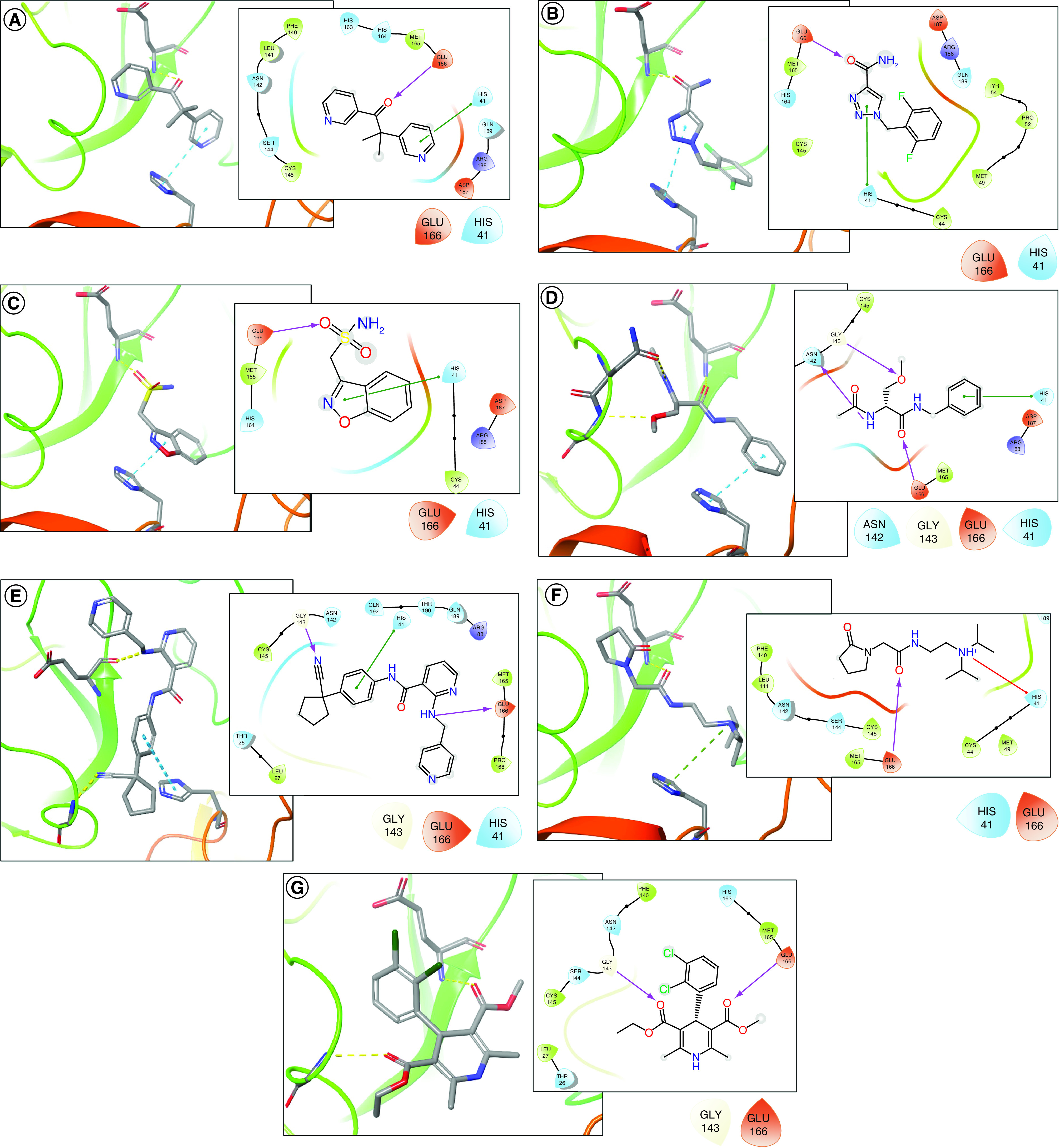
The new coronavirus pandemic has had a significant impact worldwide, and therapeutic treatment for this viral infection is being strongly pursued. Efforts have been undertaken by medicinal chemists to discover molecules or known drugs that may be effective in COVID-19 treatment - in particular, targeting the main protease (Mpro) of the virus. We have employed an innovative strategy - application of ligand- and structure-based virtual screening - using a special compilation of an approved and diverse set of SARS-CoV-2 crystallographic complexes that was recently published. We identified seven drugs with different original indications that might act as potential Mpro inhibitors and may be preferable to other drugs that have been repurposed. These drugs will be experimentally tested to confirm their potential Mpro inhibition and thus their effectiveness against COVID-19.
新型冠状病毒大流行在全球范围内产生了重大影响,目前正在积极寻找治疗这种病毒感染的方法。药物化学家努力发现可能对 COVID-19 治疗有效的分子或已知药物,特别是针对病毒的主要蛋白酶(Mpro)。我们采用了一种创新策略——应用配体和基于结构的虚拟筛选,使用最近发表的一组经过特殊编译的已批准的 SARS-CoV-2 晶体复合物。我们确定了七种具有不同原始适应症的药物,它们可能作为潜在的 Mpro 抑制剂,并且可能优于其他已重新利用的药物。这些药物将进行实验测试以确认它们对 Mpro 的潜在抑制作用,从而证明它们对 COVID-19 的有效性。