Okonogi Toya, Sasaki Takuya
Laboratory of Chemical Pharmacology, Graduate School of Pharmaceutical Sciences, The University of Tokyo, Tokyo, Japan.
Front Behav Neurosci. 2021 Jun 9;15:698753. doi: 10.3389/fnbeh.2021.698753. eCollection 2021.
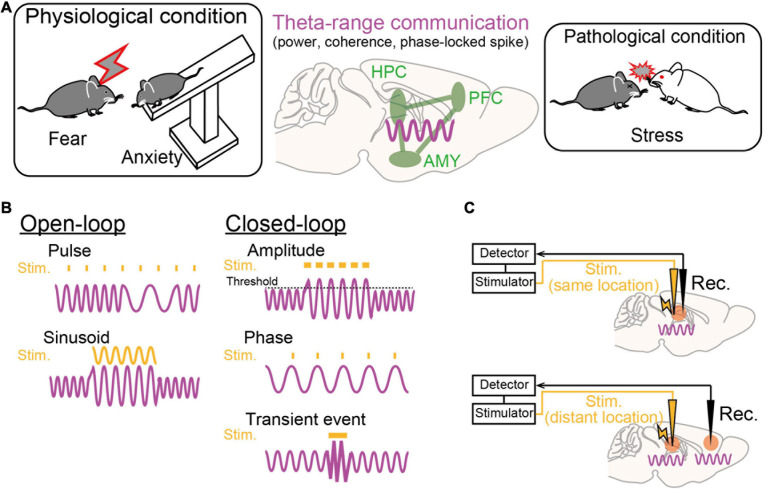
Emotional behavior and psychological disorders are expressed through coordinated interactions across multiple brain regions. Brain electrophysiological signals are composed of diverse neuronal oscillations, representing cell-level to region-level neuronal activity patterns, and serve as a biomarker of mental disorders. Here, we review recent observations from rodents demonstrating how neuronal oscillations in the hippocampus, amygdala, and prefrontal cortex are engaged in emotional behavior and altered by psychiatric changes such as anxiety and depression. In particular, we focus mainly on theta-range (4-12 Hz) oscillations, including several distinct oscillations in this frequency range. We then discuss therapeutic possibilities related to controlling such mental disease-related neuronal oscillations to ameliorate psychiatric symptoms and disorders in rodents and humans.
情绪行为和心理障碍通过多个脑区的协调相互作用来表现。脑电生理信号由多种神经元振荡组成,代表从细胞水平到区域水平的神经元活动模式,并作为精神障碍的生物标志物。在此,我们回顾了最近来自啮齿动物的观察结果,这些结果表明海马体、杏仁核和前额叶皮质中的神经元振荡如何参与情绪行为,并因焦虑和抑郁等精神变化而改变。特别是,我们主要关注θ频段(4 - 12赫兹)振荡,包括该频率范围内的几种不同振荡。然后,我们讨论了与控制这种与精神疾病相关的神经元振荡以改善啮齿动物和人类的精神症状及障碍相关的治疗可能性。