Hefei National Laboratory for Physical Sciences at Microscale, Division of Life Science and Medicine, University of Science and Technology of China, Heifei, China.
Institute of Immunology, University of Science and Technology of China, Heifei, China.
Front Immunol. 2021 Jun 11;12:633361. doi: 10.3389/fimmu.2021.633361. eCollection 2021.
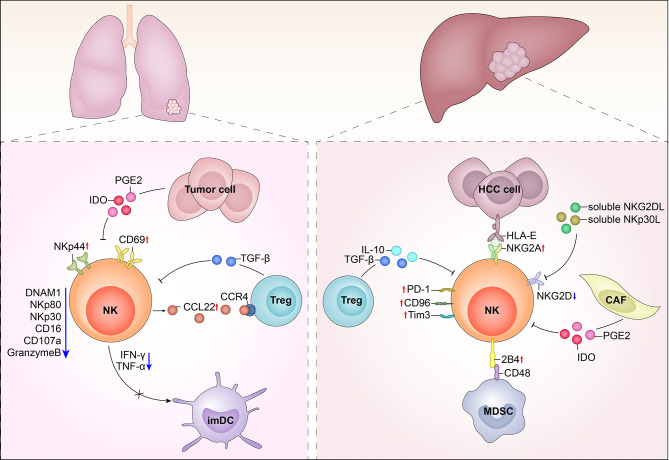
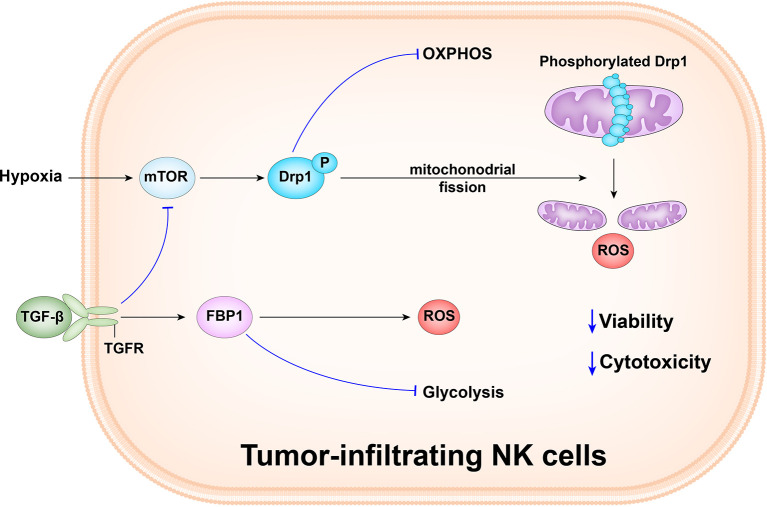
NK cells are considered an important component of innate immunity, which is the first line of defensing against tumors and viral infections in the absence of prior sensitization. NK cells express an array of germline-encoded receptors, which allow them to eliminate abnormal cells and were previously considered a homogenous population of innate lymphocytes, with limited phenotypic and functional diversity. Although their characteristics are related to their developmental origins, other factors, such as tumors and viral infections, can influence their phenotype. Here, we provide an overview of NK cells in the context of the tumor microenvironment, with a primary focus on their phenotypes, functions, and roles in tumor micro-environment. A comprehensive understanding of NK cells in the tumor microenvironment will provide a theoretical basis for the development of NK cell immunotherapy.
自然杀伤(NK)细胞被认为是先天免疫的重要组成部分,在没有预先致敏的情况下,它是抵抗肿瘤和病毒感染的第一道防线。NK 细胞表达一系列胚系编码的受体,使它们能够消除异常细胞,并且之前被认为是先天淋巴细胞的同质群体,具有有限的表型和功能多样性。尽管它们的特征与其发育起源有关,但其他因素,如肿瘤和病毒感染,也可以影响它们的表型。在这里,我们在肿瘤微环境的背景下概述了 NK 细胞,主要关注它们的表型、功能以及在肿瘤微环境中的作用。全面了解肿瘤微环境中的 NK 细胞将为 NK 细胞免疫治疗的发展提供理论基础。