The Department of Molecular and Cellular Physiology, Albany Medical College, Albany, NY, United States.
Front Immunol. 2021 Jun 10;12:660865. doi: 10.3389/fimmu.2021.660865. eCollection 2021.
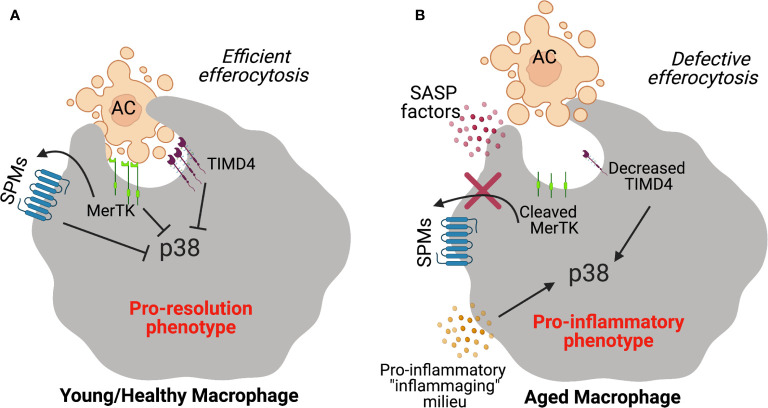
The resolution of inflammation is a tissue protective program that is governed by several factors including specialized pro-resolving mediators (SPMs), proteins, gasses and nucleotides. Pro-resolving mediators activate counterregulatory programs to quell inflammation and promote tissue repair in a manner that does not compromise host defense. Phagocytes like neutrophils and macrophages play key roles in the resolution of inflammation because of their ability to remove debris, microbes and dead cells through processes including phagocytosis and efferocytosis. Emerging evidence suggests that failed resolution of inflammation and defective phagocytosis or efferocytosis underpins several prevalent human diseases. Therefore, understanding factors and mechanisms associated with enhancing these processes is a critical need. SPMs enhance phagocytosis and efferocytosis and this review will highlight mechanisms associated with their actions.
炎症消退是一个组织保护程序,由多种因素调控,包括专门的促炎消退介质(SPMs)、蛋白质、气体和核苷酸。促炎消退介质激活了对抗炎症的反应程序,以不损害宿主防御的方式平息炎症和促进组织修复。中性粒细胞和巨噬细胞等吞噬细胞在炎症消退中起着关键作用,因为它们能够通过吞噬作用和胞吐作用等过程清除碎片、微生物和死亡细胞。新出现的证据表明,炎症消退失败和吞噬作用或胞吐作用缺陷是几种常见人类疾病的基础。因此,了解与增强这些过程相关的因素和机制是一个关键需求。SPMs 增强吞噬作用和胞吐作用,本综述将重点介绍与其作用相关的机制。