Keshri Swasti, Goel Anil Kumar, Garg Ankit Kumar
Paediatrics Emergency Medicine, All India Institute of Medical Sciences, Raipur, IND.
Paediatrics, All India Institute of Medical Sciences, Raipur, IND.
Cureus. 2021 May 21;13(5):e15155. doi: 10.7759/cureus.15155.
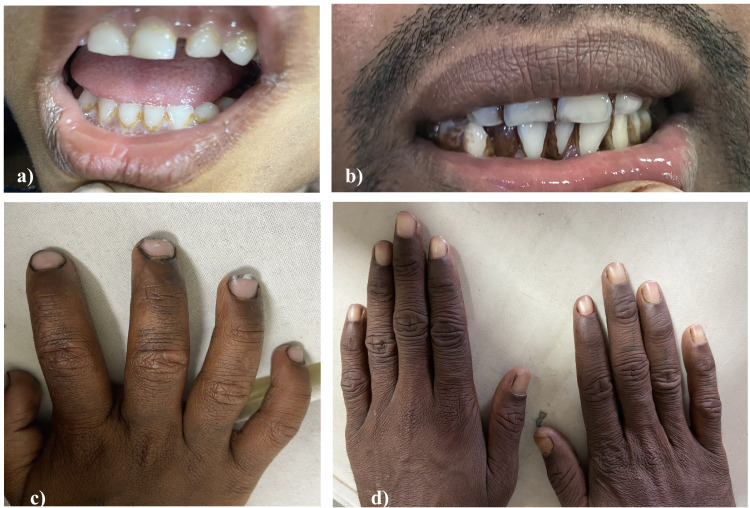
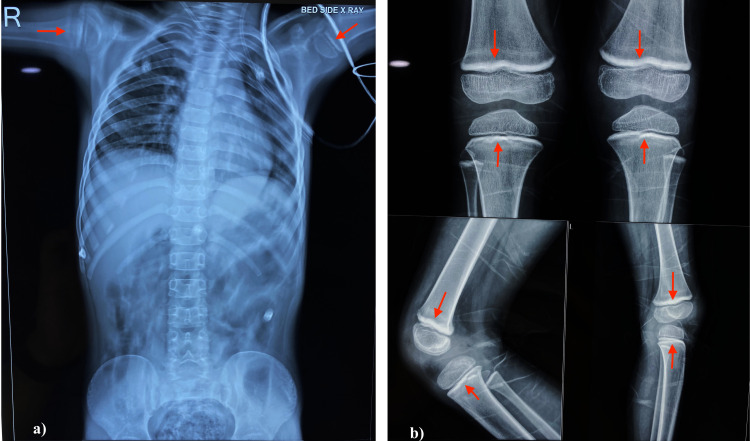
Lead poisoning, fairly common in the 20th century, has decreased drastically in the last decade. Severe lead poisoning in the form of encephalopathy has a fatality rate of 28% to 45% and neurological sequelae in about 82%. We present the management of a case of lead encephalopathy that recovered without any significant neurological sequelae in a resource-limited setting. A previously healthy seven-year-old boy presented with complaints of falling unconscious on the ground while playing, followed by multiple episodes of seizures, vomiting, and altered sensorium. The patient had pallor, Glasgow coma score of E2V3M3, with features of raised intracranial pressure. Lead poisoning was suspected as the patient had four months of exposure to a battery recycling factory. Management of seizures and raised intracranial pressure was done. X-ray long bones showed lead lines at the metaphysis. Blood lead levels were highly elevated (139.96 mcg/dL). Investigations revealed iron deficiency anemia, vitamin D deficiency, and renal tubular injury in the form of proteinuria. D-penicillamine with supplements was started due to unavailability of other chelating agents. Encephalopathy improved, but patient had psychiatric symptoms of hallucinations and delusions. On the 12th day, CaNa EDTA was started, which resulted in significant improvement in the psychiatric symptoms. The patient had near-complete recovery in another one month, the patient being able to read, write, recite and speak as the pre-illness state. In conclusion, lead poisoning remains a significant health problem even today. Early recognition and management are of paramount importance in its outcome.
铅中毒在20世纪相当常见,在过去十年中已大幅下降。以脑病形式出现的严重铅中毒死亡率为28%至45%,约82%会出现神经后遗症。我们介绍了一例在资源有限的情况下康复且无任何明显神经后遗症的铅中毒性脑病的治疗情况。一名此前健康的7岁男孩出现玩耍时摔倒在地失去意识的症状,随后多次癫痫发作、呕吐并伴有意识改变。患者面色苍白,格拉斯哥昏迷评分为E2V3M3,有颅内压升高的表现。由于患者有四个月接触电池回收厂的经历,怀疑为铅中毒。对癫痫发作和颅内压升高进行了处理。长骨X线显示干骺端有铅线。血铅水平大幅升高(139.96微克/分升)。检查发现缺铁性贫血、维生素D缺乏以及蛋白尿形式的肾小管损伤。由于无法获得其他螯合剂,开始使用D-青霉胺并补充其他物质。脑病有所改善,但患者出现幻觉和妄想等精神症状。在第12天开始使用依地酸钙钠,精神症状有显著改善。患者在另一个月内几乎完全康复,能够像患病前一样阅读、书写、背诵和说话。总之,即使在今天,铅中毒仍然是一个严重的健康问题。早期识别和治疗对其预后至关重要。