Fujian Provincial Key Laboratory of Advanced Materials Oriented Chemical Engineering, College of Chemistry and Materials Science, Fujian Normal University, Fuzhou, Fujian, China.
Clinical and Translational Research Center, Shanghai First Maternity and Infant Hospital, Tongji University School of Medicine, Shanghai, China.
Technol Cancer Res Treat. 2021 Jan-Dec;20:15330338211027898. doi: 10.1177/15330338211027898.
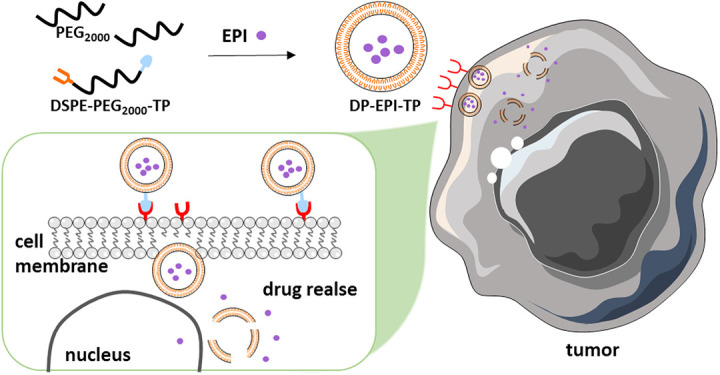
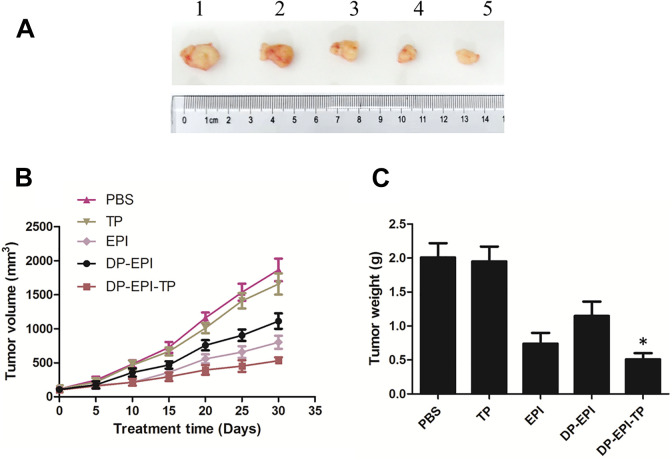
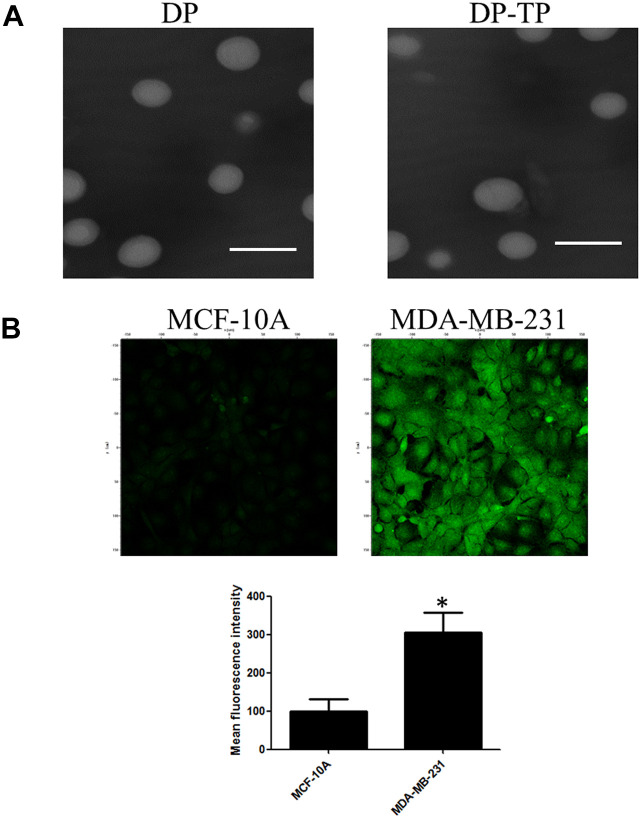
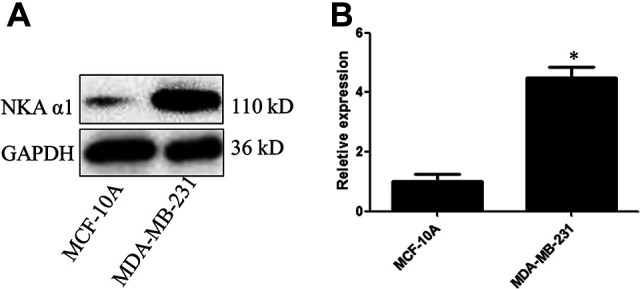
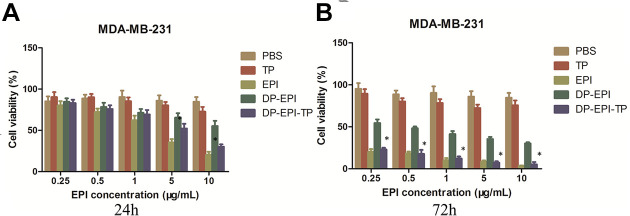
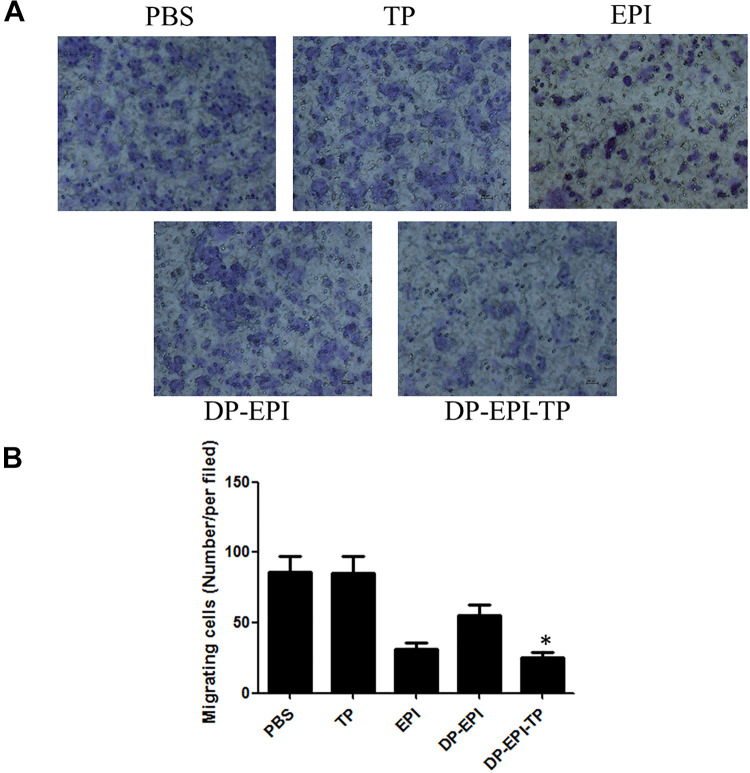
Although Epirubicin (EPI) is a commonly used anthracycline for the treatment of breast cancer in clinic, the serious side effects limit its long-term administration including myelosuppression and cardiomyopathy. Nanomedicines have been widely utilized as drug delivery vehicles to achieve precise targeting of breast cancer cells. Herein, we prepared a DSPE-PEG nanocarrier conjugated a peptide, which targeted the breast cancer overexpression protein Na+/K+ ATPase α1 (NKA-α1). The nanocarrier encapsulated the EPI and grafted with the NKA-α1 targeting peptide through the click reaction between maleimide and thiol groups. The EPI was slowly released from the nanocarrier after entering the breast cancer cells with the guidance of the targeting NKA-α1 peptide. The precise and controllable delivery and release of the EPI into the breast cancer cells dramatically inhibited the cells proliferation and migration and suppressed the tumor volume . These results demonstrate significant prospects for this nanocarrier as a promising platform for numerous chemotherapy drugs.
表阿霉素(EPI)是临床上治疗乳腺癌常用的蒽环类药物,但因其严重的副作用限制了其长期应用,包括骨髓抑制和心肌病。纳米药物已被广泛用作药物载体,以实现对乳腺癌细胞的精确靶向。在此,我们制备了一种 DSPE-PEG 纳米载体,该载体连接了一种靶向乳腺癌过表达蛋白 Na+/K+ATPase α1(NKA-α1)的肽。该纳米载体通过马来酰亚胺和巯基之间的点击反应将 EPI 包封并与 NKA-α1 靶向肽接枝。在靶向 NKA-α1 肽的引导下,EPI 进入乳腺癌细胞后缓慢释放。EPI 的精确可控递释进入乳腺癌细胞,显著抑制了细胞的增殖和迁移,并抑制了肿瘤体积。这些结果表明,这种纳米载体具有广阔的前景,可作为许多化疗药物的有前途的平台。