Division of Immunity and Pathogenesis, Burnett School of Biomedical Sciences, University of Central Florida College of Medicine, Orlando, Florida, USA.
Infect Immun. 2021 Sep 16;89(10):e0021621. doi: 10.1128/IAI.00216-21. Epub 2021 Jun 28.
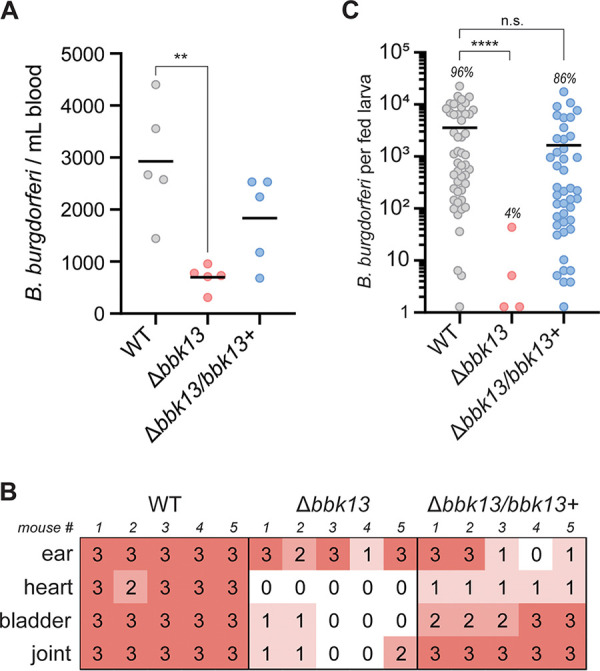
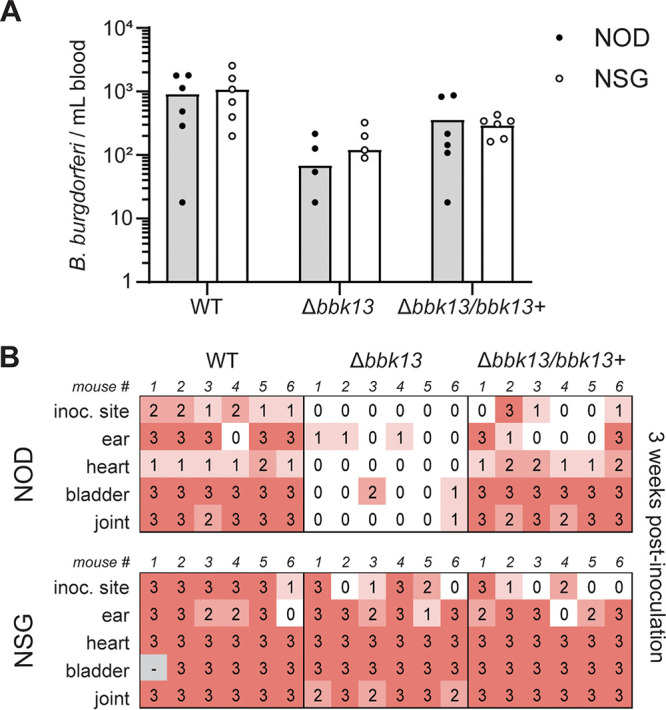
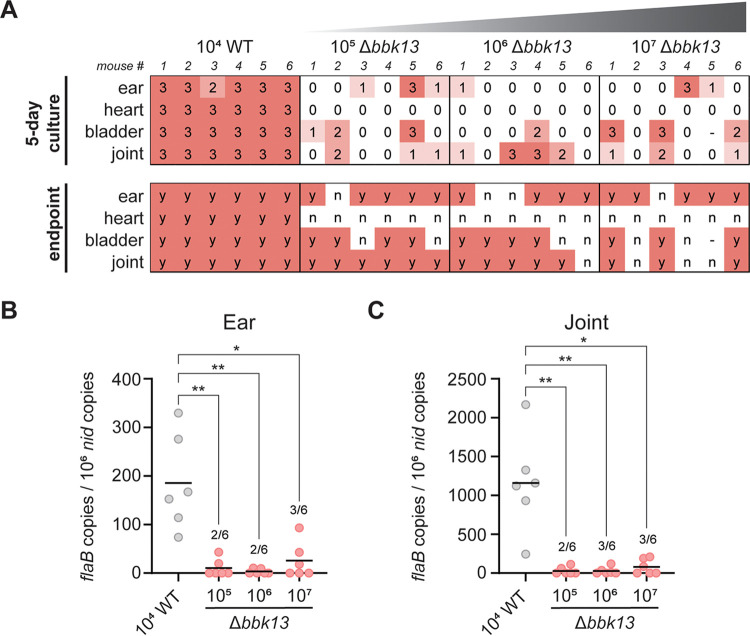
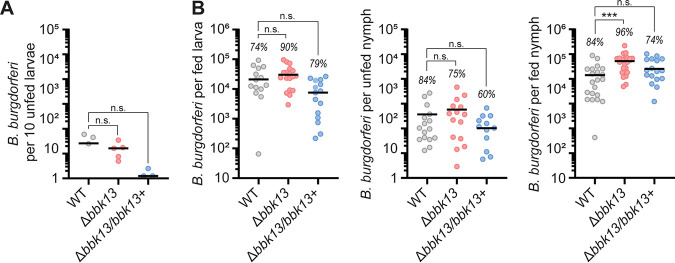
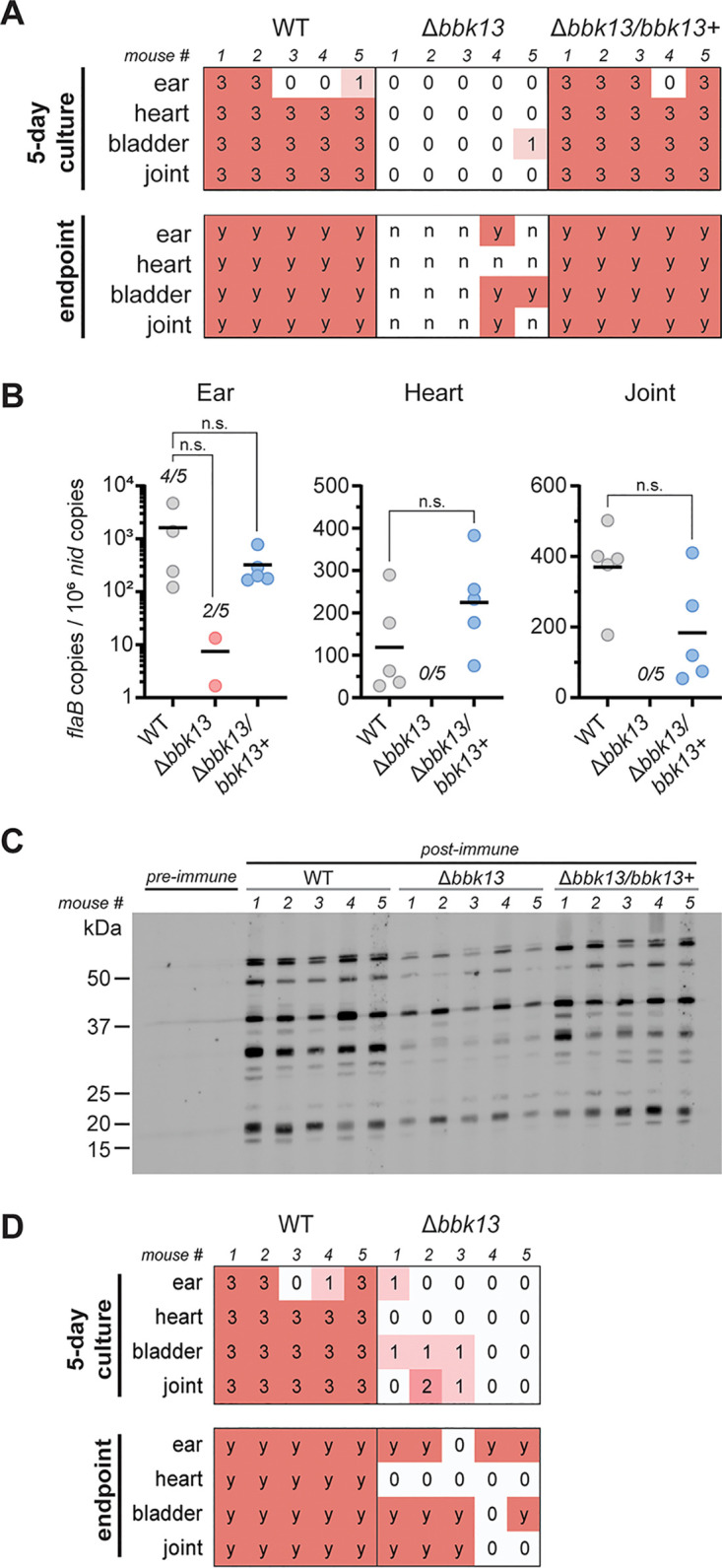
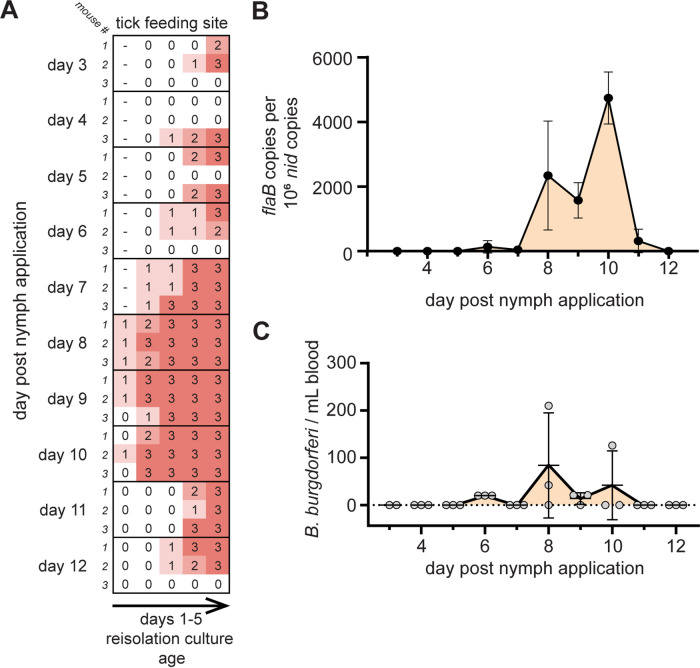
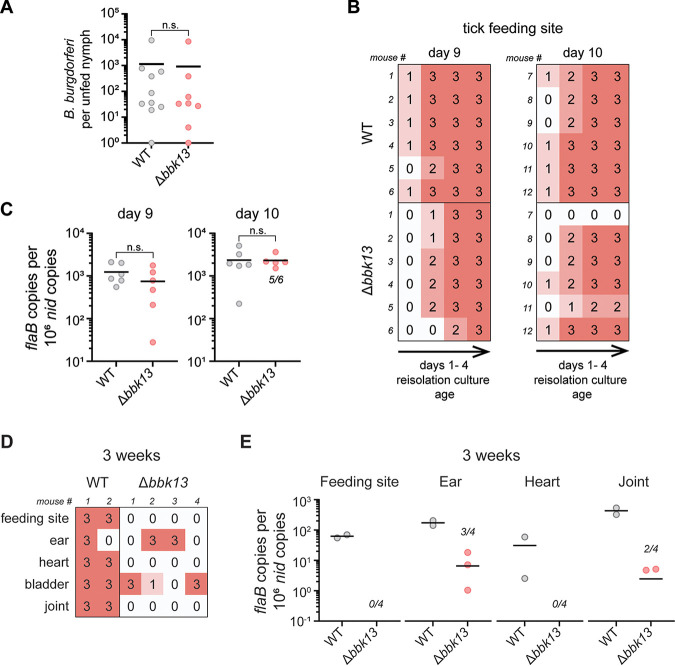
Lyme disease is a multistage inflammatory disease caused by the spirochete Borrelia burgdorferi transmitted through the bite of an infected Ixodes scapularis tick. We previously discovered a B. burgdorferi infectivity gene, , that facilitates mammalian infection by promoting spirochete population expansion in the skin inoculation site. Initial characterization of was carried out using an intradermal needle inoculation model of mouse infection, which does not capture the complex interplay of the pathogen-vector-host triad of natural transmission. Here, we aimed to understand the role of in the enzootic cycle of B. burgdorferi. B. burgdorferi spirochetes lacking were unable to be acquired by naive larvae fed on needle-inoculated mice. Using a capsule feeding approach to restrict tick feeding activity to a defined skin site, we determined that delivery by tick bite alleviated the population expansion defect in the skin observed after needle inoculation of Δ B. burgdorferi. Despite overcoming the early barrier in the skin, Δ B. burgdorferi remained attenuated for distal tissue colonization after tick transmission. Disseminated infection by Δ B. burgdorferi was improved in needle-inoculated immunocompromised mice. Together, we established that is crucial to the maintenance of B. burgdorferi in the enzootic cycle and that is necessary beyond early infection in the skin, likely contributing to host immune evasion. Moreover, our data highlight the critical interplay between the pathogen, vector, and host as well as the distinct molecular genetic requirements for B. burgdorferi to survive at the pathogen-vector-host interface and achieve productive disseminated infection.
莱姆病是一种由伯氏疏螺旋体(Borrelia burgdorferi)引起的多阶段炎症性疾病,通过受感染的肩突硬蜱(Ixodes scapularis)的叮咬传播。我们之前发现了一种伯氏疏螺旋体的感染性基因, ,它通过促进螺旋体在皮肤接种部位的种群扩张,促进哺乳动物感染。 最初是在小鼠感染的皮内针接种模型中对 进行了特征描述,该模型无法捕捉到病原体-媒介-宿主三元体的自然传播的复杂相互作用。在这里,我们旨在了解 在伯氏疏螺旋体的地方性循环中的作用。缺乏 的伯氏疏螺旋体无法被接种到针接种的小鼠上的幼稚幼虫获得。使用胶囊喂养方法将蜱的喂养活动限制在定义明确的皮肤部位,我们确定,通过蜱叮咬传递缓解了在 Δ 伯氏疏螺旋体皮内接种后观察到的皮肤中种群扩张缺陷。尽管克服了皮肤中的早期障碍,但 Δ 伯氏疏螺旋体在蜱传播后的远端组织定植中仍然减弱。在针接种免疫功能低下的小鼠中,Δ 伯氏疏螺旋体的播散感染得到改善。总之,我们确定 对于伯氏疏螺旋体在地方性循环中的维持至关重要,并且 在皮肤感染早期之后也是必需的,可能有助于宿主免疫逃避。此外,我们的数据突出了病原体、媒介和宿主之间的关键相互作用,以及伯氏疏螺旋体在病原体-媒介-宿主界面上生存并实现有效播散感染的独特分子遗传要求。