HIV Pathogenesis Research Unit, Department of Molecular Medicine and Haematology, Faculty of Health Sciences, University of the Witwatersrand, 7 York Road, Parktown, Johannesburg, 2193, South Africa.
Virol J. 2022 Sep 7;19(1):143. doi: 10.1186/s12985-022-01876-1.
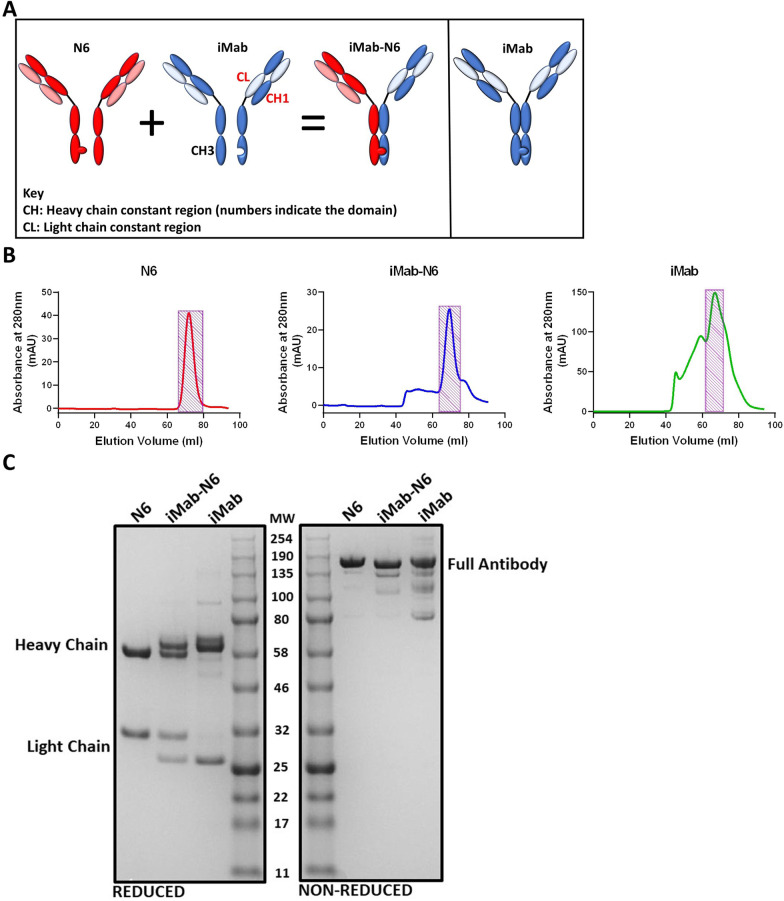
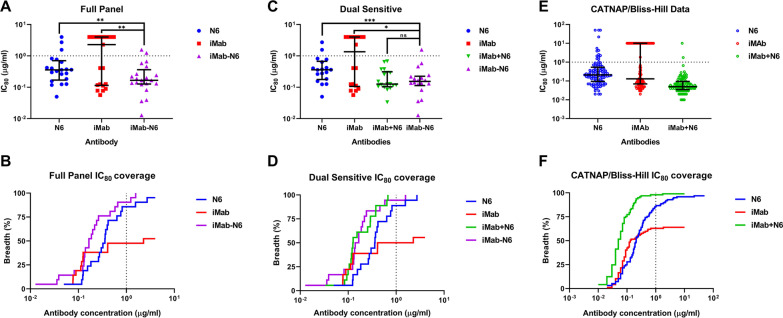
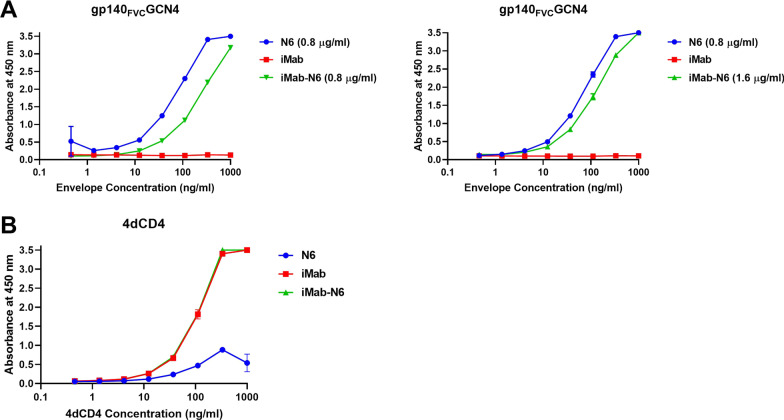
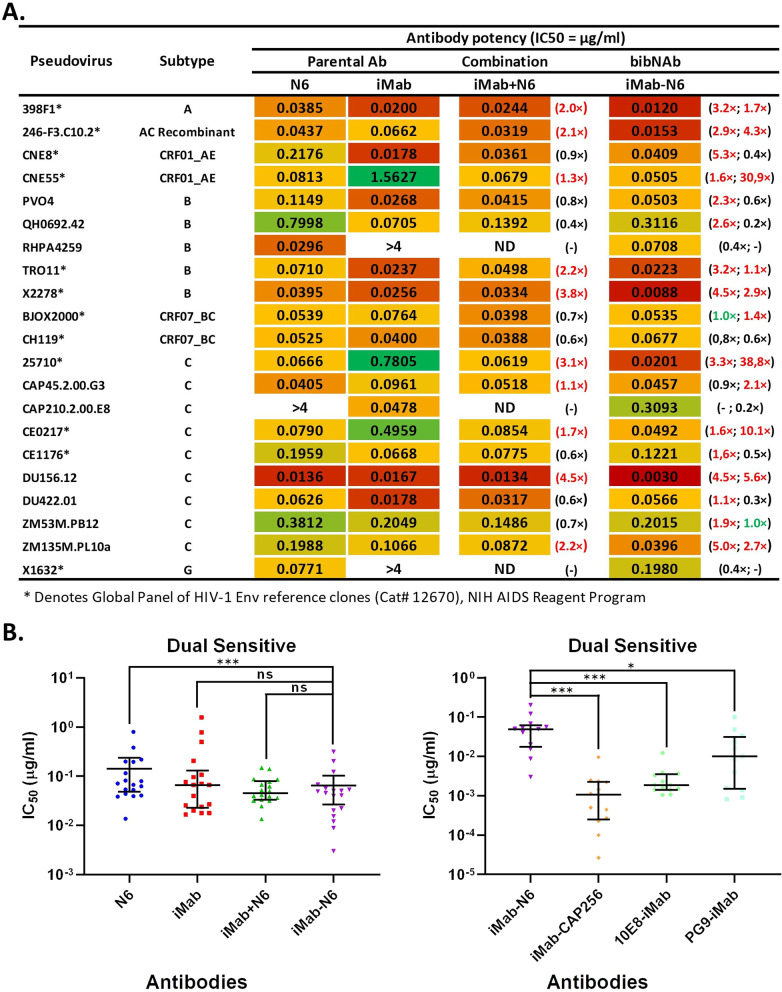
The recently published AMP trial (HVTN 703/HPTN 081 and HVTN704/HPTN 085) results have validated broad neutralising antibodies (bNAbs) as potential anti-HIV-1 agents. However, single bNAb preparations are unlikely to cope with the onslaught of existing and de novo resistance mutations, thus necessitating the use of bNAb combinations to achieve clinically relevant results. Specifically engineered antibodies incorporating two bNAbs into a single antibody structure have been developed. These bispecific antibodies (bibNAbs) retain the benefits of bNAb combinations, whilst several conformations exhibit improved neutralisation potency over the parental bNAbs. Here we report on the engineering of a bibNAb comprising of an HIV-1 spike targeting bNAb N6 and a host CD4 targeting antibody ibalizumab (iMab). Antibodies were expressed in HEK293T cells and purified by protein-A affinity chromatography followed by size exclusion chromatography to achieve homogenous, monomeric, bibNAb preparations. Antibody purity was confirmed by SDS-PAGE whilst epitope specificity and binding were confirmed by ELISA. Finally, antibody breadth and potency data were generated by HIV-1 neutralisation assay (n = 21, inclusive of the global panel). iMab-N6 exhibited better neutralisation breadth (100% coverage) in comparison to its parental bNAbs iMab (90%) and N6 (95%). This is encouraging as exceptional neutralisation breadth is necessary for HIV-1 treatment or prevention. Unfortunately, iMab-N6 did not exhibit any enhancement in potency over the most potent parental antibody, iMab (p = 0.1674, median IC of 0.0475 µg/ml, and 0.0665 µg/ml respectively) or the parental combination, iMab + N6 (p = 0.1964, median IC: combination 0.0457 µg/ml). This result may point to a lack of dual engagement of the bibNAb Fab moieties necessary for potency enhancement. Against the previously reported bibNAbs; iMab-CAP256, 10E08-iMab, and PG9-iMab; iMab-N6 was the lowest performing bibNAb. The re-engineering of iMab-N6 to enhance its potency, while retaining breadth, is a worthwhile endeavour due to its clinical potential.
最近发表的 AMP 试验(HVTN 703/HPTN 081 和 HVTN704/HPTN 085)结果证实了广谱中和抗体(bnAb)作为潜在的抗 HIV-1 药物。然而,单一的 bnAb 制剂不太可能应对现有和新出现的耐药突变的冲击,因此需要使用 bnAb 组合来实现临床相关的结果。已经开发出将两种 bnAb 结合到单个抗体结构中的特异性工程抗体。这些双特异性抗体(bibNAb)保留了 bnAb 组合的优势,同时几种构象表现出比亲本 bnAb 更高的中和效力。在这里,我们报告了一种由 HIV-1 刺突靶向 bnAb N6 和宿主 CD4 靶向抗体ibalizumab(iMab)组成的 bibNAb 的工程设计。抗体在 HEK293T 细胞中表达,并通过蛋白 A 亲和层析和分子筛层析进行纯化,以获得均一的、单体的 bibNAb 制剂。通过 SDS-PAGE 确认抗体纯度,通过 ELISA 确认表位特异性和结合。最后,通过 HIV-1 中和测定(n=21,包括全球面板)生成抗体广度和效力数据。与亲本 bnAb iMab(90%)和 N6(95%)相比,iMab-N6 表现出更好的中和广度(100%覆盖率)。这令人鼓舞,因为 HIV-1 治疗或预防需要异常的中和广度。不幸的是,iMab-N6 并没有表现出比最有效的亲本抗体 iMab(p=0.1674,中位 IC 为 0.0475μg/ml 和 0.0665μg/ml)或亲本组合 iMab+N6(p=0.1964,中位 IC:组合 0.0457μg/ml)更高的效力增强。这一结果可能表明,bibNAb Fab 片段缺乏必要的双重结合,从而无法增强效力。与之前报道的 bibNAb;iMab-CAP256、10E08-iMab 和 PG9-iMab 相比,iMab-N6 是表现最差的 bibNAb。由于其临床潜力,对 iMab-N6 进行重新设计以增强其效力而保留广度是一项值得的努力。