School of Medicine, Shandong University, Jinan, People's Republic of China.
Department of Breast Surgery, Shandong Cancer Hospital and Institute, Shandong First Medical University and Shandong Academy of Medical Sciences, Jinan, Shandong, People's Republic of China.
Technol Cancer Res Treat. 2021 Jan-Dec;20:15330338211019506. doi: 10.1177/15330338211019506.
This study aims to identify the key pathway and related genes and to further explore the potential molecular mechanisms of triple negative breast cancer (TNBC).
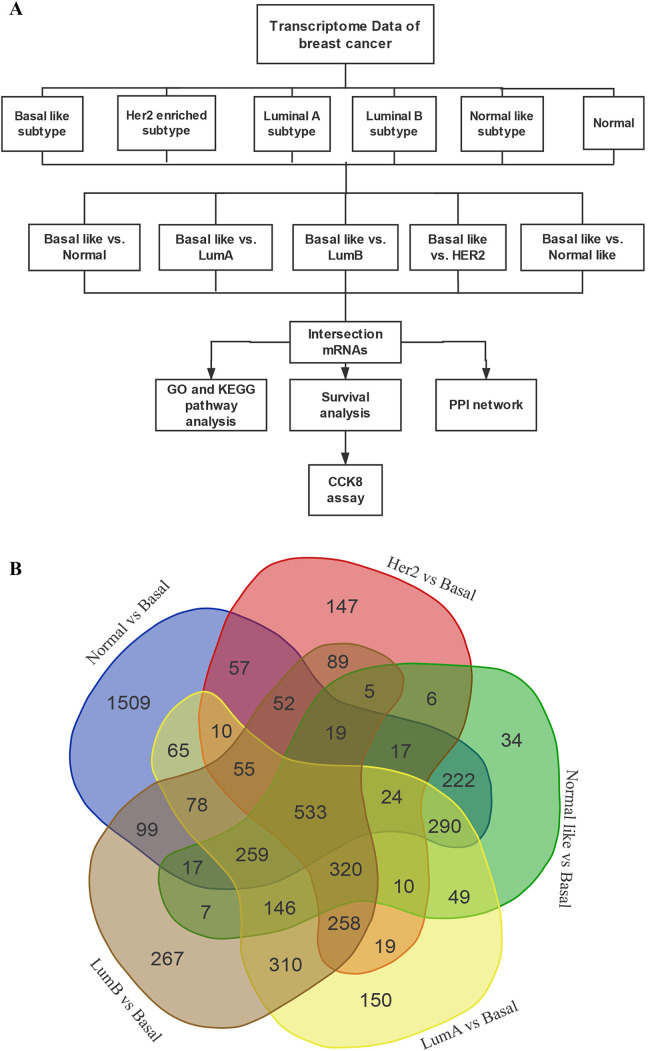
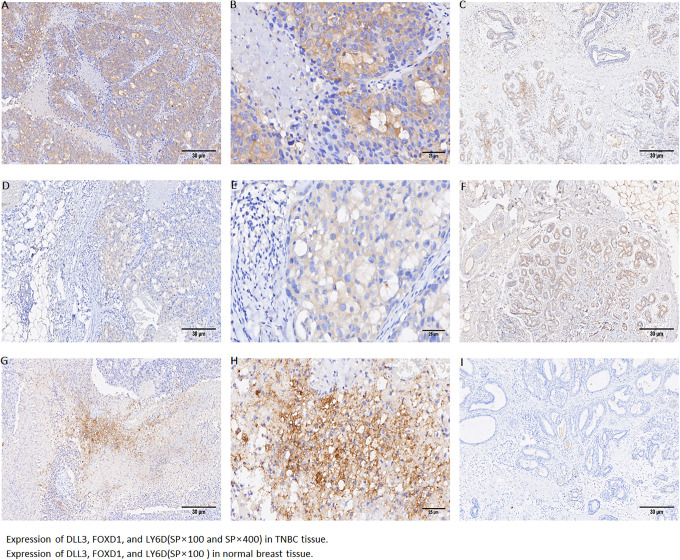
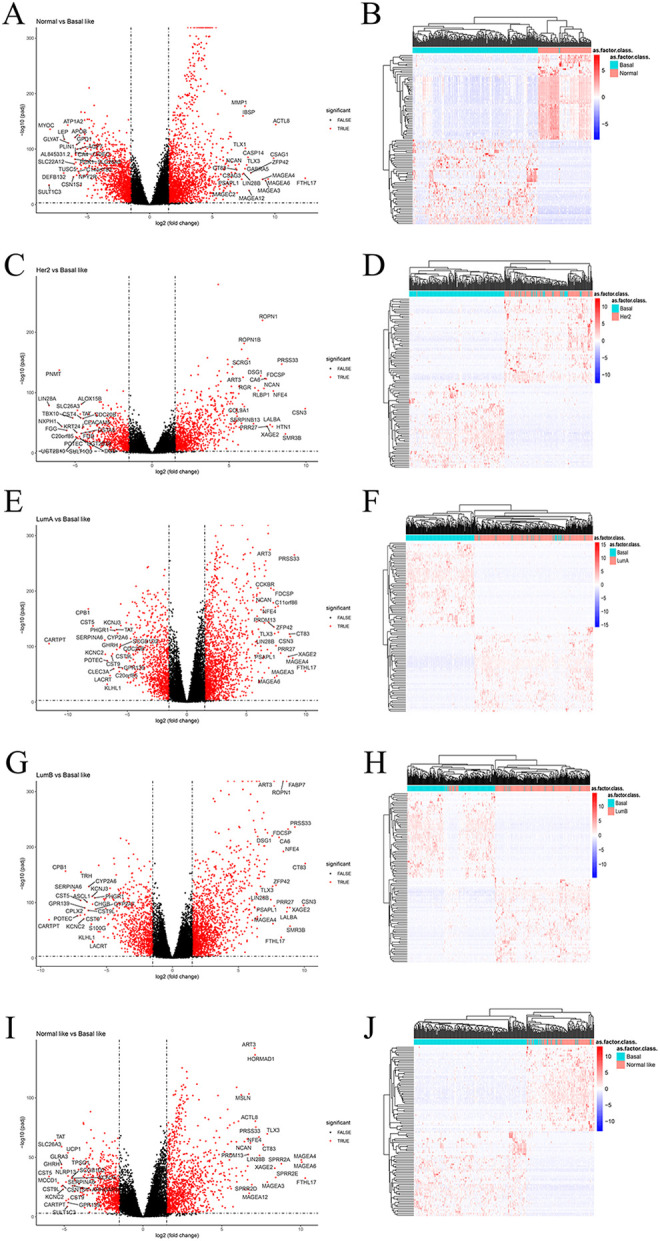
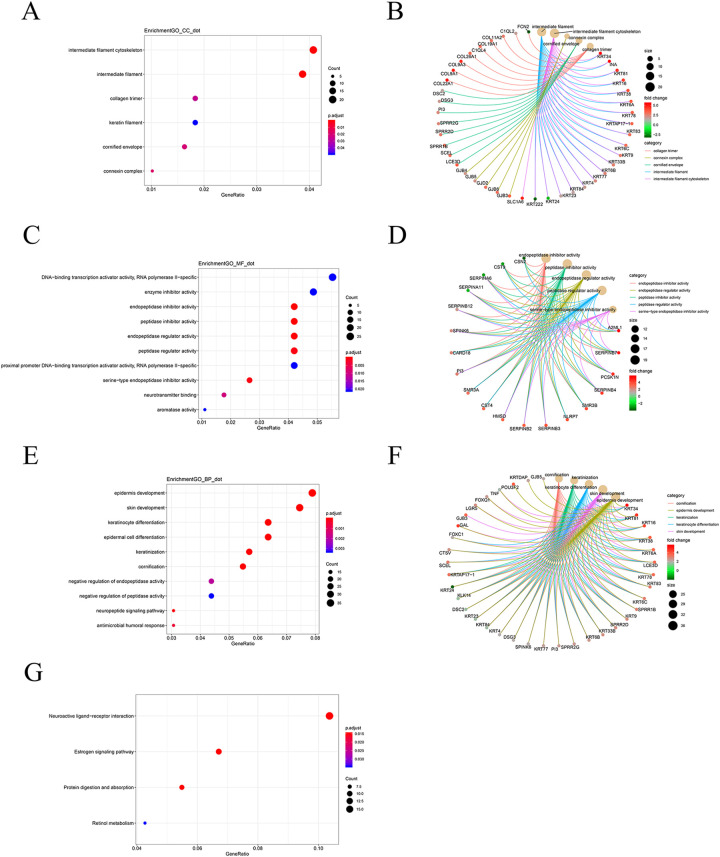
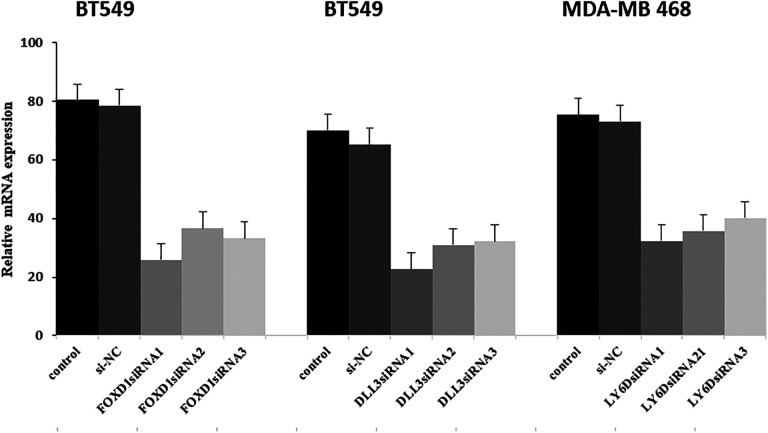
The transcriptome data and clinical information of breast cancer patients were downloaded from the TCGA database, including 94 cases of paracancerous tissue, 225 cases of Basal like type, 151 cases of Her2 type, 318 cases of Luminal type A, 281 cases of Luminal type B, and 89 cases of Normal Like type. The differentially expressed genes (DEGs) were identified based on the criteria of |logFC|≥1.5 and adjust < 0.001.Their functions were annotated by gene ontology (GO) analysis and Kyoto Encyclopedia of differentially expressed genes & Genomes (KEGG) pathway analysis. Cox regression univariate analysis and Kaplan-Meier survival curves (Log-rank method) were used for survival analysis. FOXD1, DLL3 and LY6D were silenced in breast cancer cell lines, and cell viability was assessed by CCK-8 assay. Further, the expression of FOXD1, DLL3 and LY6D were explored by immunohistochemistry on triple negative breast tumor tissue and normal breast tissue.
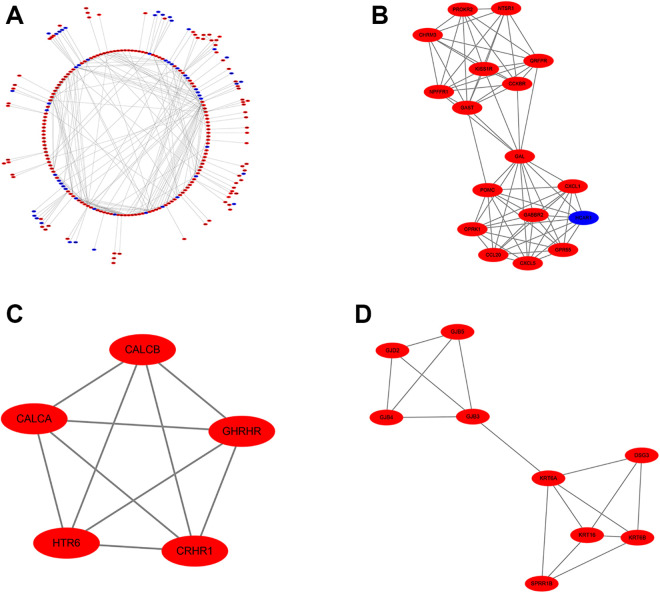
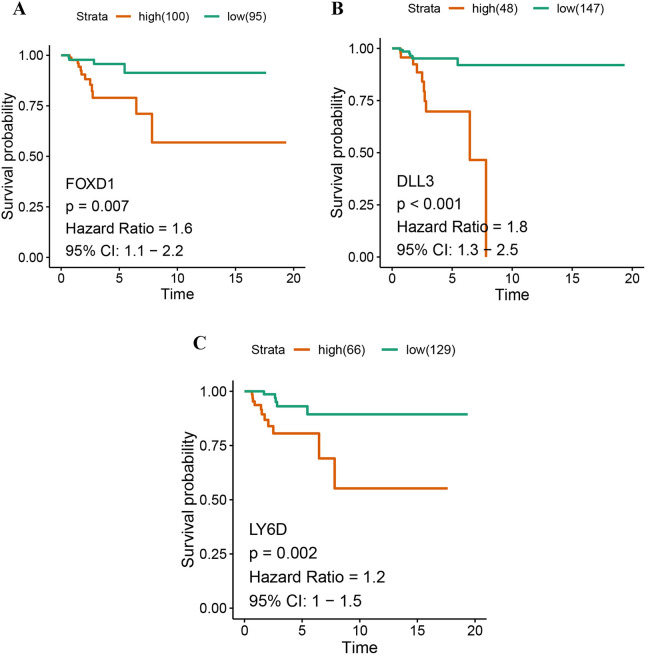
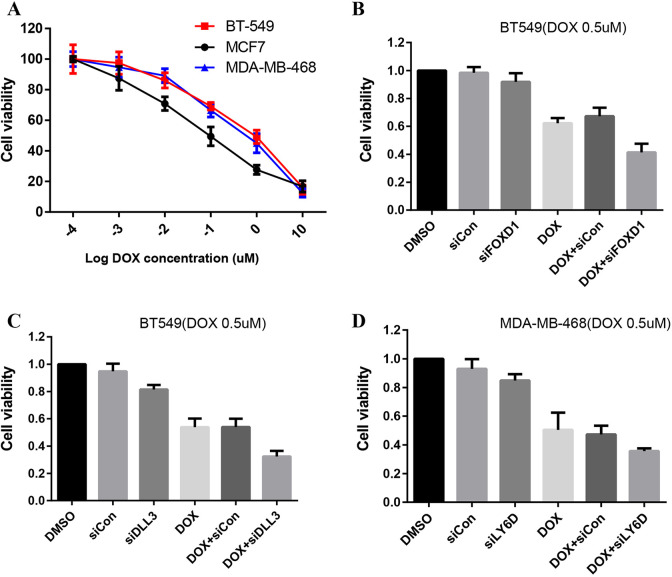
A total of 533 DEGs were identified. Functional annotation showed that DEGs were significantly enriched in intermediate filament cytoskeleton, DNA-binding transcription activator activity, epidermis development, and Neuroactive ligand-receptor interaction. Survival analysis found that FOXD1, DLL3, and LY6D showed significant correlation with the prognosis of patients with the Basal-like type ( < 0.05). CCK-8 assay showed that compared with Doxorubicin alone group, the cytotoxicity of Doxorubicin combined with siRNA-knockdown of FOXD1, DLL3, or LY6D was much significant.
The DEGs and their enriched functions and pathways identified in this study contribute to the understanding of the molecular mechanisms of TNBC. In addition, FOXD1, DLL3, and LY6D may be defined as the prognostic markers and potential therapeutic targets for TNBC patients.
本研究旨在鉴定关键途径和相关基因,并进一步探讨三阴性乳腺癌(TNBC)的潜在分子机制。
从 TCGA 数据库中下载了乳腺癌患者的转录组数据和临床信息,包括 94 例癌旁组织、225 例基底样型、151 例 Her2 型、318 例 Luminal 型 A、281 例 Luminal 型 B 和 89 例正常样型。根据 |logFC|≥1.5 和 adjust < 0.001 的标准鉴定差异表达基因(DEGs)。通过基因本体(GO)分析和京都基因与基因组百科全书(KEGG)途径分析注释其功能。Cox 回归单因素分析和 Kaplan-Meier 生存曲线(Log-rank 方法)用于生存分析。在乳腺癌细胞系中沉默 FOXD1、DLL3 和 LY6D,通过 CCK-8 测定评估细胞活力。进一步通过免疫组织化学法检测三阴性乳腺癌组织和正常乳腺组织中 FOXD1、DLL3 和 LY6D 的表达。
共鉴定出 533 个 DEGs。功能注释表明,DEGs 显著富集于中间丝细胞骨架、DNA 结合转录激活因子活性、表皮发育和神经活性配体-受体相互作用。生存分析发现,FOXD1、DLL3 和 LY6D 与基底样型患者的预后显著相关( < 0.05)。CCK-8 测定表明,与单独使用多柔比星相比,多柔比星联合 FOXD1、DLL3 或 LY6D 的 siRNA 敲低的细胞毒性明显更高。
本研究中鉴定的 DEGs 及其富集的功能和途径有助于理解 TNBC 的分子机制。此外,FOXD1、DLL3 和 LY6D 可能被定义为 TNBC 患者的预后标志物和潜在治疗靶点。