Dept. of Chemistry, University of Hamburg, Martin Luther King Platz 6, 20146, Hamburg, Germany.
Patheon Austria, Thermo Fisher Scientific, St. Peter Str. 25, 4020, Linz, Austria.
ChemSusChem. 2021 Aug 23;14(16):3325-3332. doi: 10.1002/cssc.202101175. Epub 2021 Jul 12.
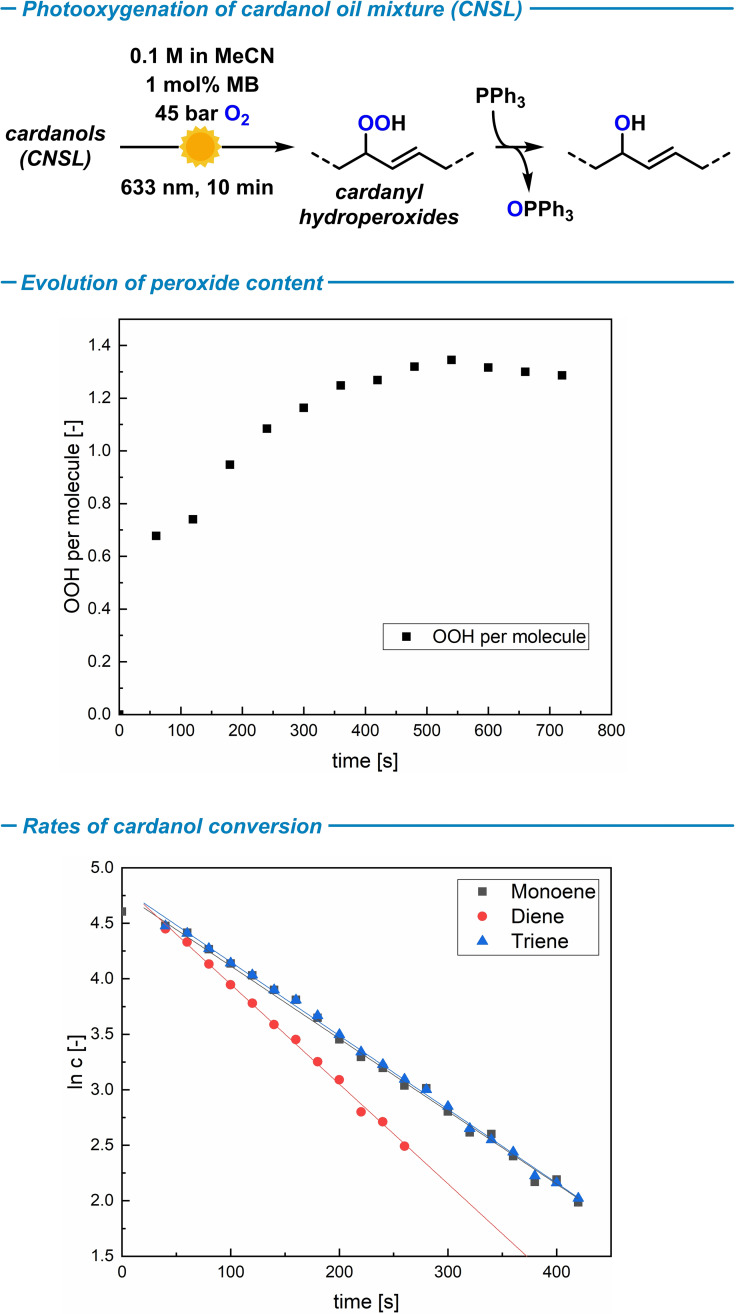
The upcycling of waste biomass into valuable materials by resource-efficient chemical transformations is a prime objective for sustainable chemistry. This approach is demonstrated in a straightforward light-driven synthesis of polyols and polyurethane foams from the multi-ton waste products of cashew nut processing. The photo-oxygenation of cardanol from nutshell oil results in the formation of synthetically versatile hydroperoxides. The choice of the workup method (i. e., reduction, hydrogenation, epoxidation) enables access to a diverse range of alcohols with tunable alkene and OH functions. Condensation with isocyanates to give rigid polyurethane foams provides a resource-efficient waste-to-value chain that benefits from the availability of cardanol and installation of OH groups from aerial O .
将废生物质通过高效资源化学转化为有价值的材料,是可持续化学的主要目标。在从腰果加工的多吨废料中直接光驱动合成多元醇和聚氨酯泡沫的过程中,就证明了这种方法的有效性。从坚果壳油中的腰果酚进行光氧化反应,生成了具有广泛用途的合成型氢过氧化物。通过选择不同的后处理方法(例如还原、氢化、环氧化),可以得到一系列具有可调烯烃和 OH 官能团的醇。与异氰酸酯缩合得到刚性聚氨酯泡沫,为废生物质到有价值材料的转化提供了一种资源节约型的方法,这得益于腰果酚的可用性和空气中 OH 基团的引入。