Clinical Bacteriology & Mycology, University Hospital Basel, University of Basel, Switzerland.
Applied Microbiology Research, Department of Biomedicine, University of Basel, Basel, Switzerland.
Microb Genom. 2021 Jun;7(6). doi: 10.1099/mgen.0.000599.
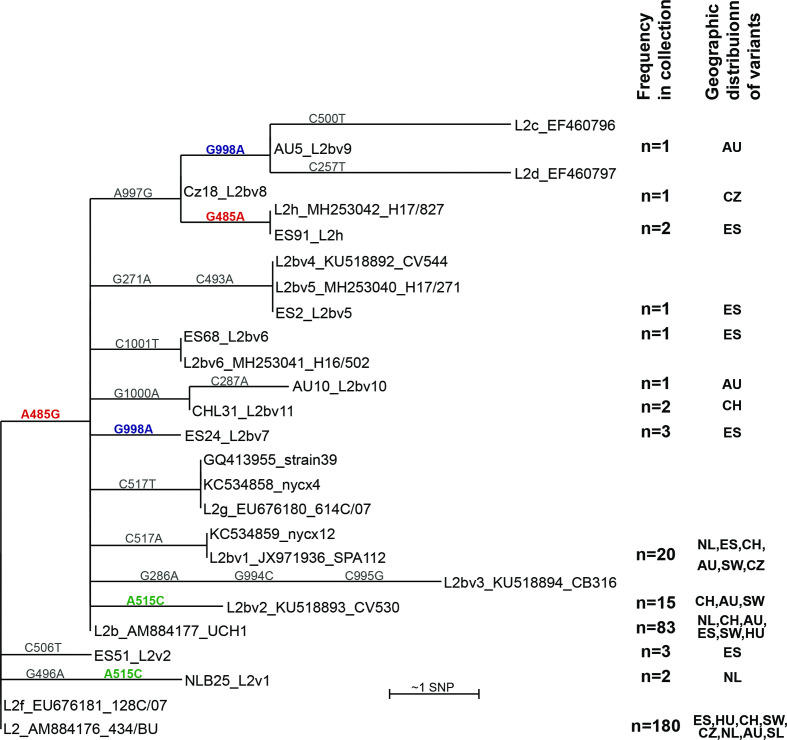
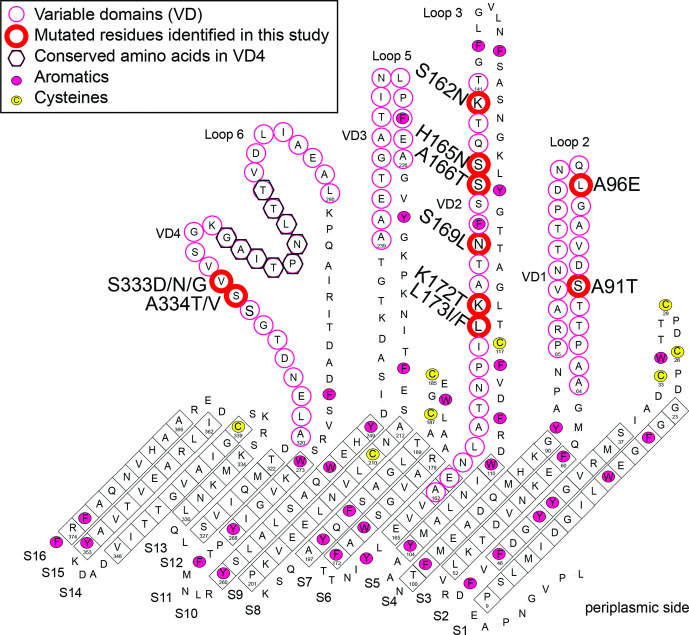
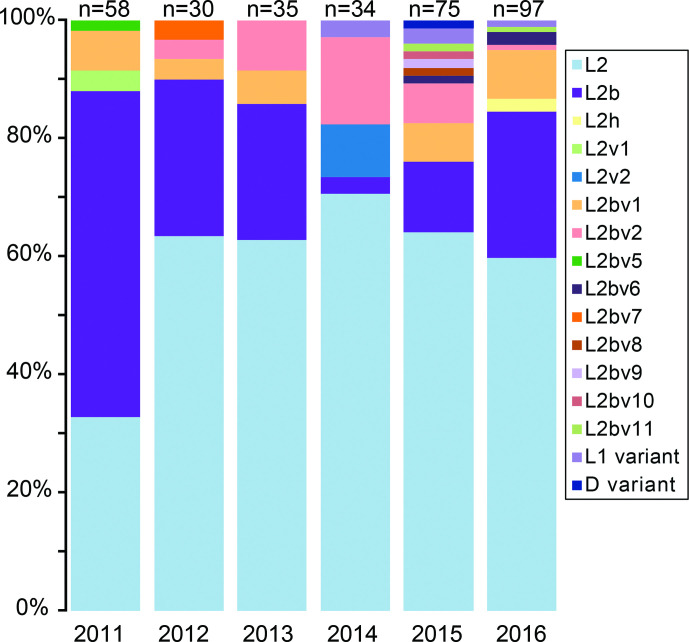
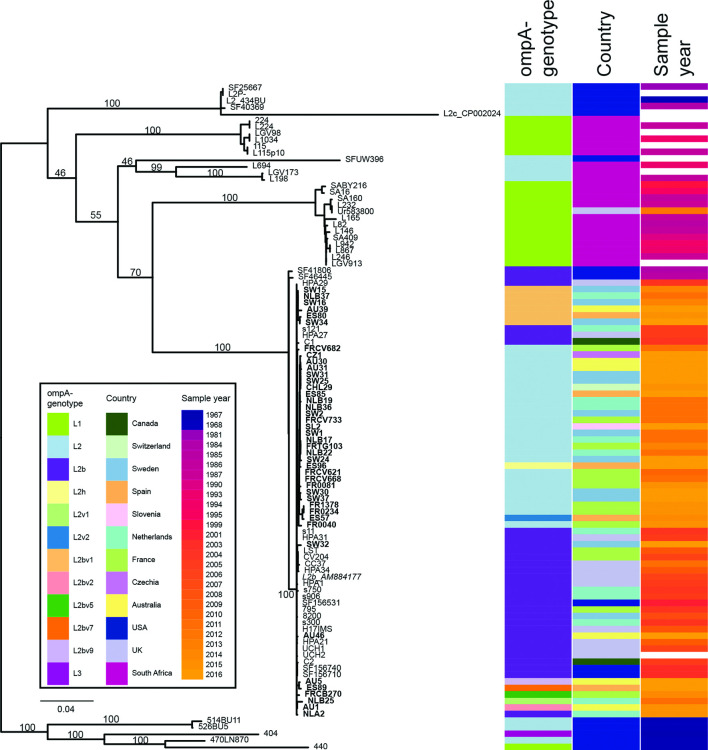
Lymphogranuloma venereum (LGV), the invasive infection of the sexually transmissible infection (STI) , is caused by strains from the LGV biovar, most commonly represented by -genotypes L2b and L2. We investigated the diversity in LGV samples across an international collection over seven years using typing and genome sequencing. LGV-positive samples (=321) from eight countries collected between 2011 and 2017 (Spain =97, Netherlands =67, Switzerland =64, Australia =53, Sweden =37, Hungary =31, Czechia =30, Slovenia =10) were genotyped for and variants. All were found to contain the 9 bp insertion in the gene, previously associated with -genotype L2b. However, analysis of the gene shows -genotype L2b (=83), -genotype L2 (=180) and several variants of these (=52; 12 variant types), as well as other/mixed -genotypes (=6). To elucidate the genomic diversity, whole genome sequencing (WGS) was performed from selected samples using SureSelect target enrichment, resulting in 42 genomes, covering a diversity of -genotypes and representing most of the countries sampled. A phylogeny of these data clearly shows that these -genotypes derive from an -genotype L2b ancestor, carrying up to eight SNPs per isolate. SNPs within are overrepresented among genomic changes in these samples, each of which results in an amino acid change in the variable domains of OmpA (major outer membrane protein, MOMP). A reversion to -genotype L2 with the L2b genomic backbone is commonly seen. The wide diversity of -genotypes found in these recent LGV samples indicates that this gene is under immunological selection. Our results suggest that the -genotype L2b genomic backbone is the dominant strain circulating and evolving particularly in men who have sex with men (MSM) populations.
性病淋巴肉芽肿(LGV)是一种性传播感染(STI)的侵袭性感染,由 LGV 生物型的菌株引起,最常见的代表型为 - 基因型 L2b 和 L2。我们使用分型和基因组测序方法,对来自八个国家的 321 份 LGV 阳性样本(2011 年至 2017 年间采集,包括西班牙 97 份、荷兰 67 份、瑞士 64 份、澳大利亚 53 份、瑞典 37 份、匈牙利 31 份、捷克 30 份和斯洛文尼亚 10 份)进行了 LGV 样本多样性调查。所有样本均含有先前与 - 基因型 L2b 相关的 基因中的 9 bp 插入。然而,对 基因的分析显示 - 基因型 L2b(=83)、- 基因型 L2(=180)以及这些基因型的几种变体(=52;12 种变体类型),以及其他/混合 - 基因型(=6)。为了阐明基因组多样性,我们从选定样本中使用 SureSelect 靶向富集进行了全基因组测序(WGS),得到了 42 个基因组,涵盖了多种 - 基因型,并代表了采样的大部分国家。对这些数据的系统发育分析清楚地表明,这些 - 基因型源自 - 基因型 L2b 祖先,每个分离株携带多达 8 个 SNP。这些样本中基因组变化中 SNP 较多,每个 SNP 都会导致主要外膜蛋白(MOMP)的可变区中的氨基酸变化。通常会观察到从 - 基因型 L2 向携带 L2b 基因组骨干的 - 基因型 L2 的回复。在这些最近的 LGV 样本中发现的 - 基因型的广泛多样性表明,该基因受到免疫选择的影响。我们的研究结果表明,- 基因型 L2b 基因组骨干是在男男性行为人群(MSM)中循环和演变的主要菌株。