Department of Psychiatry (AP, KJM, WP, LCB), University of Connecticut School of Medicine, Farmington, CT.
Department of Psychiatry (AP, KJM, WP, LCB), University of Connecticut School of Medicine, Farmington, CT; University of Connecticut Health Disparities Institute (WP), Hartford, CT.
Am J Geriatr Psychiatry. 2021 Oct;29(10):1062-1073. doi: 10.1016/j.jagp.2021.05.014. Epub 2021 May 27.
Assess cognitive impairment (global cognition and executive functioning) in older incarcerated males overall, and according to education and race.
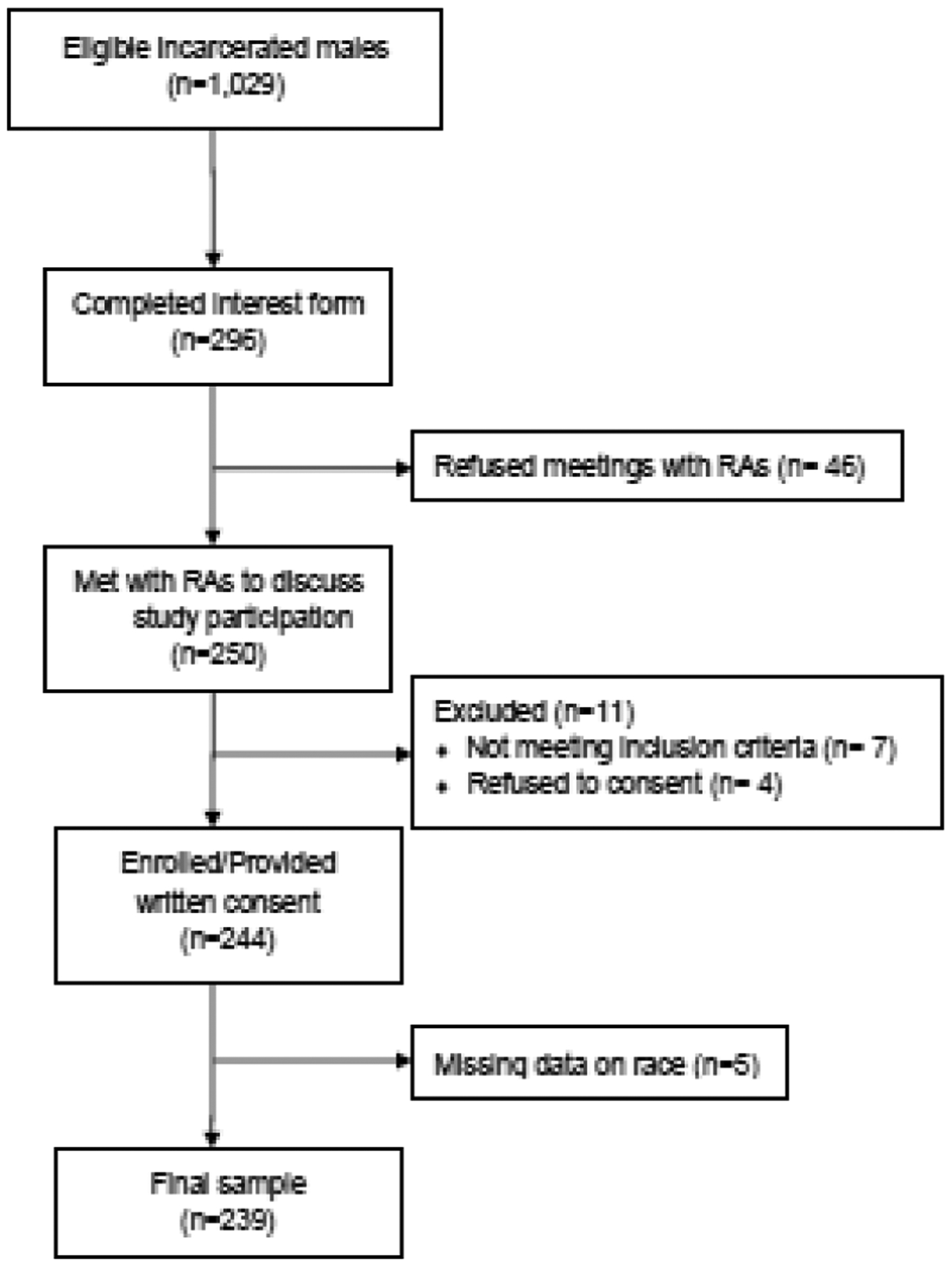
Cross-sectional PARTICIPANTS: The sample included 239 racially diverse (37.7% White, 41.4% Black, 20.9% Hispanic/Other) incarcerated males age ≥50 (mean age = 56.4 ± 6.1; range 50-79 years).
Global cognitive impairment assessed using the Montreal Cognitive Assessment (MoCA) - standard MoCA scoring (1-point adjustment for ≤12 years education, and score <26 indicating cognitive impairment) versus education- and race-specific cutpoints. Trail Making Test (TMT) assessed executive functioning. The relationship between race and cognitive impairment was evaluated using Chi-Square, One-Way ANOVA, and Tukey's HSD post-hoc analyses. Chi-Square was also used to evaluate the relationship between race and frequency of missed MoCA items.
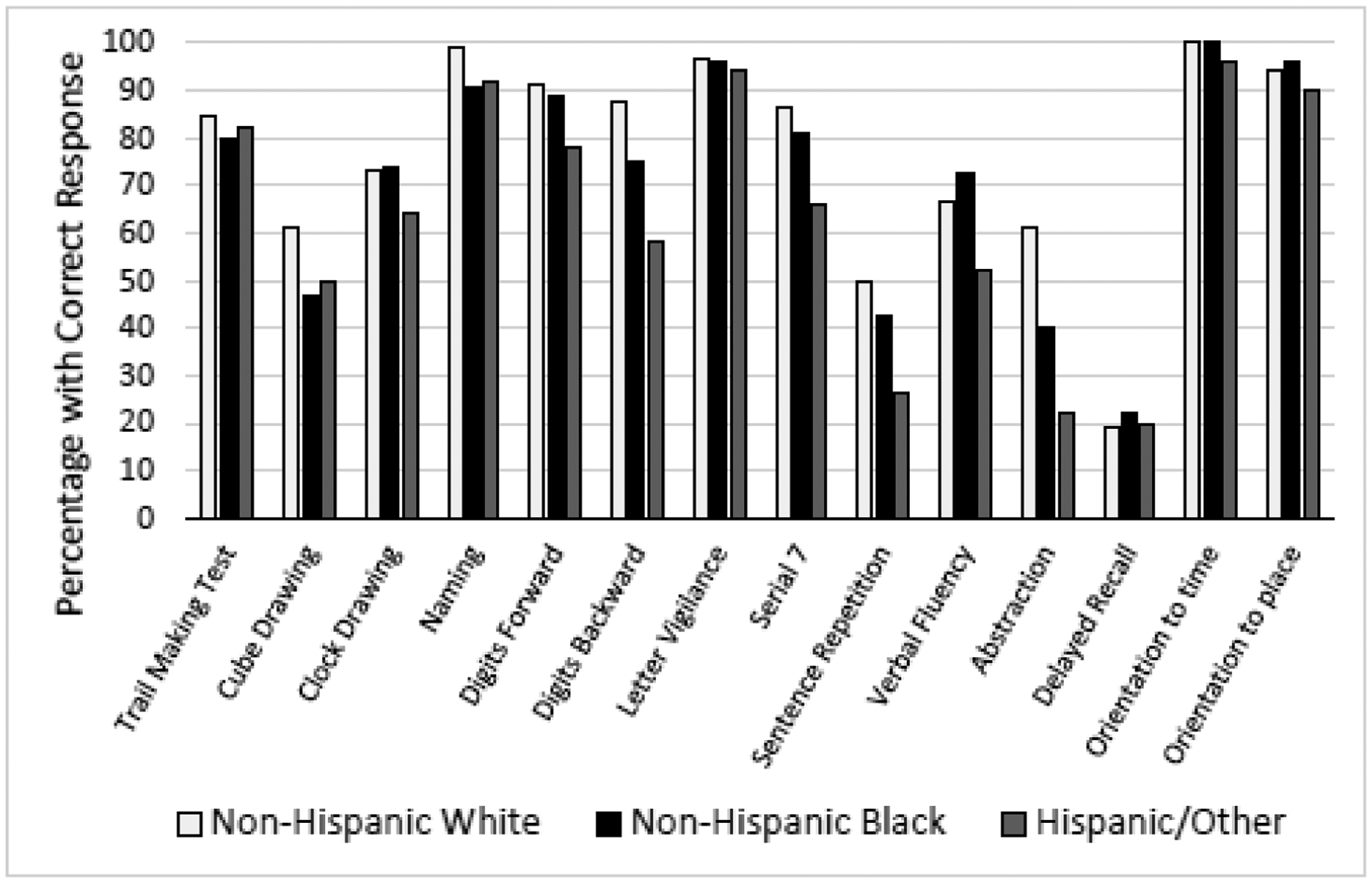
Average MoCA score was 24.12 ± 3.38. Overall, 62.8% and 38.5% of participants met criteria for cognitive impairment using standard scoring and education- and race-specific cutpoints, respectively. This difference was largely attributed to the change in proportion of Blacks who met criteria for cognitive impairment after applying education- and race-specific cutpoints (62.6% versus 19.2%). Fewer White inmates were impaired (51.1% versus 36.7%) after applying demographically-adjusted norms; however, the proportion of Hispanics/Others remained largely unchanged (84% versus 80%). A considerable proportion of participants were mildly impaired on TMT-A (18.2% Whites, 7.1% Blacks) and TMT-B (20.5% Whites, 4.1% Blacks). Race differences were observed in missed MoCA items.
Cognitive impairment is common in older incarcerated persons, despite applying education- and race-specific norms. Notable race differences highlight need for validated assessments for this diverse population.
评估总体上老年监禁男性的认知障碍(整体认知和执行功能),并根据教育程度和种族进行评估。
横断面研究
样本包括 239 名种族多样化的(37.7%为白人,41.4%为黑人,20.9%为西班牙裔/其他)年龄≥50 岁(平均年龄 56.4±6.1 岁;年龄范围为 50-79 岁)的监禁男性。
使用蒙特利尔认知评估(MoCA)评估整体认知障碍-标准 MoCA 评分(对于≤12 年教育,调整 1 分,得分<26 表示认知障碍)与教育和种族特定的临界点。采用连线测试(TMT)评估执行功能。使用卡方检验、单因素方差分析和 Tukey 的 HSD 事后分析评估种族与认知障碍之间的关系。卡方检验还用于评估种族与 MoCA 项目遗漏频率之间的关系。
平均 MoCA 得分为 24.12±3.38。总体而言,62.8%和 38.5%的参与者分别使用标准评分和教育和种族特定的临界点标准符合认知障碍标准。这一差异主要归因于应用教育和种族特定的临界点后黑人符合认知障碍标准的比例发生变化(62.6%比 19.2%)。应用人口统计学调整后的标准后,白人囚犯的受损人数减少(51.1%比 36.7%);然而,西班牙裔/其他人的比例基本保持不变(84%比 80%)。相当一部分参与者在 TMT-A(18.2%白人,7.1%黑人)和 TMT-B(20.5%白人,4.1%黑人)上轻度受损。在 MoCA 遗漏项目上观察到种族差异。
尽管应用了教育和种族特定的标准,但认知障碍在老年监禁人群中很常见。值得注意的种族差异突出表明需要针对这一多样化人群进行验证评估。